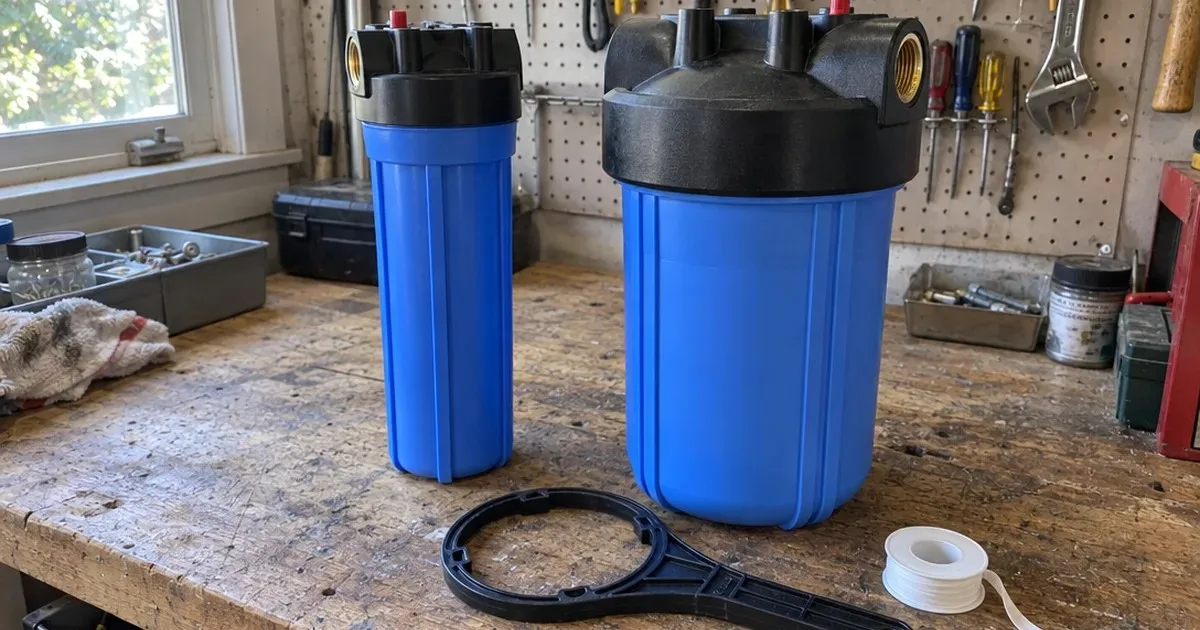
A blue 10 inch filter housing sells for $13.95 at US Water Systems.
A 10 inch water filter housing in stainless steel from Amwater runs $114.99, and both are October 2026 sale prices.
Same nominal size. Very different jobs.
Below, you’ll get the 2 housing sizes first, then the port, pressure, thread and material checks that decide which one fits your plumbing system.
What Is a 10 Inch Water Filter Housing?
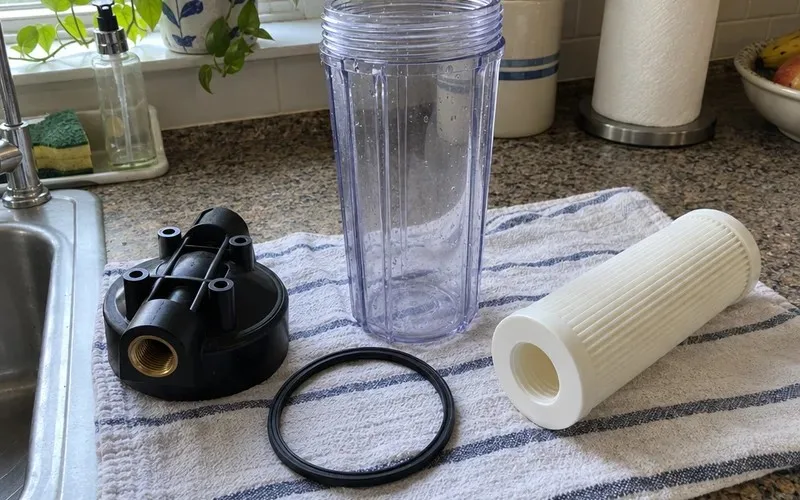
A 10 inch water filter housing is the screw-together shell that holds a 10 inch cartridge in your water line. The housing has 3 parts: a cap with the inlet and outlet ports, a sump that holds the cartridge, and an O-ring that seals them.
Water flows in through the cap, around the cartridge, through the filter media and back out the outlet.
So the housing doesn’t do the filtration itself.
The cartridge does the water filtration, while the housing’s job is to hold pressure and stay sealed.
And here’s a detail most product pages skip: “10 inch” is a nominal size. According to US Water Systems’ store listing, a standard 2.5 x 10 housing actually takes a 9-7/8 inch cartridge.
Most housings are molded from polypropylene, a tough plastic, while heavy-duty models use stainless steel.
Shop by the cartridge’s real length and diameter, not the “10 inch” label alone.
Slim vs Big Blue: The 2 Sizes of 10 Inch Housings
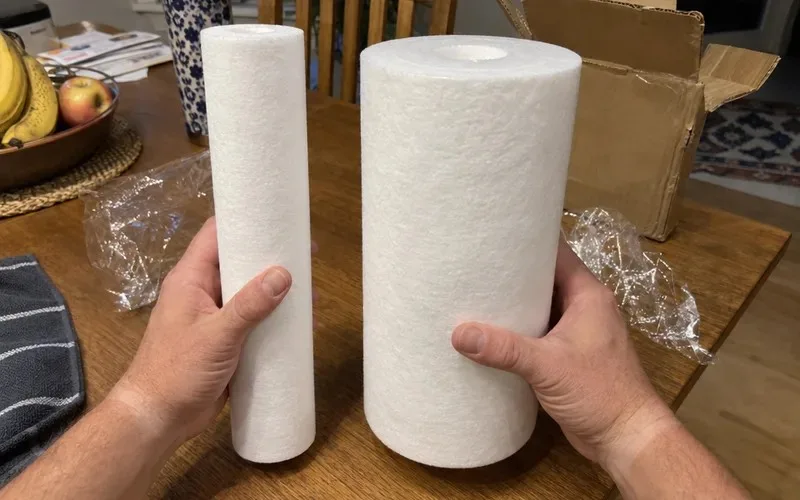
10 inch water filter housings come in 2 diameters: slim and Big Blue. Slim housings take a 2.5 inch wide cartridge, and Big Blue housings take a 4.5 inch wide one.
Both are 10 inch housings, so the cartridge’s width decides which one you need.
Amwater’s product listing shows the split: its 10 inch stainless housing comes with a 2.5 inch OD body or a 4.5 inch OD Big Blue body.
OD means outside diameter, the width you’d measure across the cartridge.
Why does the width matter so much?
A wider cartridge holds more filter media, so water has more material to pass through before it reaches your taps. Here’s how the 2 sizes compare on the things you’ll check before buying:
| Check | Slim (2.5 x 10) | Big Blue (4.5 x 10) |
|---|---|---|
| Cartridge width | 2.5 in | 4.5 in |
| Real cartridge length | 9-7/8 in | Measure before buying |
| Typical spot | One tap, under-sink, RO stage | Whole-house line |
| Cartridges that fit | Any standard 2.5 x 10 | 4.5 x 10 Big Blue only |
In other words, the cartridge in your hand already tells you which housing to buy. If it’s 2.5 inches across, get a slim housing, and if it’s 4.5 inches across, get a Big Blue.
Is a 10 Inch Housing Big Enough for a Whole House?
A slim 10 inch housing is not built for a whole house. US Water Systems’ store listing says 2.5 x 10 housings are for point-of-use spots like sinks, not point-of-entry service.
For a whole-house line, step up to a Big Blue housing or a 20 inch housing.
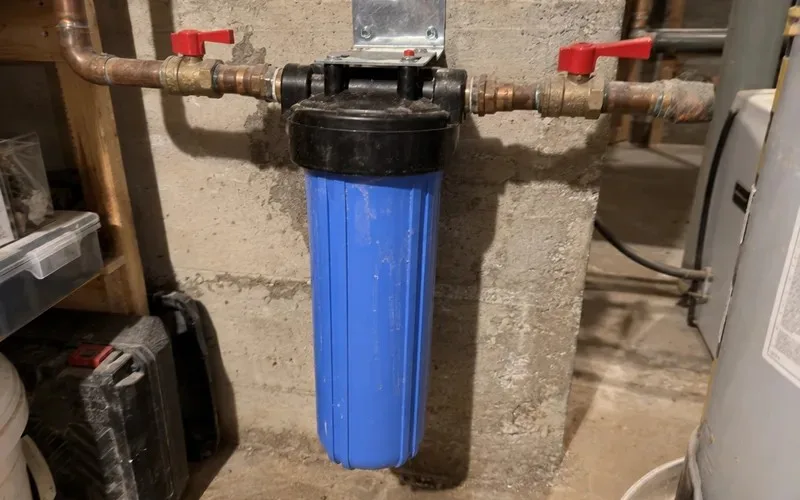
Point-of-entry means the filter sits where water enters your home, so every tap and household appliance draws through it.
That’s a lot of flow for a 2.5 inch cartridge.
Push too much water through a small cartridge and you’ll feel it as a pressure drop in the shower when the dishwasher runs.
A Big Blue cartridge gives that water far more media to move through, so it keeps up better when several taps run at once.
A housing at the main line is a bigger plumbing job than one under the sink. Read up on a whole-house filter install before you cut into a pipe.
So for one tap, a slim housing is plenty, but for the whole house, go Big Blue or longer.
10 Inch vs 20 Inch Water Filter Housings
A 10 inch and a 20 inch water filter housing differ in cartridge length. The 20 inch takes a cartridge twice as long with more room for sediment, while the 10 inch fits tight spots like a sink cabinet.
More media usually means fewer cartridge changes on the same water.
But a 20 inch housing needs twice the height, plus room underneath to pull the sump off.
So pick a 10 inch housing when space is tight or you’re filtering one tap. Pick a 20 inch filter when you have dirty well water, a big household or lots of vertical space.
Measure the space from the bottom of the cap to the floor of the cabinet. Then add a few inches so you can unscrew the sump and lift the cartridge out.
What Port Size Does a 10 Inch Filter Housing Need?
The port size on a 10 inch water filter housing should match the pipe or tubing it connects to. US Water Systems lists slim housings with 1/4, 3/8, 1/2 and 3/4 inch inlets.
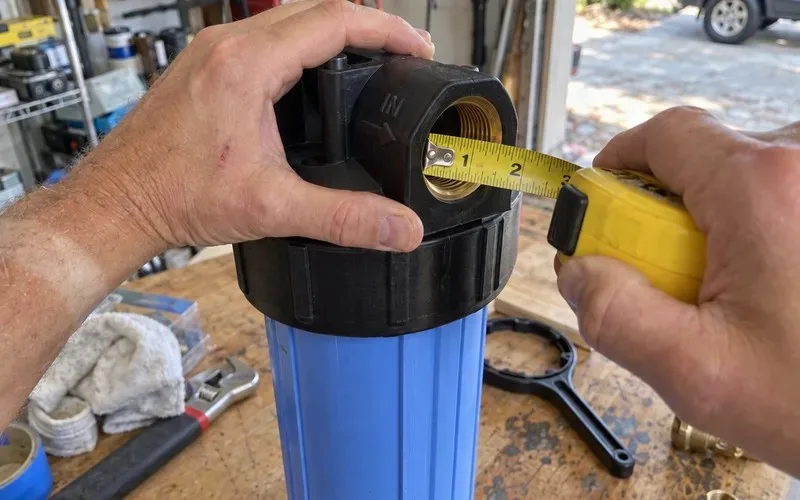
Heavy-duty housings go bigger: Amwater offers its stainless model from 1/2 inch up to 2 inch NPT.
NPT stands for National Pipe Thread, the tapered thread on most US pipe fittings, and FNPT means the threads sit inside the port.
Here’s how the sizes usually line up:
- 1/4 inch: plastic tubing to a drinking water faucet or an RO system
- 3/8 to 1/2 inch: under-sink lines and small branch lines
- 3/4 inch and up: main water lines and whole-house setups
The catch?
A port smaller than your pipe squeezes the flow at that point, no matter how big the cartridge is. Match the port to the pipe, and use a reducer only when you have to.
What Pressure Rating Should a Filter Housing Have?
A water filter housing’s pressure rating must sit above your home’s water pressure. Standard plastic models such as the Pentek 158214 are rated to 125 PSI, according to H2O Distributors’ store listing.
Check the rating on the cap or the product page before you install.
Don’t know your pressure?
Screw a cheap pressure gauge onto an outdoor hose bib. Open it with every other tap off, and you’ll have your number in under a minute.
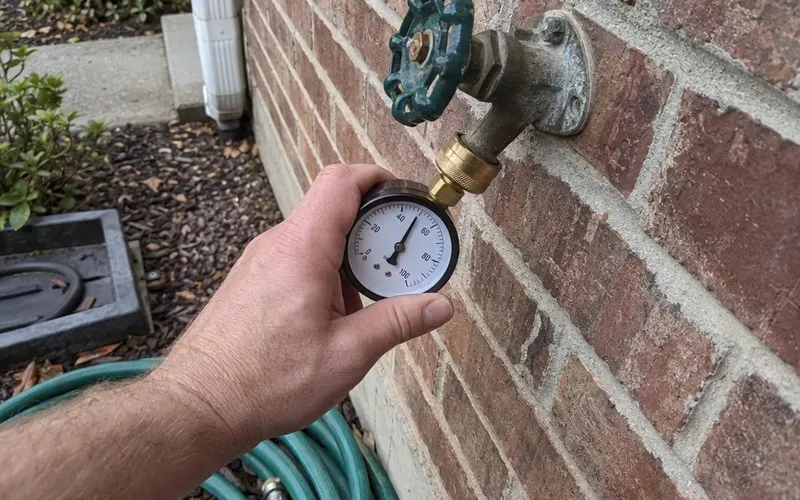
Your housing also sees a pressure swing every time a tap opens and closes. In fact, housing maker Ningbo Blue Pluser Appliance lists an endurance test of 100,000 pressure cycles between 0 and 150 psi.
That same model also has a pressure release button, which lets trapped pressure out before you open the sump.
That button makes cartridge day easier, because a sump under pressure is much harder to unscrew. If you’ve ever fought a stuck filter housing, you’ll want one.
Buttress vs Acme Threads on Filter Housings
Buttress threads are the stronger thread design on a 10 inch filter housing. H2O Distributors’ store listing says they seal better and carry higher burst ratings than Acme threads, which most housings use.
Threads are the spiral ridges that let the sump screw into the cap.
Pentek built its 3G housings around buttress threads for that reason, and the same listing says Watts/Flowmatic and Kemflo housings use them too.
What does that mean for you?
A tighter seal at the threads means less chance of a slow drip, which usually shows up first as a housing leaking from the top. So if you’re choosing between 2 similar housings, the one with buttress threads is the safer bet.
Clear, Opaque or Stainless Steel Housings?
Clear, opaque and stainless steel 10 inch housings trade visibility and price against durability. A clear sump shows a dirty cartridge, opaque plastic is the low-cost standard, and 304 stainless steel resists corrosion but costs the most.
Clear sumps are handy for sediment.
You can see a cartridge turn brown and swap it before it chokes your flow, which is why H2O Distributors stocks clear-sump models.
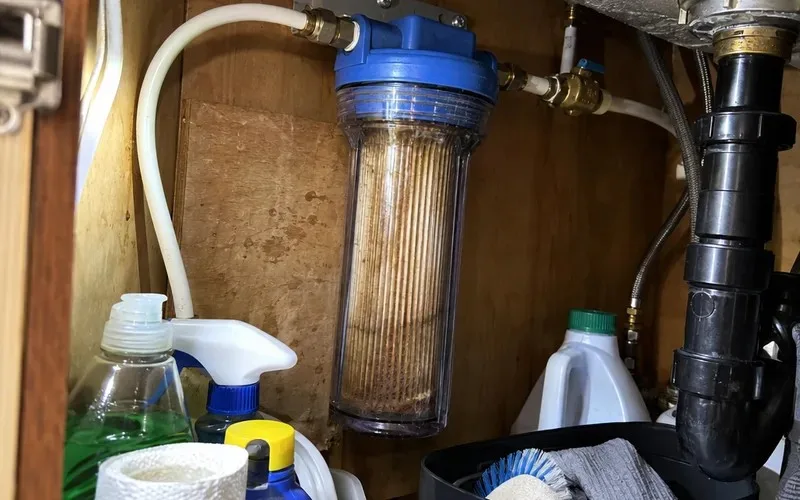
Opaque blue and white sumps hide the cartridge, so you’ll change it on a schedule instead of by sight.
Stainless steel sits at the top end, and Amwater’s 304 stainless steel housing carries NSF/ANSI 42 certification.
NSF/ANSI 42 is an NSF standard for drinking water treatment products, and 304 steel resists the corrosion that eats plain steel.
Pick clear for sediment you want to watch, opaque for low cost and stainless steel for heavy-duty jobs.
How Much Does a 10 Inch Water Filter Housing Cost?
A 10 inch water filter housing costs about $13.95 to $114.99 at October 2026 sale prices. US Water Systems lists a blue slim housing with 3/4 inch ports for $13.95, and Amwater sells its stainless steel model for $114.99.
The clear Pentek 158214 sits in between at $31.00.
Not bad for the part that holds your whole filter together.
But watch what’s in the box.
H2O Distributors’ store listing notes the clear model includes the cap, sump and O-ring only, with the mounting hardware and wrench sold separately.
So budget for a mounting bracket and a housing wrench if yours doesn’t include them.
Compare housings by what you’ll actually need to install them, not by the sticker price alone.
Which Cartridges Fit a 10 Inch Housing?
A slim 10 inch housing fits any industry-standard 2.5 x 10 cartridge, including pleated, melt-blown and string-wound filters. A Big Blue housing needs 4.5 x 10 cartridges instead.
That standard sizing lets you swap cartridge brands freely within one size.
Your cartridge choice decides what your water filtration actually removes.
For example, a sediment cartridge catches sand, rust and silt, while a carbon cartridge targets chlorine taste and odor. Some specialty cartridges target heavy metals and other contaminants.
So pick the housing for size, then pick the cartridge for your water quality.
You can compare 10 inch cartridge options for both slim and Big Blue housings, or read up on the main water filter cartridge types first.
Where a 10 Inch Housing Works Best
A 10 inch slim housing works best at a single point of use, such as one kitchen tap. US Water Systems says its customers install them under a sink as a carbon pre-filter for chlorine.
Others add one after a reverse osmosis system to put minerals back in. That makes them a cheap way to get safe drinking water at one tap instead of buying bottled water.
The same listing says these housings come in single, dual and triple setups.
That way, you can build multi-stage water filtration, with a sediment stage and a carbon stage side by side, like a 2-stage water filter does.
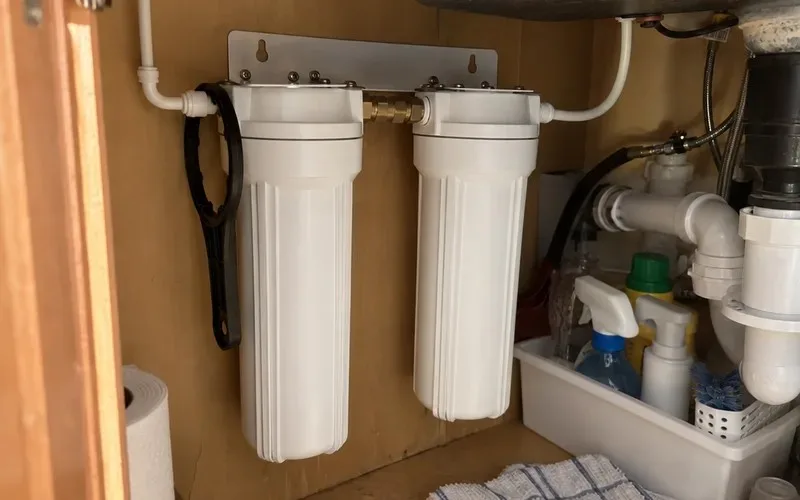
If you’ve never fitted one, here’s how an under-sink install goes from shutoff valve to first glass.
How to Choose a 10 Inch Water Filter Housing in 4 Steps
Choosing a 10 inch water filter housing comes down to 4 checks: cartridge size, location, port size and pressure rating. Do them in this order and the right housing narrows to a few models.
- Measure your cartridge. Check the width (2.5 or 4.5 inches) and the real length, since a slim “10 inch” cartridge is 9-7/8 inches.
- Decide where it goes. One tap means slim; the whole house means Big Blue or 20 inch.
- Match the port to your pipe. Read the size off your pipe or tubing, then buy the same port size.
- Check pressure and extras. Confirm the pressure rating, then look for buttress threads, a pressure release button and whether the bracket and wrench are included.
Not sure what a seller’s housing includes? Here’s what to send:
“I need a 10 inch housing for a 2.5 x 9-7/8 inch cartridge with 3/4 inch NPT ports. What’s its pressure rating, and does it come with the bracket and wrench?”
Swap in your own cartridge width and port size.
If the cartridge fits and the port matches your pipe, the rest is fine-tuning.
The Bottom Line
Match the housing to your cartridge’s width first, and every other choice gets easier.
This week, pull your old cartridge or measure your pipe, then buy the 10 inch housing that matches both.
Frequently Asked Questions
A filter housing has no fixed lifespan in the store and maker listings, so its life depends on its material and on keeping its O-ring sealing well. For a sense of how tough they are, housing maker Ningbo Blue Pluser Appliance lists an endurance test of 100,000 pressure cycles between 0 and 150 psi.
You can find a replacement filter housing at water treatment suppliers such as US Water Systems and H2O Distributors, or straight from makers such as Amwater. Bring your old cartridge’s size and your port size so the new housing fits the first time.
Filter housings are interchangeable only within the same cartridge size and port size. A slim 2.5 x 10 housing from one brand takes the same standard cartridges as another, but it won’t take a 4.5 inch Big Blue cartridge.