 guide
guide Does a Water Softener Remove Chlorine? A Practical Answer
Wondering if your water softener handles chlorine too? Here's which softeners actually remove it, other methods that work, and how to test chlorine levels at.

Reviews, comparisons, and buying guides for every type of softeners we've tested and researched.
We may earn a small commission through links on this page, at no extra cost to you. As an Amazon Associate, we earn from qualifying purchases. Ratings reflect our own editorial evaluation.
If you've ever noticed a chalky white film on your shower doors, felt like soap just wouldn't lather properly, or pulled dishes out of the dishwasher covered in spots, you've already met hard water. It's one of those problems that creeps into every corner of your home without making a dramatic entrance — but over time, it costs you real money and real comfort.
Hard water is simply water that contains elevated levels of dissolved minerals, primarily calcium and magnesium. These minerals get picked up naturally as water percolates through limestone, chalk, and dolomite deposits underground. The more contact your water supply has with these geological formations, the harder it becomes. Hardness is measured in grains per gallon (GPG) or parts per million (ppm). Water under 1 GPG is considered soft, 1–3.5 GPG is slightly hard, 3.5–7 GPG is moderately hard, and anything above 7 GPG is hard. Many homes in the US deal with water well above 10 GPG — and some areas push past 25 GPG.
The effects go far beyond spotted glasses. Hard water creates scale buildup inside your pipes, water heater, and appliances. That scale acts as an insulator inside your water heater, forcing it to work harder and driving up energy bills — the US Department of Energy estimates that scale buildup can increase water heating costs by 25–40%. Your dishwasher, washing machine, and coffee maker all suffer shortened lifespans. Clothes washed in hard water come out stiff and dingy because the minerals trap soap residue in the fibers. Your skin and hair take a hit too: hard water strips away natural oils, leaving skin dry and itchy and hair dull and brittle.
Geographically, hard water is most prevalent across the Midwest, Southwest, and Great Plains. States like Indiana, Arizona, New Mexico, Texas, Kansas, and Utah consistently report some of the hardest municipal water in the country. Florida, despite being in the Southeast, also has notoriously hard water due to its limestone bedrock. Coastal areas and the Pacific Northwest tend to have softer water, but there are pockets of hard water virtually everywhere. If you're on well water, the odds of dealing with hardness are even higher since there's no municipal treatment softening things before it reaches your tap. For a deeper dive into how calcium specifically affects your water and what filtration options exist, check out our guide on calcium water filters.
The bottom line: hard water isn't a health hazard in most cases — calcium and magnesium are minerals your body actually needs — but it's an expensive nuisance that degrades everything it touches in your plumbing and appliances. Understanding whether you have it, and how severe it is, is the first step toward deciding if a water softener belongs in your home.
The most common type of water softener uses a process called ion exchange, and once you understand it, the whole system makes intuitive sense. Inside the softener's mineral tank sits a bed of tiny resin beads — thousands of them, each one carrying a negative charge that attracts positively charged sodium ions. When hard water flows through this resin bed, the calcium and magnesium ions (which carry a stronger positive charge than sodium) are pulled onto the beads, displacing the sodium ions into the water. Hard minerals go in, sodium comes out. Your water emerges soft.
This swap is the core of every salt-based water softener on the market. The resin beads do all the heavy lifting, but they can only hold so many calcium and magnesium ions before they become saturated and stop working. That's where the regeneration cycle comes in. The system flushes a concentrated saltwater solution (brine) from the salt tank through the resin bed. The massive concentration of sodium in the brine overwhelms the calcium and magnesium clinging to the beads, knocking them loose and replacing them with fresh sodium ions. The displaced minerals and excess brine get flushed down the drain, and the resin is ready to soften again.
A typical regeneration cycle uses 30–80 gallons of water and takes about 60–90 minutes. Most modern softeners are demand-initiated, meaning they track your water usage and only regenerate when the resin is actually depleted — unlike older timer-based models that regenerate on a set schedule regardless of whether the resin needs it. This saves both salt and water. If you're curious about the specifics of regeneration timing, I've covered that in detail in our articles on how often water softeners regenerate and how often they should regenerate.
Now, about the sodium. A common concern is whether softened water tastes salty or adds unhealthy amounts of sodium to your diet. In practice, the amount of sodium added is quite small — typically 12.5 mg per 8-ounce glass for water that starts at 10 GPG hardness. That's less sodium than a slice of bread. For most people, it's completely negligible. However, if you're on a strict low-sodium diet or just don't like the idea, you can use potassium chloride pellets instead of sodium chloride in your brine tank. It costs more, but it works the same way and replaces hard minerals with potassium instead of sodium.
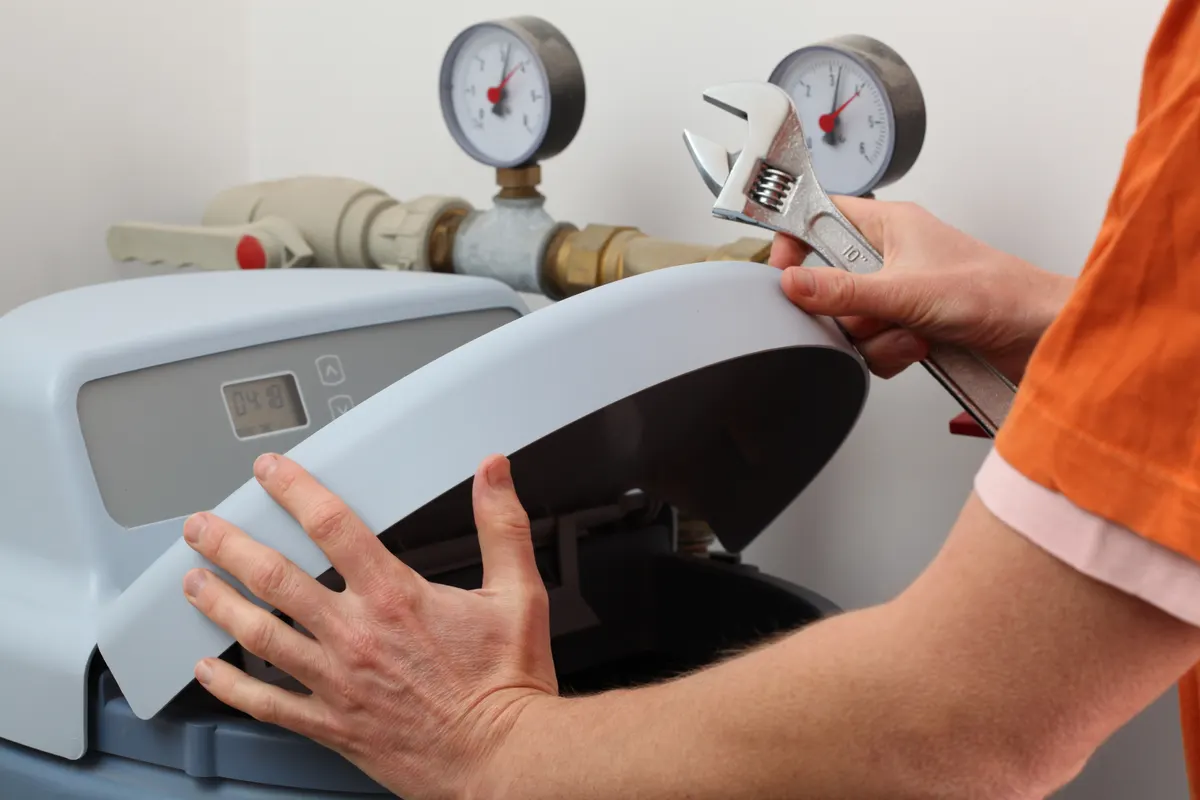
The system itself is surprisingly simple from a mechanical standpoint: a mineral tank full of resin, a brine tank where you add salt, a control valve that manages water flow and regeneration, and a drain line for the rinse water. There are no filters to replace, no membranes to clean. The resin beads themselves last 10–20 years before needing replacement. It's one of the most reliable and low-maintenance water treatment systems you can install.
| Type | How It Works | Best For | Maintenance | Avg. Cost |
|---|---|---|---|---|
| Salt-Based Ion Exchange | Swaps calcium/magnesium for sodium via resin beads | Homes with moderate to very hard water (7+ GPG) | Refill salt every 4–8 weeks; occasional brine tank cleaning | $600–$2,500+ |
| Salt-Free Conditioner | Crystallizes minerals so they don't stick (template-assisted crystallization) | Mildly hard water (under 15 GPG); scale prevention only | Very low — no salt, no drain; replace media every 5–7 years | $500–$3,000 |
| Magnetic / Electronic | Uses magnetic or electronic fields to alter mineral behavior | Budget-conscious users wanting basic scale reduction | Virtually none | $50–$300 |
| Dual-Tank | Two resin tanks alternate so soft water is always available, even during regeneration | Large households, businesses, or 24/7 water demand | Same as salt-based, but uninterrupted soft water | $1,500–$4,000+ |
| Portable (RV / Travel) | Compact ion exchange unit regenerated manually with table salt | RVs, boats, apartments, temporary setups | Manual regeneration with salt; very simple | $150–$500 |
Salt-based ion exchange softeners are the gold standard. They genuinely remove hardness minerals from the water, and they do it extremely well. If your water tests above 7 GPG — and especially if it's above 15 GPG — this is really the only option that will fully solve your hard water problems. The tradeoff is that they require a drain connection for regeneration, they use salt, and they add a small amount of sodium to your water. For most homeowners, these tradeoffs are minimal compared to the benefits.
Salt-free conditioners are a popular alternative, but I want to be honest about what they do and don't do. They don't actually remove calcium and magnesium from your water. Instead, they use a process called template-assisted crystallization (TAC) to change the structure of the minerals so they're less likely to form scale on surfaces. Your water will still test as hard, your soap won't lather any better, and you may still see some spotting — but your pipes and appliances will be better protected from buildup. They're a reasonable choice if your hardness is moderate, you want a maintenance-free solution, or you can't install a drain line.
Magnetic and electronic descalers are the most controversial option. They clip onto or wrap around your pipe and claim to use electromagnetic fields to prevent scale formation. The scientific evidence supporting their effectiveness is thin and inconsistent. Some users report noticeable improvements; others see no change at all. At their price point, they're low-risk to try, but I wouldn't rely on one as your primary solution if you have genuinely hard water.
Dual-tank softeners are simply the premium version of salt-based systems. Because they have two resin tanks, one can regenerate while the other continues providing soft water. This means you never have a period of unsoftened water flowing through your home — a real advantage for large families or anyone who uses water around the clock. The downside is cost and space: they need more room and carry a higher price tag.
Portable softeners are compact, no-electricity units designed for RVs, boats, and situations where you need soft water on the go. You regenerate them manually by pouring table salt into the unit and running water through it. They won't handle the demands of a full household, but for their intended purpose, they work surprisingly well.
This is one of the most common points of confusion I see, and it's worth getting clear on: water softeners and water filters solve fundamentally different problems. A water softener targets hardness minerals — calcium and magnesium — and removes (or conditions) them to prevent scale, improve soap performance, and protect your plumbing. A water filter targets contaminants — chlorine, lead, sediment, PFAS, VOCs, bacteria, and other things you don't want to drink. They're complementary technologies, not interchangeable ones.
Think of it this way: a softener makes your water behave better in your home (less scale, better lathering, softer laundry), while a filter makes your water safer or better-tasting to drink. A whole-house sediment filter won't do anything about hard water spots on your shower door. And a water softener won't remove chlorine taste, lead contamination, or microplastics from your drinking water. They each do their own job, and they both do it well.
Many homes benefit from having both. A common setup is a whole-house water softener installed at the main water line, followed by a whole-house carbon filter for chlorine and sediment, and then a reverse osmosis system under the kitchen sink for drinking water. The order matters, too — you generally want the softener first so that hard water doesn't foul the filter media or RO membrane downstream. I've written a detailed breakdown of this in our guide on whether to install a whole-house water filter before or after a water softener.
If you're deciding between the two and can only pick one, ask yourself what your primary complaint is. If it's spotty dishes, stiff laundry, dry skin, and scale on your fixtures, you need a softener. If it's bad taste, odor, or concern about specific contaminants, you need a filter. If you're dealing with both — and many people are — plan for both. For a full side-by-side comparison, our water softener vs water filter article breaks down every meaningful difference.
This is the big debate in the water softener world, and I think a lot of the confusion comes from marketing. Salt-free systems are often sold as "water softeners," but technically, they're water conditioners. A true softener removes hardness minerals from the water. A salt-free conditioner leaves the minerals in the water but changes their physical structure so they're less likely to stick to surfaces and form scale. That distinction matters a lot depending on what you're trying to accomplish.
If your main concern is protecting your plumbing and appliances from scale, a salt-free conditioner can be a solid solution — especially if your hardness is under 15 GPG. TAC (template-assisted crystallization) systems have real science behind them and do reduce scale formation. But if you also want softer skin, better-lathering soap, brighter laundry, and spot-free dishes, a salt-free system won't deliver those benefits. The minerals are still in your water, and they'll still interact with soap and leave deposits on surfaces that air-dry.
Salt-based systems win on effectiveness, hands down. They take water from 20 GPG down to 0 GPG. Your water will feel noticeably different — slippery, even — and every downstream benefit follows: less soap usage, cleaner dishes, softer clothes, longer appliance life. The tradeoffs are real but manageable: you need to buy and add salt regularly, the system needs a drain line for regeneration, it uses water during regeneration cycles, and it adds a small amount of sodium to your water. For most households, these are minor inconveniences compared to the comprehensive benefits.
Salt-free systems win on convenience and environmental friendliness. No salt to buy, no wastewater from regeneration, no electricity needed, no sodium added to your water, and virtually zero maintenance. If you're in an area with water softener restrictions (some municipalities ban salt-based softeners due to concerns about chloride in wastewater), a salt-free conditioner may be your only option. They're also better for outdoor irrigation since softened water isn't ideal for plants due to the sodium content.
My honest recommendation: if you have genuinely hard water and you want the full range of softening benefits, go salt-based. If your water is only mildly hard, you're primarily concerned about scale prevention, or you can't install a drain line, salt-free is a perfectly reasonable choice. For more alternatives to traditional softeners, take a look at our water softener alternative guide. And if you're wondering whether a softener handles chlorine too, the answer is generally no — we explain why in does a water softener remove chlorine.
Getting the right size water softener is more important than most people realize. Too small, and the system regenerates constantly — wasting salt, water, and wearing out the resin faster. Too large, and you're paying for capacity you never use, plus the resin can develop channeling issues from sitting too long between regenerations. The sizing sweet spot is a system that regenerates roughly every 3–7 days under your normal water usage.
The formula for sizing is straightforward: multiply the number of people in your household by the average daily water usage per person (about 75 gallons), then multiply that by your water's hardness in GPG. The result is your daily grain removal requirement. Multiply that by 7 to get the weekly demand, and choose a softener with a grain capacity that matches. For example, a family of four with 15 GPG hardness: 4 x 75 x 15 = 4,500 grains per day, or 31,500 grains per week. A 32,000-grain softener would regenerate about once a week — right in the sweet spot. A 48,000-grain unit would give you a comfortable buffer and regenerate about every 10 days.
But before you can size anything, you need to know your actual hardness level. If you're on municipal water, your utility's annual water quality report (Consumer Confidence Report) will list hardness. If you're on well water, you'll need to test it yourself. Inexpensive test strips give a ballpark, but a laboratory test from a service like Tap Score or your county extension office gives precise numbers. Don't guess — the difference between 10 GPG and 20 GPG water means you need a significantly different system.
Once your softener is installed, setting the hardness level correctly on the control valve is critical. This tells the system how hard your incoming water is so it can calculate when to regenerate. Set it too low, and the system waits too long between regenerations — you'll get hard water breakthrough. Set it too high, and it regenerates too often, burning through salt and water unnecessarily. If your water also contains dissolved iron, add 5 GPG to your hardness setting for every 1 ppm of iron, since iron occupies resin capacity just like calcium and magnesium do. Our detailed guide on what your water softener hardness should be set at walks through this calibration step by step.
Salt usage ties directly to sizing and settings. A properly sized softener for a family of four typically uses 40–80 pounds of salt per month, depending on hardness and water usage. That works out to one or two 40-pound bags from the hardware store. If you're going through significantly more than that, your hardness setting may be too high, or your system may be regenerating more often than necessary. We break down the math in our how much salt for a water softener guide.
One of the best things about water softeners is how little maintenance they actually require. Compared to water filters that need cartridge replacements, RO systems that need membrane changes, or UV systems that need lamp replacements, a water softener mostly just asks you to keep its salt tank filled. That said, there are a few maintenance tasks that will keep your system running efficiently for its full lifespan — which, by the way, is typically 10–20 years for a quality unit.
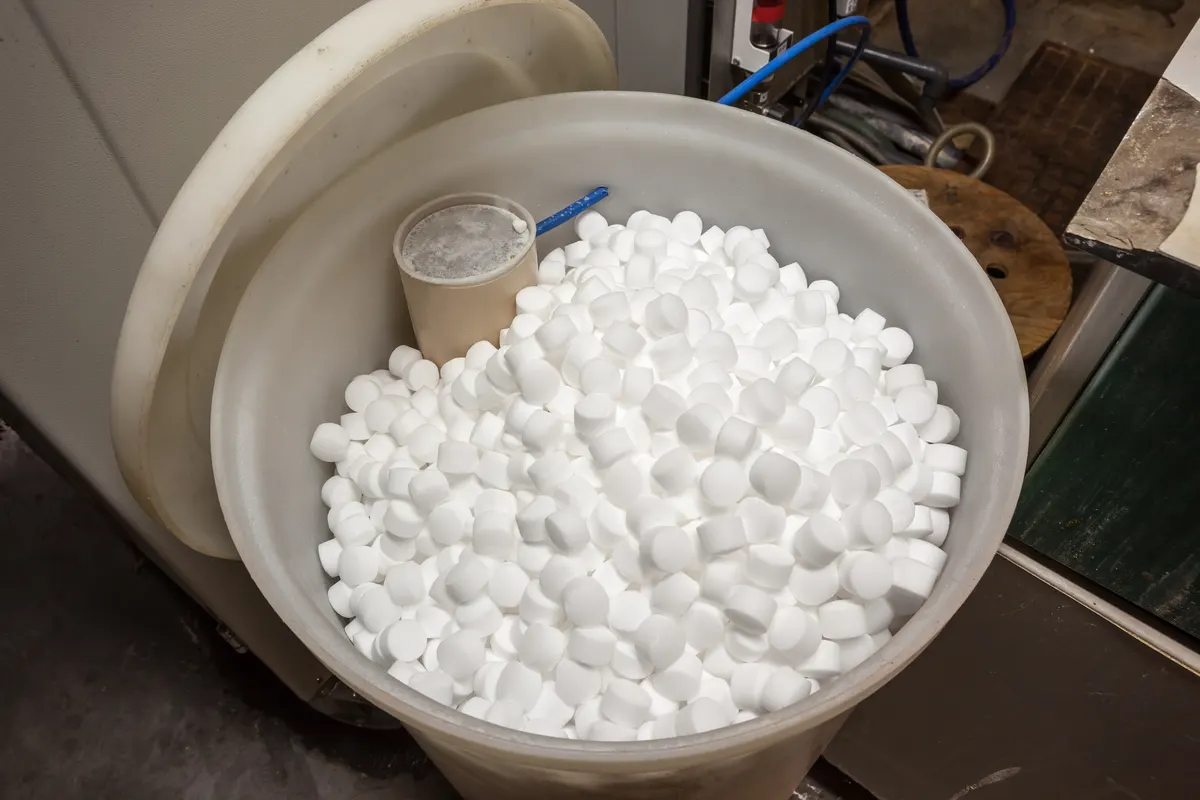
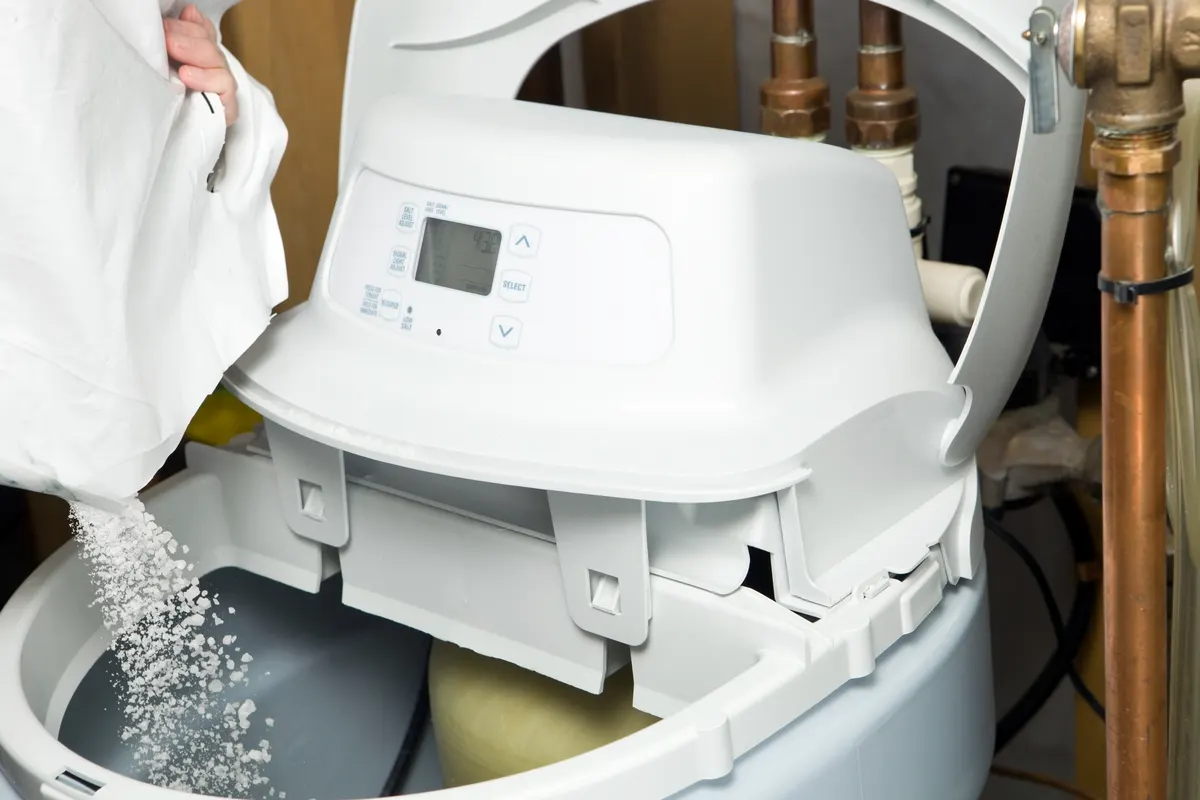
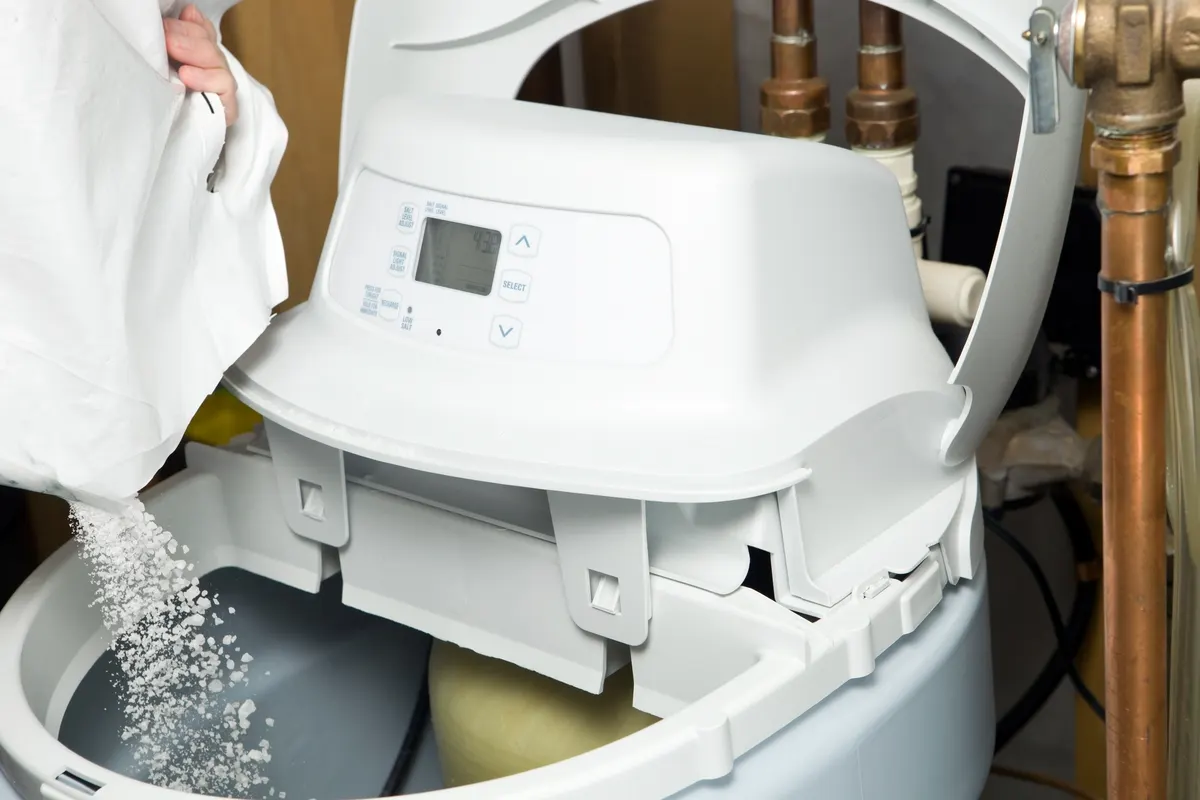
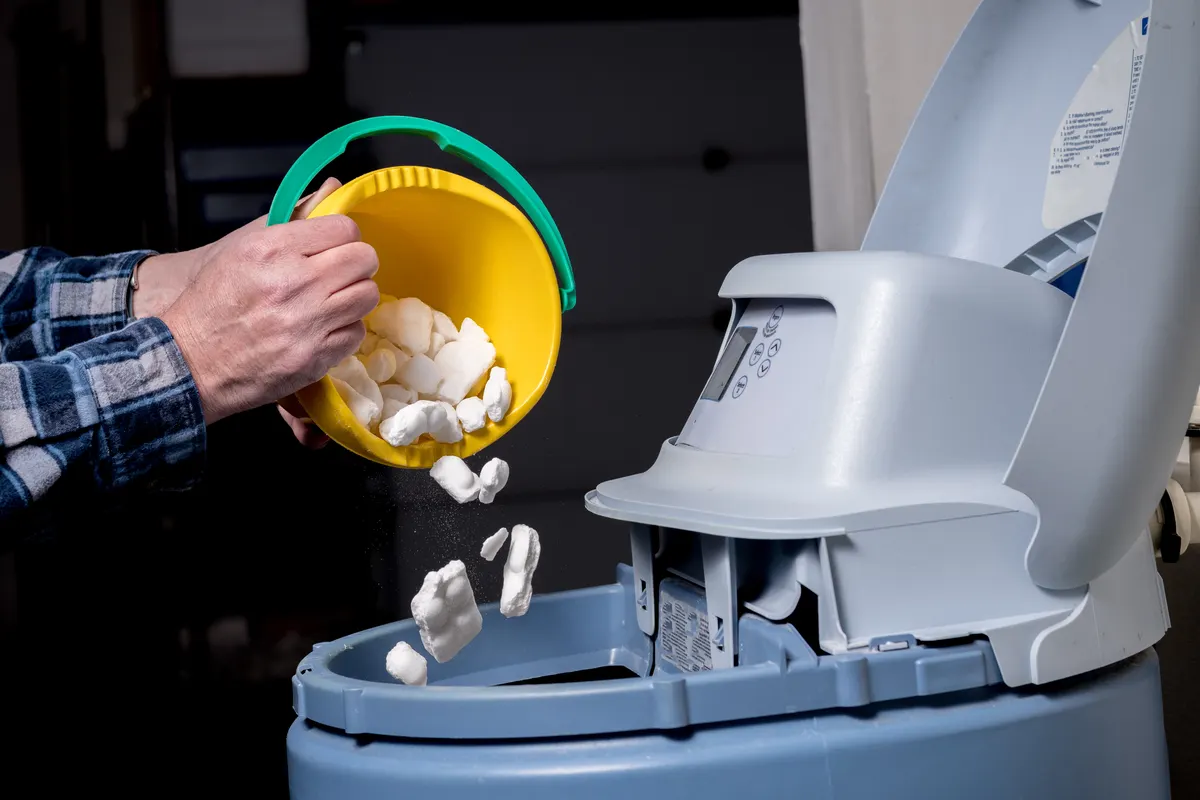
The most frequent task is checking and refilling the salt. I recommend checking the salt level at least once a month. The tank should always be at least one-quarter full, and the salt should be above the water level. If you let it run out, the system can't regenerate properly — your resin becomes exhausted, and hard water flows straight through. The type of salt matters too. Solar salt crystals are the most common, evaporated salt pellets are the purest (and least likely to cause bridging), and rock salt is the cheapest but leaves the most residue. For a full breakdown of which salt to use and why, check out our guide on the best water softener salt.
Salt bridging is the most common maintenance issue you'll encounter. This happens when a hard crust of salt forms in the brine tank, creating a bridge above the water level. The salt on top looks fine, but there's an air gap underneath and the water never touches the salt — so no brine is produced and the resin never gets regenerated. If your water suddenly feels hard even though the salt tank looks full, salt bridging is the first thing to check. Break through the crust with a broom handle, and if it happens frequently, switch to a higher-purity salt or reduce the humidity around your softener.
The brine tank itself should be cleaned out once a year. Drain it, remove any old salt or sludge at the bottom, scrub the walls, rinse it out, and refill with fresh salt. If you notice a musty smell or discoloration in the tank, a deeper cleaning with household bleach (diluted) or a dedicated resin cleaner can help. Some people swear by using vinegar for cleaning — and yes, it works, though I'd recommend reading our article on using vinegar in a water softener before you pour any in, since there are some caveats.
The resin bed is the heart of your softener, and it can last the entire lifetime of the unit if it's maintained properly. The main threats to resin longevity are chlorine exposure (municipal water chlorine degrades resin over time), iron fouling (if your water contains iron, the resin can become coated and less effective), and bacterial contamination. Using a resin cleaner like Iron Out or Res Up every few months helps keep the beads in good shape. If your softener is more than 15 years old and performance is declining despite fresh salt and correct settings, the resin bed is the likely culprit and can be replaced without buying an entirely new system. For more on lifespan expectations and when replacement makes sense, see how long a water softener lasts.
Can water be too soft? Technically, yes — but it's rare outside of specific circumstances. Very soft water (0 GPG) can feel slippery, and some people find it harder to rinse soap off their skin. In extreme cases, very soft water with low mineral content can be slightly more corrosive to copper pipes, though this is more of a concern with naturally soft water than artificially softened water. For most households, softened water in the 0–3 GPG range is perfectly fine and doesn't cause any issues. We explore this topic thoroughly in our article on whether water can be too soft.
Is a water softener worth the investment? For most homes with moderate to hard water, absolutely. The math works out pretty clearly: a water softener typically pays for itself within 3–5 years through reduced soap and detergent usage, lower energy bills (from scale-free water heaters), fewer appliance repairs and replacements, and less spending on bottled water and skin care products. That's before you factor in the quality-of-life improvements — softer laundry, cleaner dishes, better-feeling showers. I've laid out the full cost-benefit analysis in is a water softener worth it.
Does softened water taste salty? No. This is a persistent myth that won't die. The amount of sodium added by a water softener is genuinely tiny — about 12.5 mg per 8-ounce glass at 10 GPG hardness. For comparison, an 8-ounce glass of milk contains about 120 mg of sodium, and a slice of white bread has about 170 mg. You simply cannot taste the sodium that a softener adds. If your softened water tastes salty, something is wrong with your system — likely a failed seal or a problem with the regeneration cycle.
Can you use water softener salt to melt ice? You can, and many people do in a pinch — but it's not ideal. Water softener salt (sodium chloride) does melt ice, but it's usually in pellet or crystal form rather than the finer granules that purpose-made ice melt uses, so it works more slowly. It's also typically more expensive per pound than bulk rock salt sold specifically for deicing. Solar salt crystals work better than evaporated pellets for this purpose since their shape provides more surface contact with ice. We cover the details and alternatives in can you use water softener salt to melt ice.
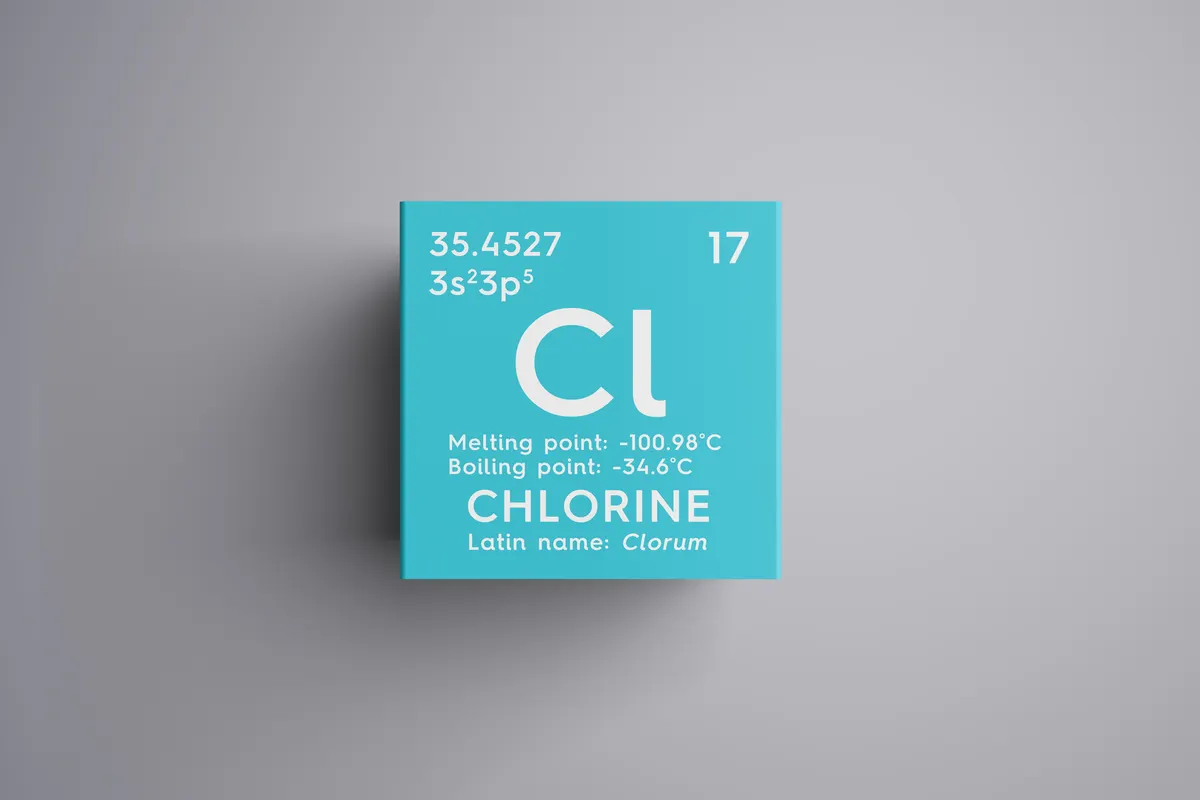
Do water softeners remove chlorine? No, and this is an important distinction. Water softeners use ion exchange to remove hardness minerals (calcium and magnesium), but chlorine passes right through the resin without being affected. If you want to remove chlorine — and most people on municipal water should, since chlorine degrades softener resin over time — install an activated carbon filter before or after your softener. A whole-house carbon filter upstream of your softener actually has a dual benefit: it removes chlorine from your drinking water and protects your softener's resin bed from chlorine damage. For the full explanation, read does a water softener remove chlorine.
Grains Per Gallon (GPG) — The standard unit of measurement for water hardness in the US. One grain per gallon equals approximately 17.1 milligrams per liter (mg/L) or parts per million (ppm). Water above 7 GPG is generally considered hard.
Ion Exchange — The chemical process at the heart of salt-based water softeners. Hardness ions (calcium and magnesium) in the water are swapped for sodium ions on the resin beads, effectively removing the hardness minerals from the water.
Regeneration — The cleaning cycle that restores the softener's resin beads after they've become saturated with hardness minerals. A concentrated brine solution flushes through the resin, replacing the captured calcium and magnesium with fresh sodium ions and sending the waste down the drain.
Brine Tank — The container that holds the salt (or potassium chloride) used to create the brine solution for regeneration. It sits alongside the mineral tank and feeds the concentrated saltwater into the resin bed during each regeneration cycle.
Resin Beads — Tiny, spherical beads made of polystyrene that fill the mineral tank. They carry a negative charge and are coated with sodium ions. As hard water passes through, the beads attract and hold calcium and magnesium ions while releasing sodium. A typical softener contains several cubic feet of these beads.
Grain Capacity — The total amount of hardness a water softener can remove before it needs to regenerate, measured in grains. Common residential sizes are 24,000, 32,000, 48,000, and 64,000 grains. Higher capacity means longer intervals between regeneration cycles.
Hardness — The concentration of dissolved calcium and magnesium in water. It's classified as slightly hard (1–3.5 GPG), moderately hard (3.5–7 GPG), hard (7–10.5 GPG), or very hard (above 10.5 GPG). Most municipal water supplies in the US fall somewhere between 3 and 20 GPG.
Total Dissolved Solids (TDS) — A measurement of all dissolved substances in water, including hardness minerals, sodium, chloride, sulfates, and more. TDS is related to but different from hardness — you can have high TDS with low hardness and vice versa. Measured in ppm or mg/L.
Bypass Valve — A valve built into or installed alongside the softener that allows you to route water around the system without disconnecting it. Useful during maintenance, regeneration, or when you need unsoftened water for outdoor irrigation or filling a swimming pool.
Demand-Initiated Regeneration (DIR) — A smart regeneration method where the softener monitors your actual water usage and only regenerates when the resin is approaching depletion. This is more efficient than time-clock regeneration, which regenerates on a fixed schedule regardless of how much water you've actually used. DIR systems save 20–40% on salt and water compared to timer-based models.
guide Wondering if your water softener handles chlorine too? Here's which softeners actually remove it, other methods that work, and how to test chlorine levels at.
 guide
guide Got a bag of water softener salt sitting in the garage? It actually works great for melting driveway ice. Here's how to use it, how it compares to sidewalk.
 guide
guide Setting your water softener to the wrong hardness level wastes salt and leaves you with hard water problems. Here's how to calculate the right setting.
 guide
guide Most water softeners need one 40-pound bag of salt per month. Here is how to calculate the right amount, choose the best salt type, and save money.
 guide
guide Hard water is slowly damaging your plumbing and appliances. Here's an honest look at whether a water softener is worth the money — including real costs, types.
 guide
guide Water softeners last 15 to 20 years with proper care. Learn the signs yours is failing, when to repair vs replace, and easy ways to extend its life.
 guide
guide A water softener should regenerate every 2 to 3 days based on usage and hardness level. Set the right frequency to avoid wasting salt and water.
 listicle
 Don't want to deal with salt, maintenance, or sodium in your water? These 10 water softener alternatives — from magnetic treatment to TAC systems.
 guide
guide Wondering if your water is too soft? That slippery feeling is actually a good thing. Here's what soft water really means for your skin, hair, appliances.
 guide
guide Yes, you can use vinegar in your water softener — it's actually a great way to clean the brine tank. Here's which type works best, how to use it.
 roundup
 The right salt makes a huge difference in how well your water softener performs. Here are 10 of the best options, from pellets and crystals to potassium.
 roundup
 3M has been solving water problems for over 50 years. We reviewed their 10 best water softeners and filtration systems to find out which ones actually live.