Every glass of water comes with an assumption: it’s safe. But E. coli contamination is more common than most people realize, and the consequences range from stomach illness to kidney infections and worse.
The good news? Reverse osmosis systems are incredibly effective at removing E. coli. The CDC specifically recommends them for this purpose. We’ve tested and compared 11 of the best RO systems to help you find the right one for your home.
Reverse osmosis systems are the CDC-recommended method for removing E. coli from drinking water. All 11 systems on this list use RO technology and can remove up to 99% of E. coli bacteria along with hundreds of other contaminants.
Quick Comparison Chart
| # | E. Coli Water Filter | Our Rating | ||
|---|---|---|---|---|
| 1 | 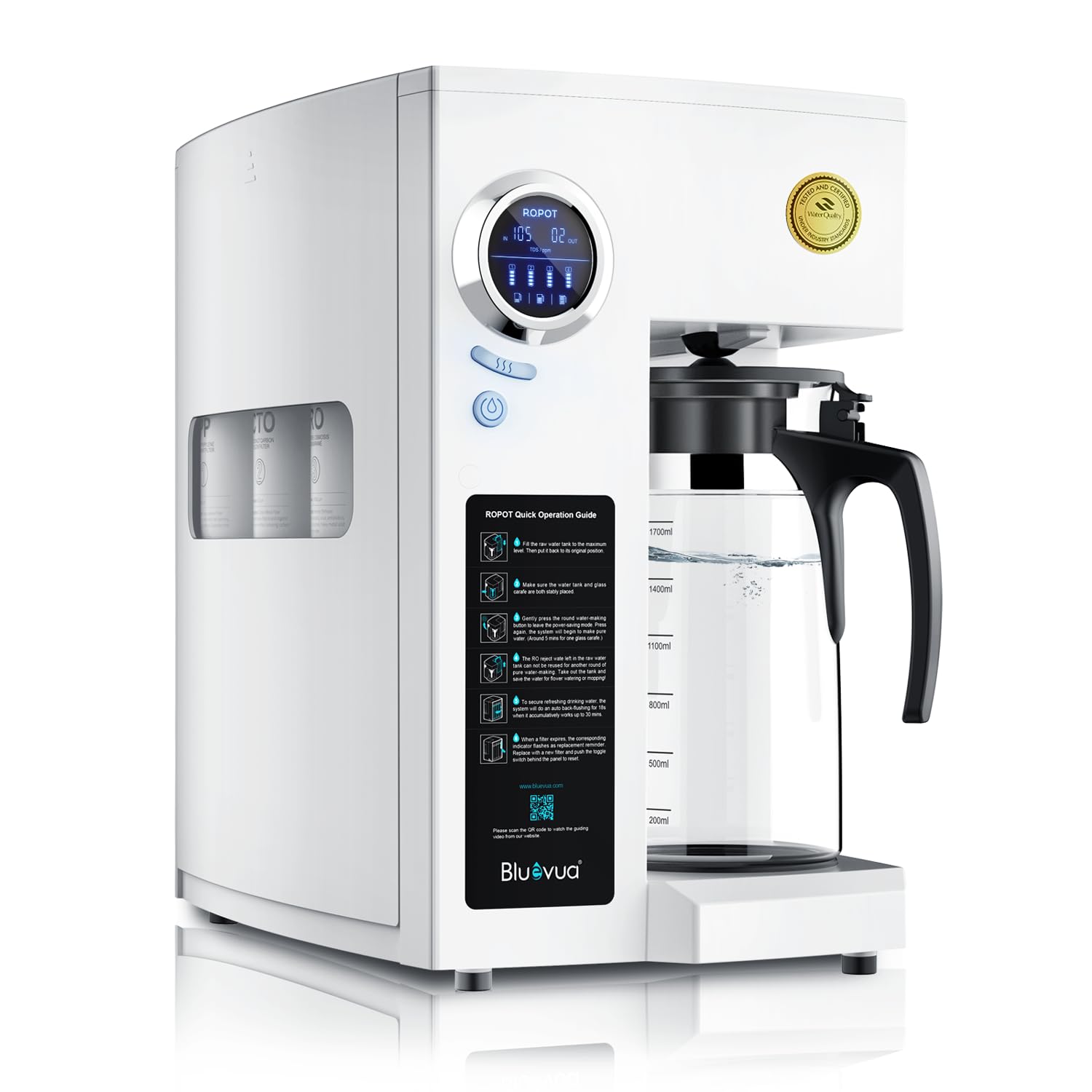 |
iSpring RCC7AK 6-Stage RO | ★★★★★ | Check Price |
| 2 |  |
Home Master TMAFC-ERP | ★★★★★ | Check Price |
| 3 |  |
APEC ROES-50 5-Stage RO | ★★★★☆ | Check Price |
| 4 |  |
iSpring RCS5T Tankless RO | ★★★★☆ | Check Price |
| 5 |  |
APEC Portable Countertop RO | ★★★★☆ | Check Price |
| 6 |  |
Waterdrop G3 RO System | ★★★★☆ | Check Price |
| 7 |  |
Brondell Circle RO System | ★★★★☆ | Check Price |
| 8 |  |
APEC 6-Stage RO w/ Remineralization | ★★★★☆ | Check Price |
| 9 | |
APEC ROES-PH75 6-Stage RO | ★★★★☆ | Check Price |
| 10 |  |
iSpring RCC7AK-UV 7-Stage + UV | ★★★★☆ | Check Price |
| 11 |  |
Express Water Alkaline RO System | ★★★★ | Check Price |
1. iSpring RCC7AK — Best Overall
iSpring RCC7AK 6-Stage Reverse Osmosis Water Filter
The iSpring RCC7AK features 6 stages of filtration including alkaline remineralization, removing 99% of E. coli and over 1,000 contaminants while restoring healthy minerals for great-tasting water.
Pros
- 6-stage filtration with alkaline remineralization
- Removes 99% of E. coli and 1,000+ contaminants
- Restores healthy minerals for better taste
- Easy under-sink installation
- Durable faucet included
Cons
- Takes up space under the sink
- Wastes some water during filtration
- Filters need periodic replacement
iSpring is one of the most recognized brands in water filtration, and the RCC7AK is their flagship 6-stage system. What sets it apart from standard 5-stage RO systems is the Alkaline Remineralization Filter.
This final stage adds calcium, magnesium, and other beneficial minerals back into the water after the RO membrane strips everything out.
The result? Water that’s 99% free of E. coli and other contaminants, but still tastes fresh and mineral-rich rather than flat.
The under-sink design keeps it out of sight, and the included faucet provides easy access to purified water. iSpring is one of the most famous names in the home water filtration industry, and their customer support reflects that reputation.
They’re based in the U.S. and known for responsive service.
If you’re in a small household of 1-3 people, the RCC7AK’s 75 GPD output is more than enough for daily drinking and cooking needs.
2. Home Master TMAFC-ERP — Best Premium
Home Master TMAFC-ERP Undersink RO System
The Home Master TMAFC-ERP provides 7 stages of purification with a permeate pump for faster flow and less water waste. Catalytic carbon removes chloramines while remineralization adds calcium and magnesium.
Pros
- 7 stages of full filtration
- Permeate pump reduces water waste significantly
- Higher water pressure than typical RO systems
- Only requires annual filter replacement
- Removes chloramines with catalytic carbon
Cons
- Higher price point
- Larger footprint under the sink
- Permeate pump requires more installation steps
With purifying drinking water from E. coli, the Home Master TMAFC-ERP is hard to beat. This 7-stage system provides thorough filtration at every step, and the permeate pump is a huge upgrade.
It delivers higher water pressure compared to other RO systems and significantly reduces wastewater.
The big convenience factor? You only need to replace the filters once per year (or every 2,000 gallons).
Most RO systems require filter changes every 6 months, so this saves you both time and money in the long run. The catalytic carbon stage is especially designed to handle chloramines, a disinfectant increasingly used by municipal water systems that standard activated carbon struggles to remove.
Another practical advantage is the 3/8” tubing used on the dispenser side, compared to the typical 1/4” tubing on most RO systems. This wider tubing means noticeably faster water flow from the faucet, so you won’t be standing around waiting to fill a pot.
3. APEC ROES-50 — Best Value
APEC Water Systems ROES-50 5-Stage RO
The APEC ROES-50 offers 5 stages of high-quality reverse osmosis filtration at an affordable price. Made in the USA with premium components, it purifies up to 50 gallons per day.
Pros
- Excellent value for the price
- Removes 99% of bacteria and contaminants
- Made in the USA with quality components
- 50 gallons per day capacity
- Stainless steel faucet included
Cons
- No remineralization stage
- Lower capacity than some competitors
- Basic faucet design
The APEC ROES-50 proves that you don’t need to spend a fortune to get clean, E. coli-free water. This 5-stage system removes 99% of contaminants and delivers up to 50 gallons per day, more than enough for a typical household.
The super-effective carbon block keeps water tasting fresh without any odor. Worth knowing: the 50 GPD rating is based on standard household water pressure.
If your home has higher pressure around 60 PSI, you can expect output closer to 60 GPD, which gives the system a bit of extra headroom for larger families.
4. iSpring RCS5T — Best Tankless
iSpring RCS5T Tankless RO System
This tankless reverse osmosis system purifies water on demand with no storage tank needed. With a booster pump and 500 GPD capacity, it delivers fresh filtered water every time.
Pros
- Water filtered fresh on demand, not stored
- Removes up to 99% of TDS
- Massive 500 GPD capacity
- Space-saving tankless design
- Efficient 1:1 pure-to-waste ratio
Cons
- Requires electricity for booster pump
- Slightly slower fill at lower pressure
- Higher price than tank-based systems
The iSpring RCS5T takes a different approach. Instead of storing filtered water in a tank, it purifies on demand.
Every glass you fill is freshly filtered, not sitting in storage.
With a massive 500 GPD capacity, it’s suitable for both residential and light commercial use. Think small offices, coffee shops, or dental offices that need a steady supply of purified water.
The advertised 1:1 pure-to-waste ratio is achievable under ideal conditions, though depending on your water pressure and usage patterns, it can sometimes shift closer to 2:1. Even at 2:1, that’s still significantly better than the 3:1 or 4:1 ratios you’ll find on most tank-based RO systems.
5. APEC Portable — Best Countertop
APEC Portable Countertop RO System
No drilling or cabinet space required. This portable countertop RO system connects to your faucet and purifies up to 90 gallons per day. Perfect for renters.
Pros
- No drilling or under-sink installation needed
- Purifies up to 90 gallons per day
- Portable, great for renters
- Works with standard kitchen faucets
Cons
- Tubes running to faucet can be unsightly
- Only works with standard faucets
- Takes up counter space
Can’t install an under-sink system? The APEC Portable sits on your countertop and connects directly to your faucet.
No drilling, no cabinet space, no permanent modifications.
At 90 GPD, it’s surprisingly powerful for a portable unit. One important thing to keep in mind: this system only works with standard kitchen faucets that have a removable aerator.
If your kitchen has a spray head, pull-out, or pull-down faucet, the adapter won’t connect properly. Check your faucet type before ordering to avoid a return.
6. Waterdrop G3 — Best Compact
Waterdrop G3 RO Filtration System
The Waterdrop G3 features a slim tankless design with dual TDS displays and 0.0001μm filtration accuracy. Quick-change filters make maintenance a breeze.
Pros
- Space-saving slim design
- 0.0001μm filtration accuracy for 99% purity
- Dual TDS display for monitoring
- Quick-change filters in minutes
- Straightforward installation
Cons
- Can't be placed sideways
- Doesn't alkalize water
- Needs 30-minute flush after installation
The Waterdrop G3’s slim, tankless design saves serious space under your sink. The dual TDS display is a nice touch.
One screen shows the TDS number and the other shows the water quality level, so you always know your filter is working.
You can also connect the G3 to your refrigerator’s water line for filtered ice and cold water, though you’ll need to run a separate drain saddle connection for the waste water. The fridge hookup isn’t complicated, but it does add an extra step to the install.
7. Brondell Circle — Best Design
Brondell Circle Reverse Osmosis System
Compact, efficient, and stylish. The Brondell Circle produces up to 50 GPD with a 2:1 efficiency ratio. Features a chrome faucet with built-in LED filter change indicator.
Pros
- Efficient 2:1 waste-to-pure water ratio
- Stylish chrome faucet with LED indicator
- Compact and space-saving
- Easy filter changes
- Compatible with other faucet styles
Cons
- Lower daily capacity (50 GPD)
- Chrome faucet may not match all kitchens
- Less filtration stages than competitors
The Brondell Circle combines efficiency with style. Its 2:1 waste-to-pure water ratio is better than most RO systems, and the chrome faucet with built-in LED indicator adds a premium touch to your kitchen.
8. APEC 6-Stage — Best Remineralization
APEC Water Systems 6-Stage Reverse Osmosis Filter
The APEC 6-Stage system removes 99% of bacteria including E. coli while adding magnesium and calcium back into the water. Purifies up to 75 GPD with an automatic shutoff valve to reduce waste.
Pros
- Removes up to 99% of bacteria and contaminants
- Adds magnesium and calcium back into water
- Purifies up to 75 gallons per day
- Automatic shutoff valve reduces wastewater
- Super capacity filter, change only once per year
Cons
- Requires space for 4-gallon pressurized tank
- Tank is 15 inches tall and 11 inches wide
- Under-sink installation required
The APEC 6-Stage system is a solid choice if you want clean water that still tastes great. It removes 99% of bacteria including E. coli while adding beneficial minerals like magnesium and calcium back into the water.
The automatic shutoff valve is a nice touch. When the storage tank is full, the valve stops the system from producing more water, which reduces daily waste to roughly 5 gallons.
Combined with the built-in flow restrictor, this makes the APEC 6-Stage one of the more efficient tank-based systems on this list.
At 75 GPD, it produces enough purified water for the whole family.
9. APEC ROES-PH75 — Best Long-Lasting
APEC ROES-PH75 6-Stage Reverse Osmosis System
The APEC ROES-PH75 offers 6 stages of filtration with an additional mineral filter for better-tasting, healthier water. The RO membrane lasts 2-3 years, and the neutralizer filter lasts 4-6 years.
Pros
- 3:1 wastewater to pure water ratio
- 6 stages of thorough filtration
- RO membrane lasts 2-3 years
- Water neutralizer filter lasts 4-6 years
- Detailed installation manual included
Cons
- First 3 filters need changing every 6 months
- 3:1 waste ratio higher than some competitors
- No UV sterilization
If low maintenance is your priority, the APEC ROES-PH75 is hard to beat. While the first 3 pre-filters need changing every 6 months, the RO membrane lasts 2-3 years and the water neutralizer filter can go 4-6 years before replacement.
The additional mineral filter adds minerals back to improve taste, and the detailed installation manual makes setup straightforward. APEC also has a library of video tutorials on YouTube that walk you through each step of the installation process, from connecting the feed water line to mounting the faucet and flushing the system for first use.
10. iSpring RCC7AK-UV — Best for Well Water
iSpring RCC7AK-UV 7-Stage RO + UV System
The iSpring RCC7AK-UV combines 7 stages of filtration with an 11-watt UV light to kill bacteria and viruses. Ideal for well water users who need extra protection against microorganisms.
Pros
- 7 stages of filtration plus UV sterilization
- 11-watt UV light kills bacteria and viruses
- Removes 99% of 1,000+ contaminants
- 75 gallons per day capacity
- Easy under-sink mounting
Cons
- Requires electricity for UV lamp
- UV bulb needs periodic replacement
- Higher price due to UV component
If you’re on well water, the iSpring RCC7AK-UV should be at the top of your list. The 11-watt UV light is the key differentiator.
It kills bacteria, viruses, and microorganisms that the RO membrane alone might miss.
With 7 stages of filtration removing 99% of over 1,000 contaminants including fluoride, chlorine, lead, asbestos, and even trace hormones, plus UV sterilization, you get peace of mind that your well water is truly safe. The combination of RO membrane and UV light creates a two-barrier approach to biological contaminants, which is especially important for well water that doesn’t go through municipal treatment.
11. Express Water Alkaline — Best Easy Install
Express Water Reverse Osmosis Alkaline Water Filter
The Express Water Alkaline RO system features a 2:1 waste ratio and color-coded filters for easy installation. Removes 99% of contaminants and remineralizes water for better taste and health.
Pros
- Efficient 2:1 wastewater to pure water ratio
- Color-coded filters for easy installation
- Removes up to 99% of contaminants
- Remineralizes water for better taste
- Install yourself in under 2 hours
Cons
- Marketing claims can be misleading (10-step vs 6-step)
- Basic faucet included
- No UV sterilization
The Express Water Alkaline system is a top pick for its ease of installation. Color-coded filters mean you can’t put them in the wrong spot, and most users complete the install in under 2 hours.
The 2:1 waste-to-pure water ratio makes it one of the more efficient systems on this list. Just be aware that while Express Water markets this as a “10-step” system, it’s more accurately a 6-stage system where each remineralization step is counted separately.
How We Evaluated
We evaluated each E. coli water filter based on the following criteria:
Bacteria Removal
We researched each system's ability to remove E. coli and other harmful bacteria based on manufacturer specifications and third-party testing.
Filtration Stages
We compared the number and quality of filtration stages, including sediment pre-filters, RO membranes, and post-filters.
Daily Capacity
We evaluated each system's gallons-per-day output to make sure it meets typical household needs.
Ease of Installation
We assessed installation difficulty, included hardware, and whether professional help is needed.
Long-term Value
We calculated total cost of ownership including filter replacements, water waste, and system longevity.
Buying Guide: Finding the Best E. Coli Water Filter
What Is E. Coli?
E. coli (Escherichia coli) is a type of bacteria that normally lives in the intestines of humans and animals. While most strains are harmless, certain types, particularly E. coli O157:H7, can cause severe illness including bloody diarrhea, vomiting, and in serious cases, kidney failure.
Young children, the elderly, and people with weakened immune systems are especially vulnerable. E. coli enters drinking water when animal waste, agricultural runoff, or sewage seeps into wells, rivers, or reservoirs.
Private wells are at higher risk because they don’t receive the same disinfection treatment as municipal water supplies. Well owners should also consider a UV water filter for additional bacterial protection. If you suspect contamination, stop drinking the water immediately and get it tested through a certified lab.
Boiling water for at least one minute will kill E. coli, but a reverse osmosis system provides continuous, automatic protection without any extra effort.
Why Reverse Osmosis?
The CDC recommends reverse osmosis systems for removing E. coli from drinking water. RO systems force water through a semi-permeable membrane with pores small enough to block bacteria, viruses, and most other contaminants. If you prefer a countertop reverse osmosis option, those also provide effective E. coli protection.
What to Look For
- Filtration stages: More stages generally means more thorough filtration. Look for at least a 5-stage system.
- Daily capacity: A family of four needs at least 50 gallons per day for drinking and cooking.
- Waste ratio: Standard RO systems waste 3-4 gallons for every gallon purified. Look for systems with permeate pumps or better ratios.
- Remineralization: RO removes everything, including beneficial minerals. A remineralization stage adds them back.
- Filter replacement cost: Factor in ongoing costs when comparing systems. Our guide to water filter cartridge types helps you understand what needs replacing.
Tank vs. Tankless
Tank-based systems store filtered water for instant access but take up more space. Tankless systems filter on demand and save space but may have slower flow rates.
Choose based on your space and usage needs.
For most households, the iSpring RCC7AK offers the best balance of E. coli removal, taste quality (thanks to remineralization), and value. If you can't install under-sink, the APEC Portable Countertop is your best bet.
Frequently Asked Questions
E. coli is a fecal coliform bacteria that lives in the intestines of animals and humans. It gets into water when animal waste or sewage contaminates freshwater supplies. Drinking contaminated water can lead to gastrointestinal illness, kidney problems, and other serious infections.
Unfortunately, most pitcher filters and faucet-mount filters can't reliably handle E. coli. You need something more powerful: a reverse osmosis system, UV purification, or a filter with pores 0.2 microns or smaller. The CDC specifically recommends RO systems for this.
Here's the tricky part: you can't tell by looking at, smelling, or tasting the water. The only reliable way is lab testing. Your local water utility can provide a free quality report, or you can grab a home bacteria test kit for about $20-30.
Plan on swapping pre-filters every 6-12 months and the RO membrane every 2-3 years. Your specific schedule depends on how much water you use and your water quality, so check the manufacturer's guidelines.
Final Thoughts
E. coli contamination is a serious health concern, but the good news is that reverse osmosis systems are extremely effective at removing it. All 11 systems on our list can remove up to 99% of E. coli bacteria along with hundreds of other contaminants.
Whether you're on city water dealing with aging infrastructure or on a private well with agricultural runoff concerns, an RO system gives you a reliable last line of defense.
For most people, the iSpring RCC7AK is the best choice. It combines thorough 6-stage filtration with alkaline remineralization for water that's both safe and great-tasting.
If budget is a concern, the APEC ROES-50 delivers excellent filtration at a lower price point.
If you can't install an under-sink system, don't worry. The APEC Portable Countertop gives you RO-level protection without any permanent installation.
And if you're on well water where biological contamination is a bigger risk, the iSpring RCC7AK-UV with its dual RO and UV barrier is the safest option.
No matter which system you choose, you're taking an important step toward protecting your family from E. coli and other waterborne contaminants. We recommend testing your water before and after installation so you can confirm the system is performing as expected.
Every E. coli water filter on this list uses CDC-recommended reverse osmosis technology. Start with the iSpring RCC7AK for the best overall experience, or the APEC ROES-50 if you want great filtration at a lower price.