
A water filter certified by NSF International to standard 42 isn’t certified to cut lead.
That standard covers chlorine, taste and odors, while lead reduction is a health-effects claim under NSF/ANSI 53, per the NSF certified product listing.
So the best budget water filter isn’t the one with the smallest sticker. It’s the one certified for what’s actually in your tap water.
Below are 7 low-cost picks, from a 10-cup pitcher to an under-sink reverse osmosis system. Each one comes with what it’s certified or listed to reduce and how long its filter lasts.
Here’s the fast way to pick:
- Renting with a crowded fridge door: #2.
- A family that fills water bottles all day gets the most from #3.
- Hard, mineral-heavy tap water points to #4 and its TDS meter.
- Own your home and want filtered water straight from the faucet? Go with #7.
Quick Comparison Chart
| # | Product | Our Rating | ||
|---|---|---|---|---|
| 1 |  |
Brita Everyday Elite 10-Cup Water Filter Pitcher | ★★★★★ | Check Price |
| 2 |  |
PUR Plus 7-Cup Water Filter Pitcher | ★★★★☆ | Check Price |
| 3 |  |
Waterdrop WFD-40L Water Filter Dispenser | ★★★★☆ | Check Price |
| 4 | 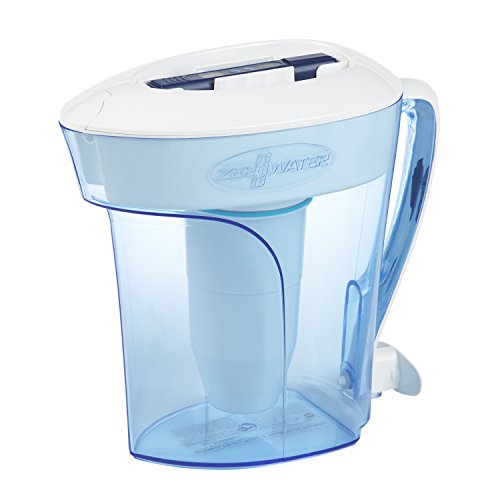 |
ZeroWater 10-Cup Pitcher Water Filter | ★★★★☆ | Check Price |
| 5 |  |
LifeStraw Home 7-Cup Water Filter Pitcher | ★★★★☆ | Check Price |
| 6 |  |
Culligan MaxClear Gravity Water Filter System | ★★★★☆ | Check Price |
| 7 |  |
iSpring RCC7 5-Stage Under-Sink Reverse Osmosis System | ★★★★☆ | Check Price |
Picking the Right Budget Water Filter
Choosing a budget water filter comes down to 3 checks: the contaminant claim you need, how long the filter lasts, and the type that fits your kitchen. A filter that skips the first check can look like a bargain and still leave lead or PFAS forever chemicals in your glass.
We didn’t lab-test these filters. We picked them on these factors instead:
- Certification claims: what NSF, IAPMO or WQA certified the cartridge to reduce, as each listing states it.
- Filter life: gallons or months per filter, since a short-lived filter means more swaps.
- Capacity and fit: cups per fill, shelf depth and whether it needs plumbing.
- Setup: pour-and-go pitchers beat installs for renters, while homeowners can plumb one in.
5 of the 7 picks also appear in the top-ranking reviews for this search. The order follows our overall rating, from the best all-rounder down.
1. Brita Everyday Elite 10-Cup Water Filter Pitcher
Brita Everyday Elite 10-Cup Water Filter Pitcher
A 10-cup, BPA-free pitcher whose Elite filter is listed to reduce 99% of lead, plus chlorine taste and odor, cadmium, mercury, benzene and asbestos, with a filter change about every 6 months.
Pros
- Elite filter listed to reduce 99% of lead
- New filter only about twice a year
- Electronic indicator tracks filter life
- Fits most fridges at 10.7 inches tall
- One fill tops up 3 24-ounce bottles
Cons
- Listing makes no PFAS reduction claim
- 10 cups means frequent refills for big families
The Brita Everyday Elite is the best budget water filter for most renters, couples and small families who drink straight from the fridge. Skip it if PFAS is your main worry, because this listing makes no PFAS claim.
The Elite filter is listed to reduce 99% of lead and only needs changing about every 6 months. That’s 2 filters a year instead of 6 two-month filters, which is where a pitcher quietly saves you money.
In fact, switching to Elite filters replaces 1,800 single-use 16.9-ounce bottles a year, according to the Brita listing on Amazon. The same filter also cuts chlorine taste and odors, cadmium, mercury, benzene and asbestos.
Compared with the PUR Plus (#2), the Brita holds 3 more cups per fill. The PUR, though, adds a Total PFAS claim on some filter options.
An electronic indicator counts down filter life, so you don’t have to remember the install date. In other words, it’s the set-and-forget pitcher of the group.
2. PUR Plus 7-Cup Water Filter Pitcher
PUR Plus 7-Cup Water Filter Pitcher
A slim 7-cup pitcher whose PUR Plus filter is IAPMO certified to reduce lead and certified to reduce 5x more substances than the leading Brita pitcher filter.
Pros
- IAPMO certified to reduce lead
- Certified for 5x more substances than a leading Brita filter
- Genuine PUR Plus filter options cover Total PFAS and microplastics
- Slim shape fits most fridge doors
- Stay-tight lid lets you pour while it filters
Cons
- Holds just 7 cups
- Only genuine PUR filters are certified for it
The PUR Plus 7-Cup is the pick for renters with a packed fridge who still want a lead claim backed by a third party. Skip it if you fill several bottles a day, since 7 cups go fast.
PUR says the Plus filter is IAPMO certified to reduce lead, and certified to reduce 5x more chemical and physical substances than the leading Brita pitcher filter. IAPMO is an independent certifier, like NSF, so the claim was checked by someone other than PUR.
Genuine PUR Plus filter options are also certified to reduce Total PFAS and microplastics from your water, the listing adds. That Total PFAS claim is one the Brita Elite listing doesn’t make, in a pitcher slim enough for most fridge doors.
The stay-tight lid is a small but useful touch. You can pour while the top reservoir is still filtering, without the lid sliding off.
The catch?
Only genuine PUR filters are certified for this pitcher, so cheaper knockoff cartridges throw away the very claim you bought it for. Stick with PUR Plus filters when you reorder.
3. Waterdrop WFD-40L Water Filter Dispenser
Waterdrop WFD-40L Water Filter Dispenser
A 35-cup fridge dispenser with a carbon fiber filter rated for 200 gallons or 2 months, certified to NSF 42 and 372, with up to 97.4% chlorine reduction in third-party lab tests.
Pros
- Holds 35 cups, 19 of them in the main body
- Filter rated for 200 gallons or 2 months
- Up to 97.4% chlorine reduction in lab tests
- Spigot plus a sliding refill cover
- Built-in filter change indicator
Cons
- Does not lower TDS
- Needs about 14.4 inches of shelf depth
The Waterdrop WFD-40L is the budget water filter for families who drink a lot of water and hate refilling a pitcher. Skip it if your fridge shelves are shallow, because the tank runs about 14.4 inches long.
It holds 35 cups, with 19 cups in the main body, and its carbon fiber filter is rated for 200 gallons or 2 months. Waterdrop says the water is fully filtered within 5 minutes, which keeps up with a busy kitchen.
Its replacement filter is certified to NSF 42 and 372, and third-party lab tests found chlorine reduction of up to 97.4%. So treat it as a taste, odors and chlorine filter first, not a lead filter like #1 or #2.
The spigot and sliding refill cover save you from lifting a full jug every time. A built-in indicator tells you when the filter is due.
One thing to know before you buy: this system does not lower TDS, and Waterdrop says so on its own listing. If you want TDS lowered, #4 is the better match.
4. ZeroWater 10-Cup Pitcher Water Filter
ZeroWater 10-Cup Pitcher Water Filter
A 10-cup pitcher with a 5-stage ion exchange filter that is IAPMO certified to reduce PFOA/PFOS, lead, chromium and mercury, with a TDS meter in the box.
Pros
- IAPMO certified for PFOA/PFOS, lead, chromium and mercury
- Removes virtually all dissolved solids (TDS)
- TDS meter shows when the filter is spent
- BPA-free pitcher and filter
- Saves up to 110 plastic bottles per filter
Cons
- Strips minerals along with contaminants
- You time filter swaps by TDS readings
The ZeroWater 10-Cup is the pick when your tap water has a high mineral load and you want an IAPMO PFOA/PFOS claim in a pitcher. Skip it if you like the taste of minerals in your water.
TDS, or total dissolved solids, is everything dissolved in water, such as metals, minerals, salts and ions. ZeroWater uses 5-stage ion exchange filtration that removes virtually all of it, and the included TDS meter shows the result.
The ZeroWater listing on Amazon says the filter is IAPMO certified to reduce PFOA/PFOS, lead, chromium and mercury. That PFOA/PFOS claim is one the Brita Elite (#1) listing doesn’t make.
That near-zero TDS reading is also why people ask whether ZeroWater removes fluoride too. It’s worth a look if fluoride is the reason you’re shopping.
Here’s the tradeoff:
- You change filters when the meter reading rises, not on a fixed date.
- Each filter saves up to 110 single-use plastic bottles, or up to 660 a year.
- Minerals leave along with the contaminants, since TDS includes them.
Key Takeaway: Pick ZeroWater for PFOA/PFOS and TDS, and Brita for a longer-lasting filter.
5. LifeStraw Home 7-Cup Water Filter Pitcher
LifeStraw Home 7-Cup Water Filter Pitcher
A 7-cup, BPA-free pitcher that pairs a membrane microfilter for bacteria, parasites and microplastics with a carbon and ion exchange filter for lead, mercury and PFAS.
Pros
- Membrane filter removes bacteria and parasites
- Reduces lead, mercury, PFAS and chlorine
- Membrane lasts 264 gallons, about 1 year
- Keeps magnesium and potassium in the water
- Durable BPA-free plastic body
Cons
- Carbon filter needs changing every 40 gallons
- Only 7 cups per fill
The LifeStraw Home is the budget pitcher for anyone worried about microbes and microplastics as well as metals. Skip it if you want 1 filter to track instead of 2.
LifeStraw calls it the only water filter pitcher that removes bacteria and parasites, in addition to microplastics. A second filter, made of activated carbon plus ion exchange, reduces lead, mercury, PFAS, chlorine, herbicides and pesticides.
The membrane microfilter lasts 264 gallons, about 1 year, while the carbon and ion exchange filter lasts 40 gallons, about 2 months. So you’ll swap the carbon filter roughly 6 times for every membrane.
Compared with ZeroWater (#4), the LifeStraw keeps essential minerals like magnesium and potassium in your water. So it’s the better fit if you want those minerals left in.
If you want microbe protection in a pitcher, this is the one to buy.
6. Culligan MaxClear Gravity Water Filter System
Culligan MaxClear Gravity Water Filter System
A 2.25-gallon stainless steel gravity system with a ceramic and carbon filter that Culligan lists as certified to reduce microplastics, lead and Total PFAS, lasting up to 6 months.
Pros
- Listed as certified for microplastics, lead and Total PFAS
- Up to 6 months per ceramic and carbon filter
- No electricity or plumbing needed
- Takes Berkey BB9-2 and other gravity filters
- Nests under 12 inches for storage
Cons
- Needs counter space for its stand and tank
- Ships with 1 filter, and a 2nd speeds it up
The Culligan MaxClear is the pick for a big household that wants countertop capacity with no fridge space and no plumbing. Skip it if your counter is already crowded.
Culligan lists it as IAPMO certified to reduce microplastics, lead and Total PFAS. Its filter pairs a ceramic shell with carbon media and lasts up to 6 months.
Gravity systems work by letting water drip from an upper chamber through the filter into a lower tank. A gravity water filter needs no power, so it doubles as a backup for emergencies and camping trips.
Here’s what that looks like day to day:
- Fill the top chamber from your tap.
- Let the water drip through the ceramic and carbon filter.
- Pour from the spigot whenever you need a glass.
Compared with the Waterdrop (#3), the Culligan holds a similar amount without taking a fridge shelf, and each filter lasts up to 3 times longer. It also takes Berkey BB9-2 and other gravity filter replacements, so you’re not locked into 1 brand of cartridge.
If you like the brand, the wider range of Culligan water filters includes the Culligan ZeroWater pitchers too.
7. iSpring RCC7 5-Stage Under-Sink Reverse Osmosis System
iSpring RCC7 5-Stage Under-Sink Reverse Osmosis System
A 5-stage under-sink reverse osmosis system certified to NSF/ANSI 58 that makes up to 75 gallons a day and reduces up to 99% of more than 1,000 contaminants.
Pros
- Certified to NSF/ANSI 58 for reverse osmosis
- Reduces up to 99% of 1,000+ contaminants
- Cuts lead by up to 98% and reduces fluoride
- Makes up to 75 gallons per day
- Needs no electricity to run
Cons
- Needs under-sink space and a plumbing hookup
- Cuts TDS by 80-90%, minerals included
The iSpring RCC7 is the budget water filter for homeowners who want filtered water from a dedicated faucet, with no refills at all. Skip it if you rent or have no space under the sink.
The system is certified to NSF/ANSI 58, the standard for reverse osmosis. iSpring says it reduces up to 99% of more than 1,000 contaminants, including PFAS, chlorine, fluoride, arsenic and up to 98% of lead.
It makes up to 75 gallons of filtered water a day and needs no electricity to run. It also cuts TDS by 80-90%, so it removes minerals that cause scale along with the contaminants.
Compared with the Culligan MaxClear (#6), the iSpring plumbs in once and then runs on its own. That makes it the strongest choice on this list for cooking and drinking from one tap.
Not sure you can handle the hookup? Walk through how to install an under-sink water filter before you order, and browse more under-sink water filters if you want other sizes.
Do Cheap Water Filters Actually Work?
Cheap water filters work for the exact claims they’re certified for: NSF/ANSI 42 covers chlorine, taste and odor, and NSF/ANSI 53 covers health claims like lead and Total PFAS. A low-cost pitcher certified for lead reduction does more about lead than a fancier unit certified only for taste.
That’s why the label matters more than the brand name on the box.
Here’s how to check any filter in a few minutes:
- Find the exact model number on the box or the listing.
- Look it up in the NSF, IAPMO or WQA certified product search.
- Confirm the claim you need, such as lead, is listed for the cartridge you’ll buy.
If lead is the big concern in your home, compare more lead-certified water filters side by side. Then buy the cheapest one that carries that claim.
What NSF/ANSI 42, 53, 58 and 401 Cover
NSF/ANSI 42 certifies a filter for aesthetic effects like chlorine, taste and odors, while NSF/ANSI 53 certifies health effects such as lead, cysts and Total PFAS reduction. The NSF listing groups each reduction claim under the standard it belongs to.
Two more numbers turn up on budget filters:
- NSF/ANSI 58: the reverse osmosis standard, which holds nitrate/nitrite, fluoride and TDS reduction claims. The iSpring RCC7 (#7) is certified to it.
- NSF/ANSI 401: the emerging compounds standard, where microplastics reduction is certified.
You’ll also see IAPMO and WQA, the Water Quality Association, on listings like the PUR Plus (#2) and ZeroWater (#4). They’re independent certifiers too, so check which standard they certified the filter to.
Match the standard to your problem, not the number of badges on the box. A taste-only 42 rating is fine for chlorinated city water, but it isn’t proof of lead or PFAS reduction.
Pitcher, Faucet Mount or Under-Sink?
A pitcher is the better budget water filter if you rent or want zero installation, while a faucet mount suits you better if you use more water than a pitcher holds. An under-sink system like the iSpring RCC7 (#7) is best when you own the home and want filtered water for cooking too.
Here’s how each type stacks up:
- Pitchers and dispensers (#1 to #5): pour-and-go, fit the fridge and hold 7 to 35 cups.
- Faucet mounts: filter straight from the tap, though they don’t fit every faucet.
- Countertop gravity (#6): large capacity with no plumbing or power.
- Under-sink (#7): a separate faucet, plumbed once and refilled never.
All 7 picks are point-of-use water filters, which treat water at one pitcher or tap instead of the whole house.
No faucet mount made our list, because the units we looked for showed up on Amazon only as replacement cartridges. You can still compare faucet water filters or pick a water filter for an apartment that won’t break a lease.
For the pitcher side, the full range of water filter pitchers goes beyond budget models. And if you’re weighing every option, start with the main types of drinking water filters.
How Long Budget Water Filter Cartridges Last
Budget water filter cartridges on this list last from 40 gallons, about 2 months, up to about 6 months, and the LifeStraw membrane runs about a year. Gallon ratings and month ratings both count, so swap at whichever comes first.
Here’s how the picks compare:
- Brita Everyday Elite (#1): about 6 months per Elite filter.
- Waterdrop WFD-40L (#3): 200 gallons or 2 months.
- ZeroWater 10-Cup (#4): when the TDS meter says so.
- LifeStraw Home (#5): 40 gallons for the carbon filter, 264 gallons for the membrane.
- Culligan MaxClear (#6): up to 6 months per filter.
The filter that lasts longest usually wins on value, as long as it carries the claim you need. Set a phone reminder the day you install a new cartridge, and keep 1 spare on hand.
Different housings take different cartridges, so learn the main water filter cartridge types before you stock up.
Budget Filters and Well Water
For well water, a budget filter only helps once you know what’s in the well, because nitrate, fluoride and TDS reduction are reverse osmosis claims under NSF/ANSI 58. The iSpring RCC7 (#7) is the one pick here certified to that standard.
So start with a water test. A home kit or a certified lab will show which contaminants you’re dealing with, and then you can match each one to a claim.
Pitchers and dispensers aren’t sized for a whole household on well water. If your well needs more than drinking water treatment, compare well water filtration systems built for the whole house.
Treat every pick here as a way to improve potable water, not a fix for a well you haven’t tested.
Key Takeaway: Test the well first, then buy the filter certified for what the test finds.
Frequently Asked Questions
What is the best budget water filter?
The Brita Everyday Elite 10-Cup pitcher is the best budget water filter for most people, since its Elite filter is listed to reduce 99% of lead and lasts about 6 months. If PFOA/PFOS is your concern, the ZeroWater 10-Cup carries that IAPMO claim instead.
Does a budget water filter remove lead?
A budget water filter removes lead only if it is certified for lead reduction, which NSF lists as a health-effects claim under NSF/ANSI 53. On this list, the Brita Everyday Elite, PUR Plus and ZeroWater pitchers carry lead claims, so check the cartridge listing before you buy.
Can a budget water filter remove PFAS?
Yes, a budget water filter can reduce PFAS when it is certified for it, and NSF lists Total PFAS Reduction as one of its health-effects claims. The ZeroWater 10-Cup is IAPMO certified for PFOA/PFOS, and genuine PUR Plus filter options are certified for Total PFAS.
Is ZeroWater better than Brita?
ZeroWater is better than Brita for TDS and PFOA/PFOS, because its 5-stage ion exchange filter removes virtually all dissolved solids and carries an IAPMO PFOA/PFOS claim. Brita Elite is better for low upkeep, with one filter lasting about 6 months and a 99% lead claim.
Should I test my water before buying a water filter?
Yes, test your water before buying a filter, because each certification covers specific contaminants and you need to know which ones you have. Use a home test kit or a certified lab, then pick the filter certified for what the results show.
Which budget water filter lasts the longest between changes?
The LifeStraw Home membrane lasts the longest at 264 gallons, about 1 year, though its carbon filter needs changing every 40 gallons. Among single-filter picks, the Brita Everyday Elite and Culligan MaxClear each go about 6 months per filter.
Final Thoughts
Certification decided these picks more than anything else. The Brita Everyday Elite takes the top spot for most homes because one 6-month filter covers lead, while the ZeroWater 10-Cup is the one to grab for PFOA/PFOS and high TDS.
Pull up your water test or utility report this week, find the contaminant you care about most, and buy the first filter on this list certified for it.