A 32 oz bottle can stand shorter than a 24 oz one.
Owala’s own FreeSip lineup shows it: the 32 oz model is 10.66 inches tall, and the 24 oz is 10.68 inches.
So “how tall is a water bottle?” really comes down to which bottle you mean.
Below are real heights for every common size, in inches and centimeters.
You’ll also get the widths and other dimensions that decide whether a bottle fits your cup holder, bag or fridge door.
How Tall Is a Standard 16.9 oz Water Bottle?
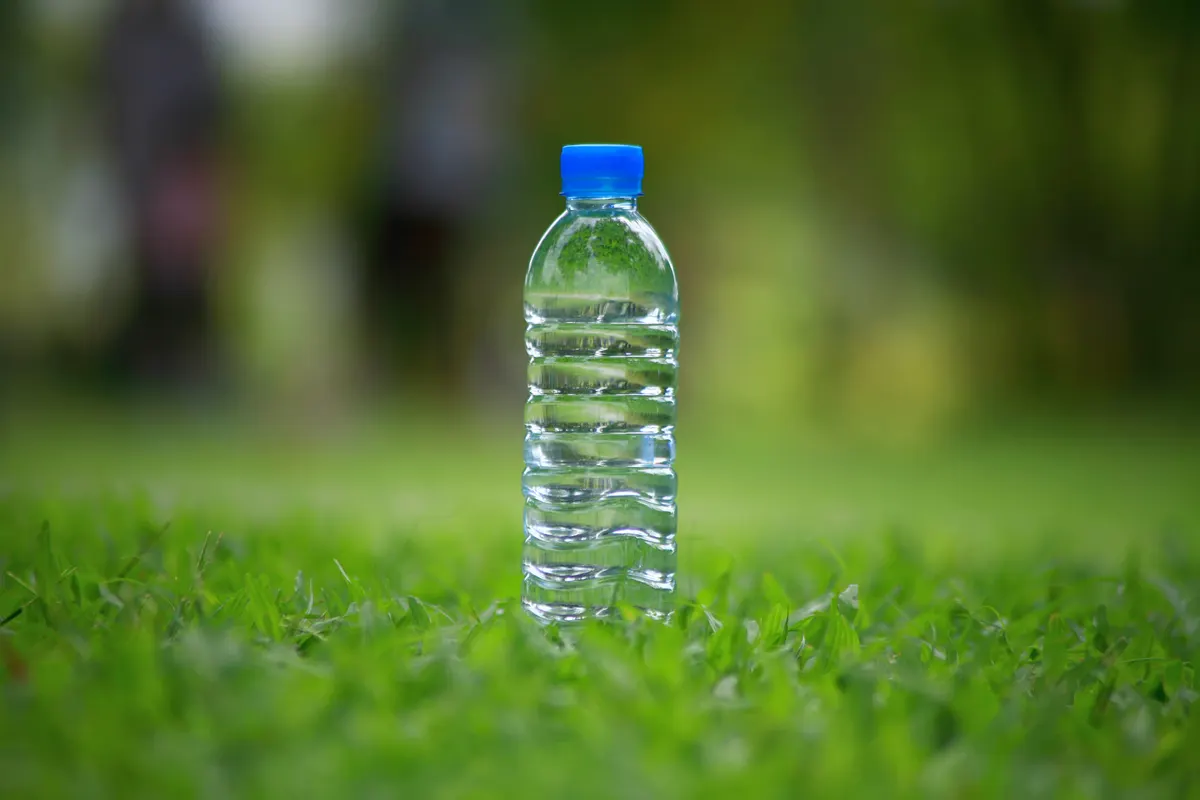
A standard 16.9 oz (500 mL) single-use water bottle is about 8 inches (20.3 cm) tall and 2.5 inches (6.35 cm) wide, according to the Dimensions.com reference database.
That’s the clear plastic bottle you grab from a cooler or a vending machine.
Once it’s empty, you can recycle that bottle or turn it into the body of a DIY survival filter.
The entry was last updated on September 27, 2026.
But not every 16.9 oz bottle matches those measurements to the inch.
BottleYourBrand, which sells custom-label bottled water, lists its own 16.9 oz bottle at 8.25 inches tall and 2.25 inches wide.
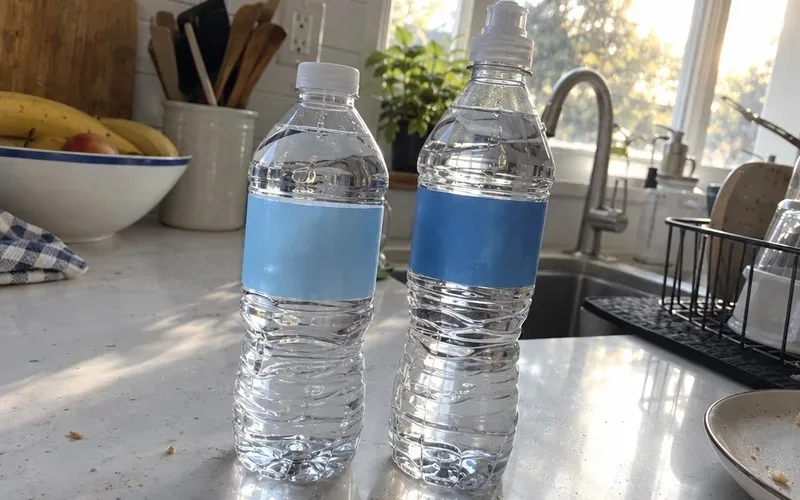
Why the quarter-inch gap?
A taller bottle cap, a longer neck or a slimmer body can each add height without adding a drop of capacity.
So plan on 8 to 8.25 inches for any standard 16.9 oz plastic bottle.
Keep in mind that 16.9 oz is a capacity, not a size.
That’s why how many ounces a bottle holds and how tall it stands are 2 separate questions with 2 separate answers.
How Tall Is a 500 mL Water Bottle in cm?
A 500 mL water bottle is about 20.3 to 21 cm tall, which is the same 8 to 8.25 inches converted to centimeters.
Metric numbers help when the space you’re checking was measured in centimeters, like a drawer, a shelf or a bag listing from an overseas brand.
Round up to 21 cm when the space is tight. Those extra few millimeters cover a taller cap.
Water Bottle Heights by Size
Water bottle height runs from about 5 inches for an 8 oz bottle to roughly 9 inches for a 20 oz bottle, per BottleYourBrand’s listings and Owala’s size guide.
Here’s a chart of how the common smaller sizes compare:
| Bottle size | Height (in) | Height (cm) | Width (in) |
|---|---|---|---|
| 8 oz (237 mL) | 5 | 12.7 | 2.25 |
| 12 oz (355 mL) | 6.25 | 15.9 | 2.25 |
| 16.9 oz (500 mL) | 8 to 8.25 | 20.3 to 21 | 2.25 to 2.5 |
| 20 oz (591 mL) | 8.9 | 22.6 | Not listed |
Notice the jump: going from 12 oz to 16.9 oz adds 2 inches of height, but going from 16.9 oz to 20 oz adds less than 1 inch.
So the bottle sizes in the middle are closer together than their ounces suggest.
How Tall Is an 8 oz Water Bottle?
An 8 oz water bottle is about 5 inches tall and 2.25 inches wide, per BottleYourBrand’s listing for its own 8 oz bottled water.
That’s short enough for a lunchbox, a purse or a small kid’s backpack.
It’s the shortest size in the seller’s lineup, a full 3 inches shorter than its 16.9 oz bottle.
How Tall Is a 12 oz Water Bottle?
A 12 oz water bottle is about 6.25 inches tall, with the same 2.25-inch width as the 8 oz size in the seller’s lineup.
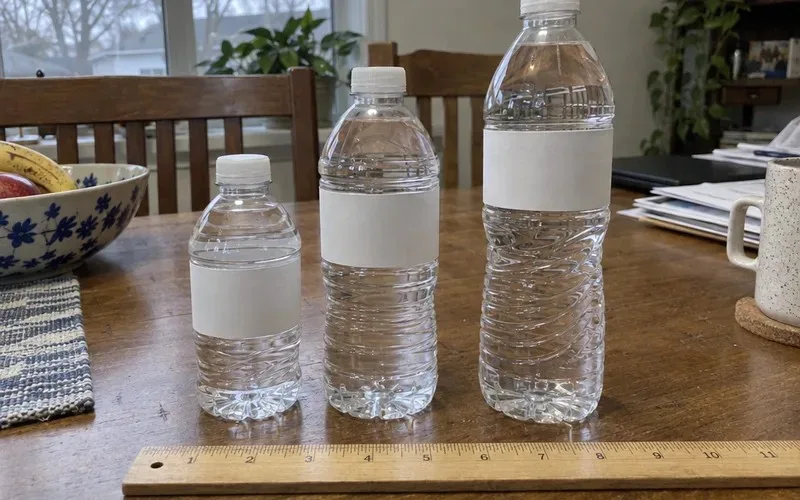
Same width, more height, and the same 12 oz a soda can holds.
In other words, the extra 4 ounces go straight up, which is why a 12 oz bottle still slides into the same narrow pockets as an 8 oz one.
How Tall Is a 20 oz Water Bottle?
A 20 oz water bottle measures about 8.9 inches tall, according to bottle brand Owala’s size guide, which also says it holds 2.5 cups.
That’s under 1 inch taller than a standard 16.9 oz bottle, for about 3 extra ounces at the gym or your desk.
Not bad.
How Tall Are Reusable Water Bottles?
Reusable water bottles in the 19 to 40 oz range stand about 9.9 to 11.6 inches tall, based on the heights Owala lists for its own FreeSip bottles.
Here’s the full FreeSip lineup, with each height converted to centimeters:
| FreeSip size | Height (in) | Height (cm) |
|---|---|---|
| 19 oz | 9.88 | 25.1 |
| 24 oz | 10.68 | 27.1 |
| 25 oz (Tritan) | 9.87 | 25.1 |
| 32 oz | 10.66 | 27.1 |
| 40 oz | 11.64 | 29.6 |
Compare that with single-use plastic.
The 19 oz FreeSip is almost 1 inch taller than the brand’s 8.9-inch figure for a 20 oz bottle, even though it holds less water.
Owala published these heights on May 1, 2023, so check the current product page before you buy a specific model.
Filter bottles add one more variable, since a stainless steel filter bottle has to fit a cartridge inside its body.
Reusable bottles can stand an inch or more taller than disposable ones of similar capacity. Never size one from a plastic bottle chart.
Why Capacity Doesn’t Predict Height
Capacity doesn’t predict a water bottle’s height because brands change the width and shape too, and the FreeSip numbers prove it.
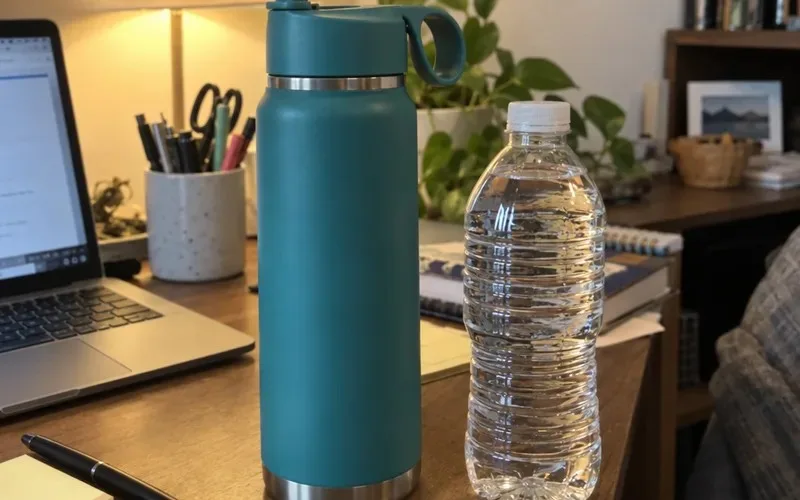
Its 32 oz FreeSip is 10.66 inches tall, while the 24 oz version is 10.68 inches.
The 32 oz bottle holds 8 more ounces at the same height, so its body has to be wider, and that extra water adds weight you’ll feel in a bag.
Material changes the numbers too.
The 25 oz FreeSip, the only Tritan plastic size, is 9.87 inches tall, almost an inch shorter than the 24 oz stainless steel version.
Add-ons change the design and shape too.
A fruit infuser bottle carries a rod or basket inside, so check its listed height instead of assuming it matches a plain bottle.
In other words, check the listed height, not the ounces, when space is tight.
How Wide Is a Water Bottle?
A standard 16.9 oz water bottle is about 2.25 to 2.5 inches (5.7 to 6.35 cm) in diameter, per BottleYourBrand and Dimensions.com.
The smaller 8 oz and 12 oz bottles share that 2.25-inch width in the seller’s lineup.
Diameter matters more than height in one spot most people use daily: the car cup holder.
Will a Water Bottle Fit in a Car Cup Holder?
A water bottle fits a car cup holder when its widest point is narrower than the holder’s opening. So compare the bottle’s diameter with the holder, not its height.
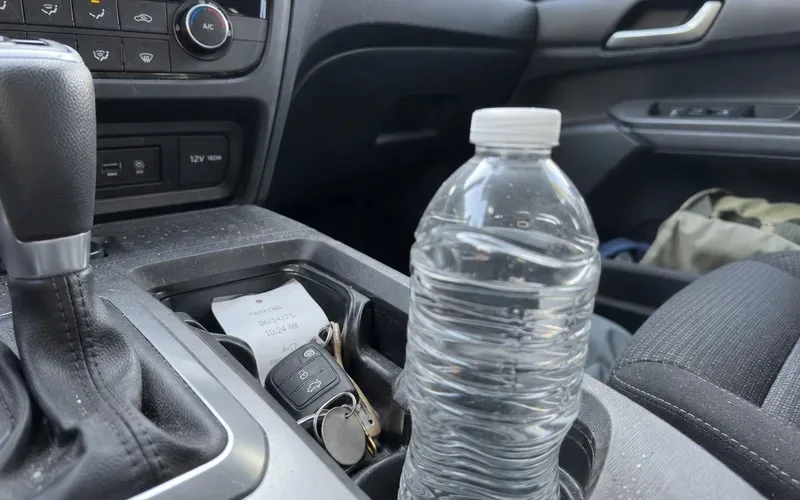
Here’s how to check both dimensions in 2 minutes:
- Measure straight across the top of the cup holder opening with a ruler or tape measure.
- Measure the bottle at its widest point with calipers or a ruler. That’s often the lid or the base.
- If the bottle is wider, look for a model with a narrower base that drops into the holder.
Height still matters in a vehicle, though.
Door pockets and center consoles have their own limits, so measure those the same way before you buy a tall 40 oz bottle.
How to Measure a Water Bottle’s Height
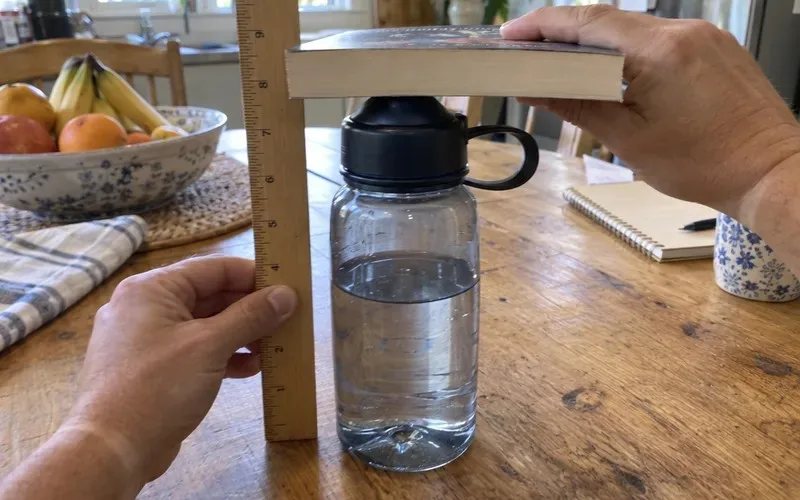
You measure a water bottle’s height by standing it on a flat surface with the cap closed. Then measure from the base to the highest point of the lid.
Here’s the simple version:
- Close the cap, and flip up any handle or carry loop if you need the tallest number.
- Stand the bottle on a flat table, not a soft surface or a counter edge.
- Hold a ruler or tape measure straight up beside it.
- Lay a book flat on top of the lid and read the ruler where the book’s bottom edge sits.
The book trick matters because a domed or angled lid makes it hard to see where the top really is, which throws off your measurements.
Brands may list height with or without the lid. If a listing doesn’t say, measure your own bottle or ask the seller before you order.
Why Are Water Bottles 16.9 oz?
A 16.9 oz water bottle is a 500 mL bottle labeled in US fluid ounces: 500 mL converts to 16.9 oz, not 17, so the label shows the odd number.
The math is simple.
One US fluid ounce is about 29.57 mL, and 500 divided by 29.57 equals 16.9.
The same math explains another odd label: 33.8 oz is 1 liter, or exactly 2 standard bottles.
You can turn any bottle size in mL into ounces the same way, by dividing by 29.57.
That’s why a 16.9 oz bottle and a 500 mL bottle are the same bottle with two labels.
Which Water Bottle Size Fits Where?
The best water bottle size for a spot depends on how tall that space is. Small bags suit 8 and 12 oz bottles (5 to 6.25 inches), while 32 to 40 oz reusable bottles (10.7 to 11.6 inches) suit long days out.
Here’s a quick way to match them:
- Lunch bag or purse: 8 oz or 12 oz, at 5 to 6.25 inches.
- Desk or refrigerator door: 16.9 oz, at about 8 inches.
- Gym bag: 20 to 24 oz, at 8.9 to 10.7 inches.
- Hiking or a long drive: 32 to 40 oz, at 10.7 to 11.6 inches.
Say your backpack’s side pocket is 9 inches deep.
A 20 oz bottle at 8.9 inches fits, but a 24 oz FreeSip at 10.68 inches sticks out almost 2 inches and can tip out while hiking, since a taller bottle has a higher center of gravity.
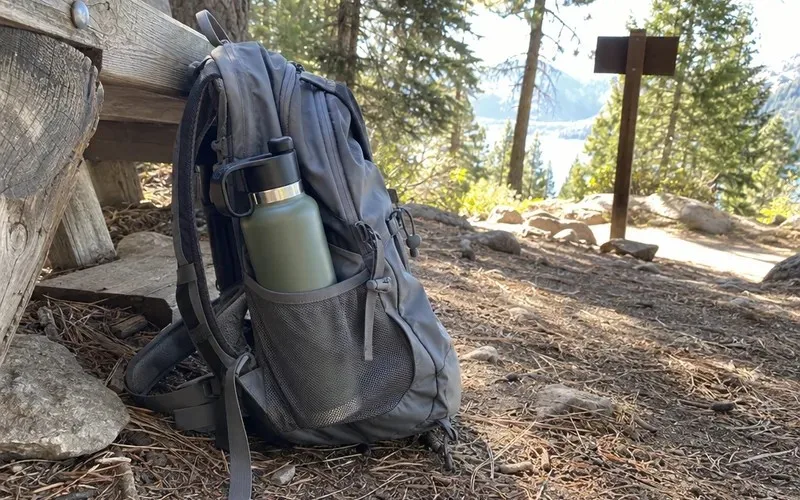
Refilling from streams on the trail? Size the bottle for the distance between water sources, and pack a water filter straw to drink from each refill.
Packing for a flight instead? Pick the bottle that fits your carry-on pocket, then empty it before security.
How to Choose a Water Bottle Size
The best way to choose a water bottle size is to measure the space first, then match it to a listed height and diameter.
Start with the spot you use most: your cup holder, bag pocket or fridge door.
Then pick the bottle that clears that space by at least 0.25 inches, so a taller cap or a flip-up handle never surprises you.
Frequently Asked Questions
A 7-inch water bottle sits between two standard sizes: BottleYourBrand lists its 12 oz bottle at 6.25 inches and its 16.9 oz bottle at 8.25 inches. So a 7-inch bottle usually holds more than 12 oz but less than 16.9 oz, and the label will tell you exactly.
32 ounces is about 946 mL, or 4 cups, which is just under 1 liter. As a bottle, Owala lists its 32 oz FreeSip at 10.66 inches tall.
A standard 16.9 oz water bottle holds about 2.1 cups of water, since 1 US cup is 8 fluid ounces. A 20 oz bottle holds 2.5 cups, according to Owala’s size guide.
A straw-lid water bottle like Owala’s FreeSip stands 9.87 to 11.64 inches tall, from the 25 oz Tritan size up to the 40 oz stainless steel size. If you need the tallest point, flip the straw or handle up before you measure.
A standard 16.9 oz water bottle is about 0.2 meters tall, or 20.3 cm. Even a 40 oz reusable bottle at 11.64 inches comes in under 0.3 meters.
Reusable water bottles can stand taller than single-use plastic bottles of similar capacity. Owala lists its 19 oz FreeSip at 9.88 inches, while its size guide puts a 20 oz bottle at 8.9 inches.