Watching your favorite bottle go into the trash bin at the checkpoint is a lousy way to start a trip, and it’s why so many travelers ask if they can bring an empty water bottle on a plane at all.
In this guide, you’ll get the exact rule, a simple routine that gets your bottle through, and the few places where even an empty one gets taken.
Here’s how to jump to what you need:
- Flying out of a US airport this week? Start with the step-by-step routine.
- Packing a big jug, a steel bottle or a Stanley? Go to the bottle types section.
- Heading to Australia or another route with a gate check? Read the international section first.
Let’s dive right in.
Can You Bring an Empty Water Bottle on a Plane? The TSA Rule
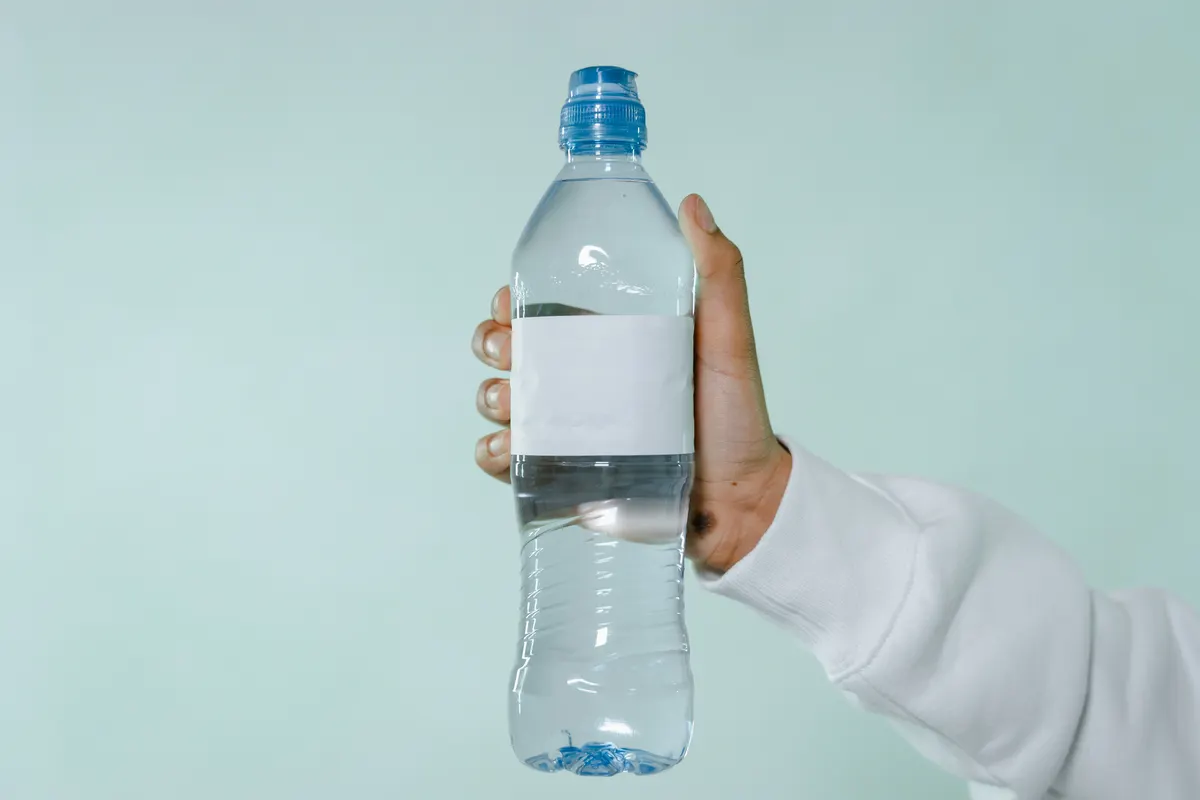
An empty water bottle is allowed through airport security in the US in any size and any material, as long as nothing is left inside. The Transportation Security Administration (TSA) limits the liquid you carry, not the container that holds it.
That liquid limit is the 3-1-1 rule, which also covers gels, aerosols, toothpaste and sunscreen. According to Mental Floss (updated in 2023), travelers can carry 3.4 ounces of liquid per container in a 1-quart bag, with one bag per passenger.
So a full 24 oz bottle fails the rule, but an empty one is just another item in your bag. Empty is the whole trick.
The water bottle itself never breaks a rule. What matters is the state it’s in when it reaches the X-ray conveyor belt, and the checkpoint treats each state a little differently:
| Your bottle | At the TSA checkpoint | What to do |
|---|---|---|
| Empty, any size | Allowed | Fill it after security |
| Full, over 3.4 oz | Not allowed | Drink or dump it first |
| 3.4 oz or less | Allowed in your quart bag | Pack it with your liquids |
| Frozen solid | Allowed | Keep it fully frozen |
| Slushy or half-melted | Not allowed | Dump it before the line |
Bottom line: if you can turn the bottle upside down and nothing comes out, you’re set. Every other row on that chart takes planning.
What “Completely Empty” Means at the Checkpoint
A water bottle counts as completely empty when there’s no water, no ice and no slush inside it as it goes through the X-ray machine. Even a few sips left at the bottom still count as a liquid, so an officer can ask you to pour them out.
That’s the part people miss. A bottle you drank from in the car can still hold an inch of water, and you won’t notice it until the bag gets pulled for an inspection.
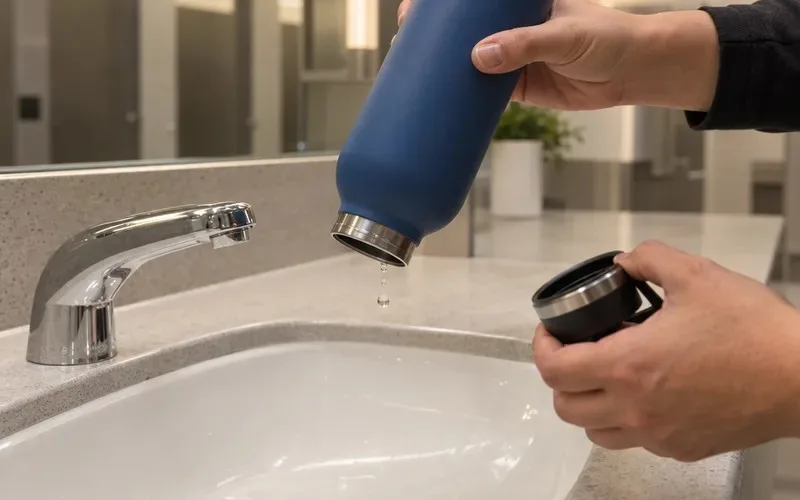
Ice is the other trap. Cubes rattling around from this morning’s iced water will melt into a liquid, so they need to go before the line, too.
Here’s the simple test I recommend before you leave the curb. Open the cap, tip the bottle over a sink or trash can, and give it a hard shake.
If anything drips out, it isn’t empty yet.
Leave the cap off when you place the bottle in the bin. An open, empty bottle is easy for an officer to check, which keeps your bag moving.
How to Get Your Empty Bottle Through Security, Step by Step
Getting an empty water bottle through airport security takes four moves: empty it, check it for ice, pack it within reach, and fill it after the checkpoint. Here’s the full routine:
- Drink or dump it before the line. Use a restroom sink or a trash can before security, so you’re not stuck holding a full bottle at the bin.
- Check for ice. Shake the bottle and listen. If you hear rattling, dump the ice too.
- Pack it where you can reach it. A side pocket works best, so you can pull it out fast if an officer asks.
- Fill it after screening. Head for a drinking water fountain or bottle-filling station once you’re through.
That last step is the payoff. Mental Floss notes you can bring a completely empty bottle through and fill it after the screening, which it calls the more environmentally conscious choice.
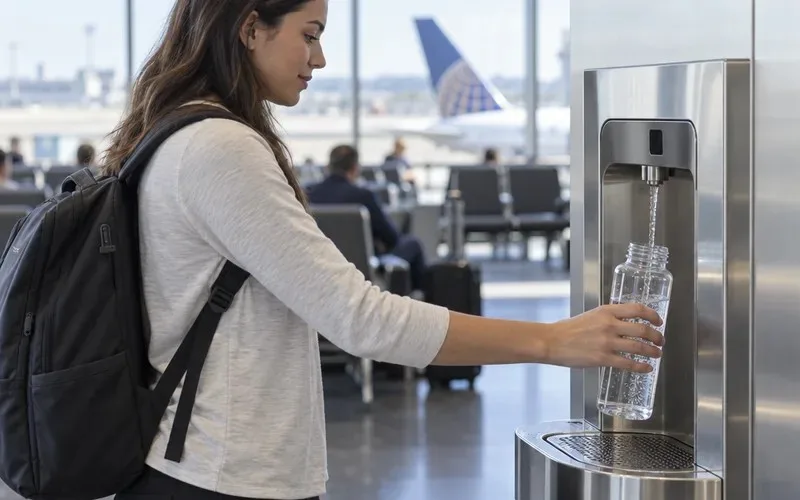
So what happens if an officer stops you anyway? Stay calm and keep it short, because an empty bottle breaks no rule.
Here’s what to say:
“It’s empty. I’m going to fill it at a fountain after security. You’re welcome to check it.”
A common slip is a forgotten bottle, still full at the bottom of a backpack from yesterday’s hike.
The fix: check every pocket of every bag the night before, not just the one you usually use.
Which Water Bottles You Can Take on a Plane
Any type of empty water bottle can go through TSA screening, including plastic, metal, stainless steel, glass, insulated tumblers and collapsible bottles. The rule is about the liquid, so the material doesn’t change the answer.
That said, the bottle you pick changes how easy your travel day feels.
Metal and Stainless Steel Bottles
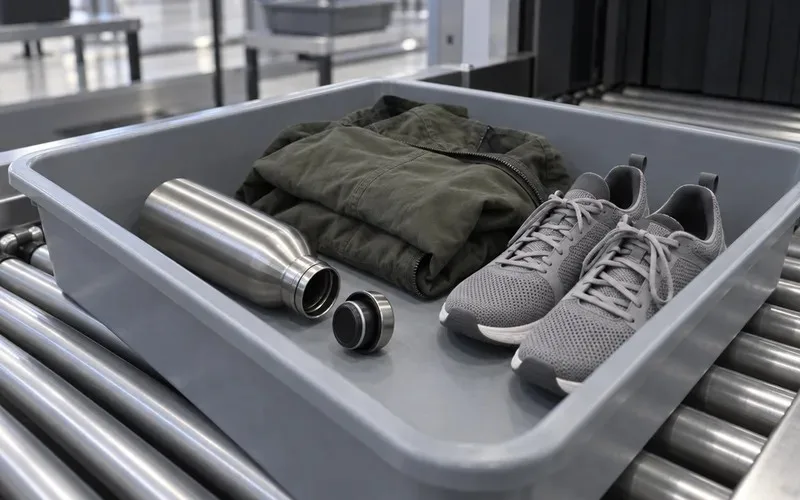
An empty metal or stainless steel water bottle is allowed through security, just like a plastic one. This question comes up all the time in travel forums, since you can’t see through steel the way you can with clear plastic.
If an officer wants to check it, they can open it, see nothing inside and hand it back.
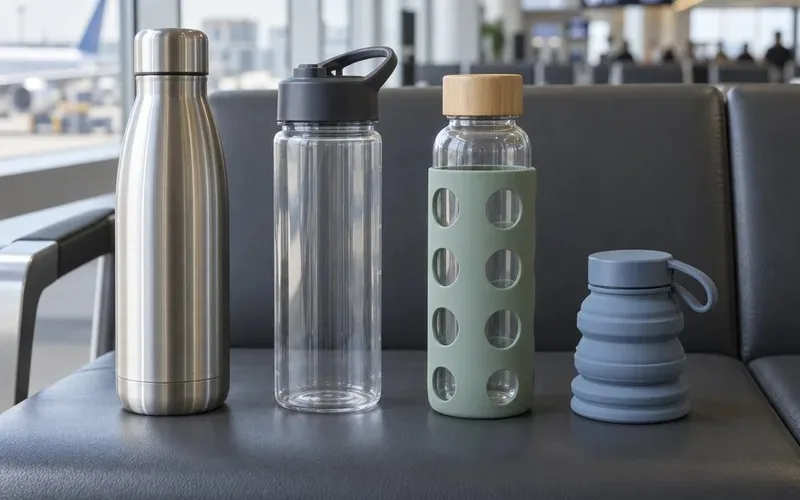
Insulated steel is great on long flights, because it keeps the water you fill after security cold for hours. Skip it if you pack ultralight, since steel adds weight that a collapsible bottle doesn’t.
Big Bottles: 40 oz, 64 oz and Gallon Jugs
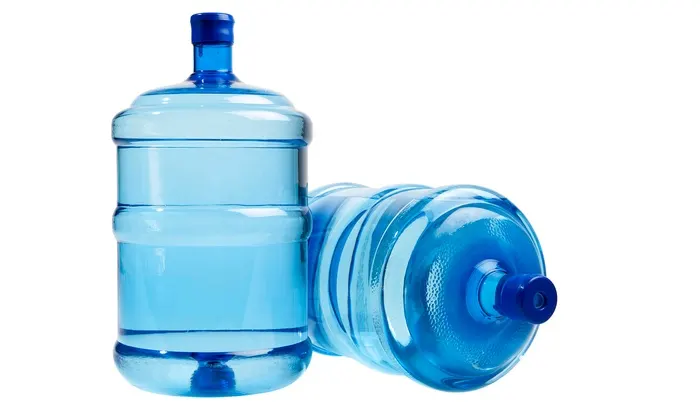
An empty 64 oz water bottle is allowed through TSA airport security, because size only matters when the bottle has liquid in it. The same rule covers a 40 oz tumbler or an empty gallon jug.
The real limit is your bag. A 64 oz bottle takes up a big chunk of a small personal item, so pack it in your larger carry-on luggage instead.
Stanley Tumblers and Other Insulated Cups
An empty Stanley tumbler, such as the Quencher H2.0, goes through security the same way as any other empty bottle or vacuum flask. Stanley’s own travel page says a 40-ounce tumbler is generally allowed on a plane, and it suggests checking your airline’s rules on drinkware.
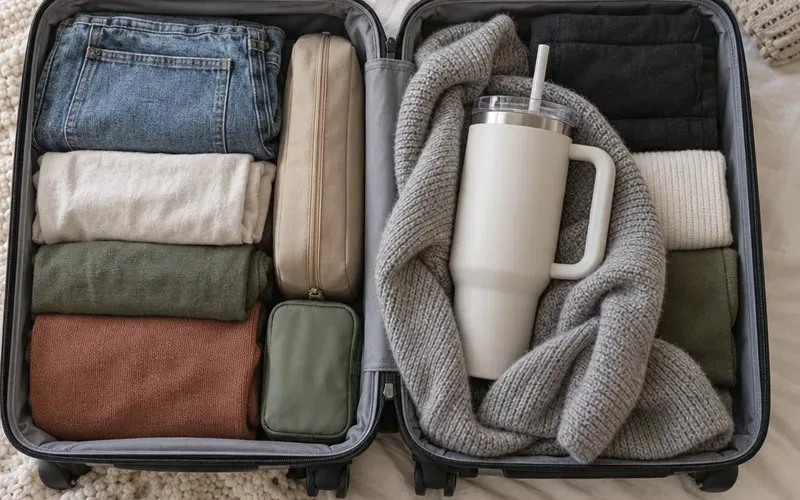
A tumbler that size eats bag space, so check your airline’s carry-on size page before you fly. Stanley also suggests wrapping drinkware in soft clothing or a protective case so it doesn’t get damaged in your bag.
The Best Bottle Type for Flying
The best water bottle for flying depends on your trip: collapsible for light packers, insulated steel for long flights, and cheap plastic if you might lose it. Here’s how they compare:
| Bottle type | Best for | Skip it if |
|---|---|---|
| Collapsible silicone | Light packers, small bags | You want cold water for hours |
| Insulated stainless steel | Long flights, cold water | You pack ultralight |
| Plastic reusable | Budget trips, kids | You want it to last for years |
| Glass | Short, calm trips | You’re rushing through busy airports |
If you only buy one bottle for travel, I’d pick an insulated steel bottle with a leak-proof lid.
Can You Bring a Frozen Water Bottle on a Plane?
A frozen water bottle can go through TSA screening only if the ice is frozen completely solid when you reach the checkpoint. According to Mental Floss, TSA allows frozen liquids so long as they’re completely solid, and anything mushy or half-melted gets tossed.
That’s harder than it sounds. A bottle that leaves your freezer rock-hard can start melting in a warm car, a long check-in line or a slow security queue.
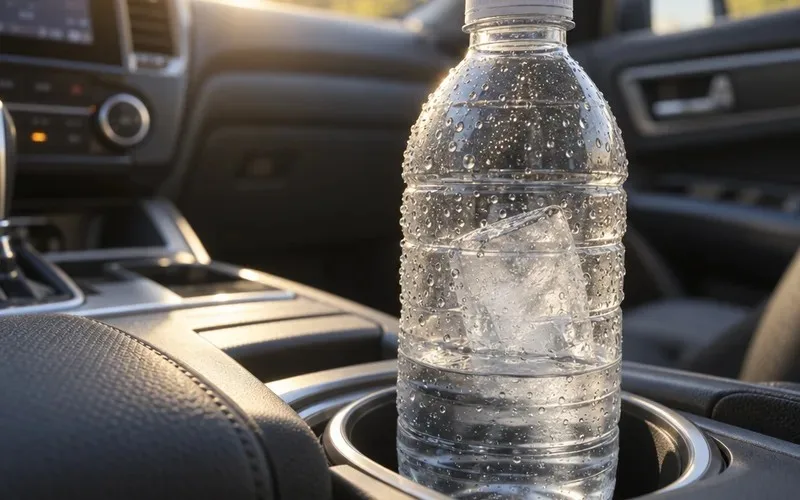
Once there’s slush in the bottom, it’s a liquid again, and you’ll have to dump it at the bin.
So who should try the frozen trick? It fits travelers with a short drive to the airport, a cool day and a fast security line.
Skip it if you’re flying from a hot city in summer or your airport run takes a while. For most people, an empty bottle you fill after security is the safer bet, with no slush and no surprise at the bin.
Where to Fill Your Water Bottle After Security
You can fill an empty water bottle after security at fountains, bottle-filling stations and airport restaurants, or on the plane by asking a flight attendant. Fountains and filling stations usually sit near restrooms and gate areas, so check there first.
Your first step: open your airport’s website or app before you fly and search the terminal map for “water fountain” or “filling station.”
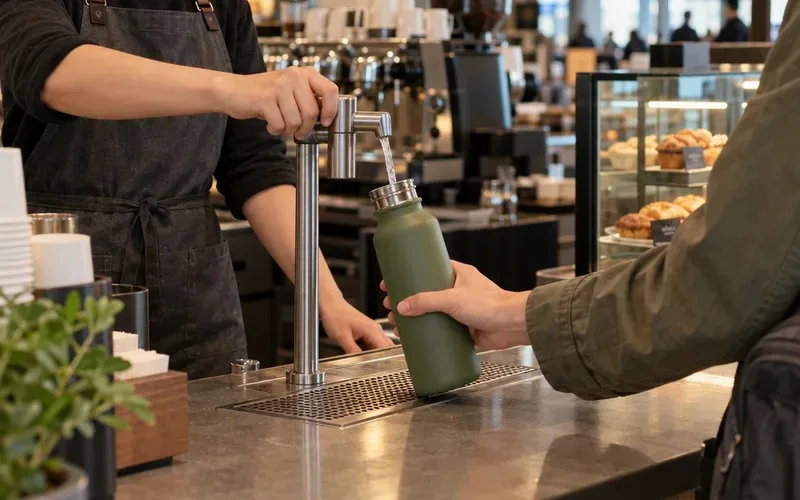
No fountain near your gate? Restaurants and coffee shops past security may fill a bottle with tap water if you ask nicely.
Here’s what to say: “Could you fill this with tap water, please? I’m happy to pay if there’s a charge.”
Asking a Flight Attendant for a Refill
Flight attendants will usually fill your water bottle on board if you ask during the drink service or at a quiet moment near the galley.
Here’s a simple script: “Hi, could you fill my bottle with water when you get a chance? Thanks so much.”
On short flights the crew may not have time for refills. Fill up at the airport first and treat the onboard refill as your backup plan.
Empty Water Bottles on International Flights
An empty water bottle is allowed through security on most international flights. Some routes, though, add a second bag check at the gate that can take even an empty bottle, and flights bound for Australia are a common example.
A traveler on the Australian Frequent Flyer forum described one case. Security took their empty, clear 500 mL plastic bottle at an extra bag check on the jet bridge as they boarded a LATAM flight from Santiago, Chile, to Australia.
Other members reported similar gate checks in Abu Dhabi, Hong Kong, Doha and Jakarta, while some carried bottles through with no trouble.
That inconsistency is the real lesson. You can’t predict which officer you’ll get, so plan as if the strictest rule applies.
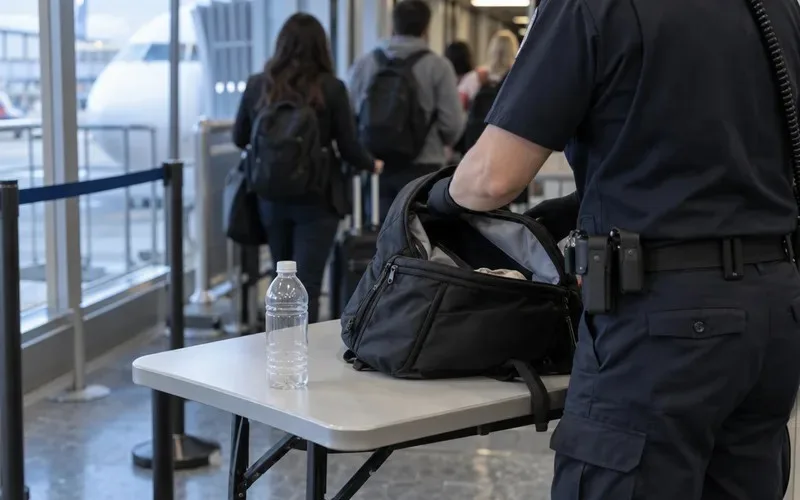
On any flight with a gate check, such as some flights to Australia, keep the bottle empty until you board, then ask the crew to fill it once you’re seated.
The main checkpoint at an international airport has its own liquid limit, often the same 100 ml (3.4 oz) cap. Rules are set country by country, though, so check your departure airport’s security page before you fly.
Why TSA Is So Strict About Water Bottles
TSA is strict about water bottles because its liquid limits are designed to stop liquid explosives, and the rule covers every liquid, including plain water.
The rule has a specific origin, which former CIA official Steve Hersem explained to Mental Floss in 2018. “The banning of a certain quantity of liquids from airline flights in 2006 was the direct result of the intelligence uncovered during Operation Overt,” he said.
Operation Overt broke up a plot to hide liquid explosives in drink bottles that looked unopened. It’s one reason a sealed bottle of water from the store gets no pass at the checkpoint.
The small container size is part of the defense, too. Mental Floss explains that the 3.4 oz cap limits how much potentially explosive liquid anyone can carry on board.
Arguing at the bin won’t change any of that. Empty the bottle before the line, and the rule never touches you.
The Bottom Line on Empty Water Bottles
An empty water bottle is one of the easiest things to bring on a plane. Empty it before security, fill it after, and keep it empty until boarding on flights with a gate check.
That one habit saves you from buying single-use plastic bottles past the checkpoint and from losing your bottle at the bin.
Your first step this week: find your travel bottle, check it for leftover water and ice, and look up the filling stations on your airport’s terminal map.
Which bottle are you packing for your next flight?
Frequently Asked Questions
Yes, an empty reusable water bottle is allowed in your carry-on through TSA screening. Empty it before you join the line, then fill it at a fountain once you're through.
Yes, a water bottle can fly on a US domestic flight under the same TSA rule: empty at the checkpoint, full once you're past it. Domestic rules in other countries vary, so check the departure airport's security page before you go.
Drinks you carry through security must follow the 3-1-1 rule, so each container holds 3.4 ounces or less and fits in your one quart-size liquids bag. Drinks you buy after the checkpoint, like bottled water or coffee, can usually come on board with you.
Yes, an empty or full water bottle can go in your checked bag, because the carry-on liquid limit doesn't apply there. Screw the lid on tight and seal the bottle in a plastic bag in case it leaks.
A water bottle can leak or spurt when the cabin pressure changes, especially if you filled it to the very top. Leave some air space at the top and open the cap slowly over a napkin.