One battery can keep a gas tankless water heater firing for over 6 hours.
That’s the runtime the original HUGO’s Amazon listing gives a Rinnai RU199i. Yet Rinnai’s recirculating RUR199i gets under 2.5 hours from the same box.
So choosing battery backups for a tankless water heater is about fit, not just battery size.
Below are 5 picks, ranked by how well they fit a gas or propane heater. You’ll also get the runtime math, the setup steps and the backups to skip.
Short on time? Match your situation to a pick:
- An outdoor unit in a cold climate needs the freeze-aware HUGO, so start with #1.
- For a plug-in heater indoors and outages under an hour, #2 or #3 is plenty.
- If you’d rather never replace a lead battery again, the lithium UPS at #4 fits.
- Multi-day storms call for the 1,024Wh power station at #5.
Quick Comparison Chart
| # | Product | Our Rating | ||
|---|---|---|---|---|
| 1 |  |
HUGO L50 | ★★★★☆ | Check Price |
| 2 |  |
APC BR1500MS2 | ★★★★☆ | Check Price |
| 3 |  |
CyberPower CP1500PFCLCD | ★★★★☆ | Check Price |
| 4 |  |
GOLDENMATE Lithium UPS | ★★★★☆ | Check Price |
| 5 | 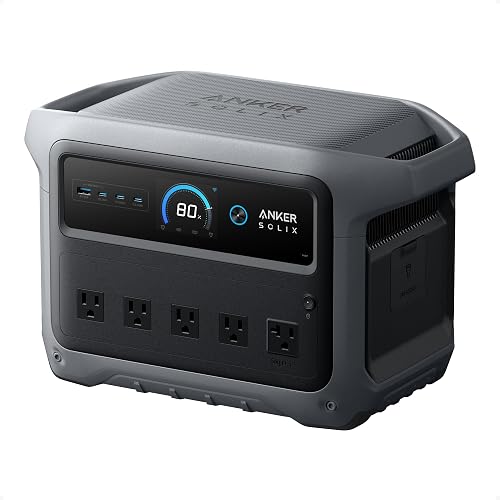 |
Anker SOLIX C1000 Gen 2 | ★★★★☆ | Check Price |
Picking the Right Battery Backup for a Tankless Water Heater
The best battery backup for a tankless water heater is a pure sine wave unit sized for your heater’s wattage. For most gas and propane models, that’s the purpose-built HUGO L50.
A pure sine wave UPS from APC or CyberPower is the budget route for short outages. And a power station covers outages that last for days.
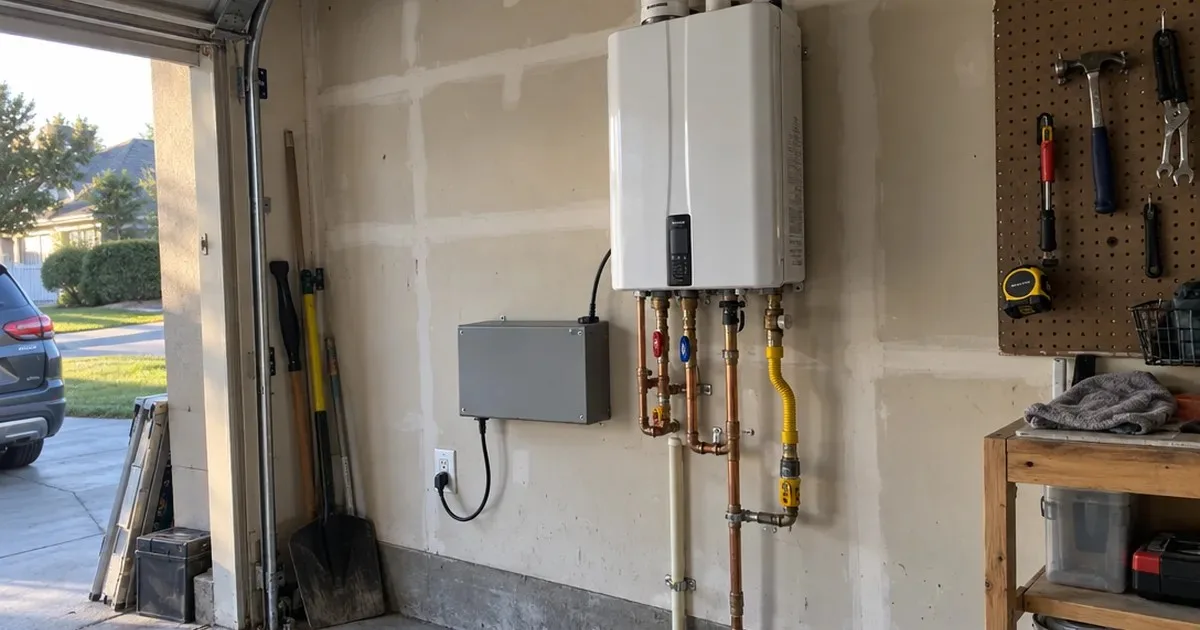
These backups only make sense for gas and propane units. A gas tankless water heater burns fuel to heat water, but it still uses some electricity to run its electronics.
That small electric load is why a battery can carry it through a power outage.
Electric tankless models are a different story. (More on that later.)
Here’s what decided the rankings:
- Pure sine wave output. A sine wave inverter turns the battery’s DC electricity into the smooth AC power a control board expects. The APC, CyberPower and GOLDENMATE listings all promise sine wave output, and so does the original HUGO’s.
- Battery size and type. Bigger batteries run longer, and LiFePO4 packs last thousands of charge cycles.
- Fit for the install. Outdoor heaters need a weatherproof box and freeze protection. Indoor units can use a standard UPS.
- Runtime evidence. Picks that publish runtime figures ranked higher than picks that don’t.
Nobody on our team bench-tested these units. The picks come from their makers’ published specs, the competing guides we compared and the questions owners ask most.
What VA and Watt Ratings Mean
A UPS’s VA rating and watt rating both describe how much it can power at once, and for a tankless water heater the watt figure is the one to compare. VA (volt-amperes) is always the bigger number on the box, so it can make a small unit look strong.
For example, the APC BR1500MS2 is a 1500VA unit but only 900W. The CyberPower CP1500PFCLCD is also 1500VA, yet it’s rated at 1000W.
Neither number tells you how long the battery lasts. That’s what watt-hours (Wh) or a runtime chart are for.
So check 2 specs on every listing: watts, to make sure it can carry the heater, and Wh or runtime, to see how long it will.
UPS, HUGO or Power Station: Which Type Fits Your Heater?
A UPS fits an indoor heater with a plug and short outages, a HUGO fits outdoor heaters and longer outages, and a power station fits outages that run for days. All 3 types switch to battery on their own when the grid drops.
Here’s how they differ in practice:
- UPS (uninterruptible power supply). An uninterruptible power supply sits on the floor, stays plugged in and takes over automatically. It’s built for computers, so runtime is usually counted in minutes.
- HUGO. It mounts on the wall beside the heater. Its flow sensor only feeds power when water runs, which is how it stretches a modest battery across hours or days.
- Power station. It holds the most energy, and its built-in battery charger refills it from the wall or solar panels. But it powers the heater’s standby electronics nonstop, and it isn’t rated for outdoor use.
On this list, #1 is the HUGO, #2 through #4 are UPS units and #5 is the power station.
In other words, start with where your heater is mounted. Then pick the type that matches your longest typical outage.
1. HUGO L50 Battery Backup for Tankless Water Heaters
HUGO L50 Battery Backup for Tankless Water Heaters
Built only for gas tankless water heaters, with a 50Ah LiFePO4 battery, a flow sensor that saves charge between showers and an IP54 enclosure for outdoor mounting.
Pros
- Made only for tankless heaters and gas appliances
- Flow sensor powers the heater only when water runs
- Temperature sensor keeps anti-frost protection working
- NEMA4 IP54 enclosure mounts indoors or outdoors
- L50 runs nearly 70% longer than the L30
Cons
- Listing gives no watt or runtime rating for the L50
- Must be wall-mounted near the heater
The HUGO L50 is the only pick here designed from day one for a tankless water heater. That’s why it takes the top spot.
Best for: owners of gas or propane tankless heaters, especially units mounted outside. Skip it if your heater is electric, or you only need to ride out a 20-minute flicker.
So what makes it different from a computer UPS?
Two sensors. HUGO’s flow sensor sends power to the heater only when it detects water flowing, then drops into standby to save the battery.
Its temperature sensor ties into the heater’s anti-frost system. So the heater’s freeze protection still gets power during a winter outage.
That’s a big deal for outdoor installs. A standard UPS has no idea it’s cold outside, and it isn’t built to sit in the rain.
HUGO’s NEMA4 IP54 enclosure, on the other hand, is rated for indoor or outdoor mounting.
The original HUGO shows how much runtime that design buys. Its Amazon Canada listing (model SUPS350A) claims 5-13 hours of continuous operation, or 3-7 days of normal use.
That same listing calls its 350W/500VA rating suitable for all gas-powered tankless water heaters.
The L50 swaps that model’s sealed lead-acid battery for LiFePO4. Its own listing says the L50 runs nearly 70% longer than the smaller L30, but it gives no hours for either one.
Here’s the catch: the HUGO isn’t cheap, and its price moves around.
When we checked in October 2026, Walmart’s Hugo 350W listing showed $711.97 and an out-of-stock notice. So check the live price before you budget.
The original HUGO also has a few practical quirks worth knowing. Its listing gives a weight of 45 lbs and a 1-year warranty, with an extra 3-year warranty you can buy.
Walmart’s listing adds a 58-inch power cord and LED and chirp alerts for troubleshooting. That cord length matters, since the unit has to reach the heater’s outlet from where it hangs.
If your tankless heater lives outside or you want hours of hot water, the HUGO L50 is the one to buy.
2. APC BR1500MS2 Pure Sine Wave UPS
APC BR1500MS2 Pure Sine Wave UPS
A 1500VA/900W pure sine wave UPS with 6 battery backup outlets, automatic voltage regulation and up to 73 minutes of runtime at a 100W load.
Pros
- True pure sine wave output, not simulated
- Up to 73 minutes of runtime at 100W
- AVR fixes high or low voltage without using the battery
- 6 battery backup outlets plus 4 surge-only outlets
- 3-year warranty and a replaceable battery
Cons
- Runtime is counted in minutes, not hours
- No weather rating for outdoor installs
The APC BR1500MS2 is the best plug-in UPS for a tankless heater. It pairs true pure sine wave output with a published runtime number.
Best for: indoor heaters with a standard plug, and outages that last an hour or less. Skip it if your heater is outdoors or hardwired.
APC’s Amazon listing rates the BR1500MS2 at up to 73 minutes of runtime at a 100W load. Neither the CyberPower nor the GOLDENMATE lists a runtime, so that number makes sizing much easier.
The listing also calls out the feature that matters most here. It promises pure sine wave output and contrasts it with basic units that put out simulated sine wave.
Tankless heaters run on sensitive control boards, so that’s the first spec to check.
Compared with the CyberPower at #3, the APC has fewer outlets: 6 battery backup and 4 surge-only. It’s also rated lower, at 900W.
But a tankless heater only needs 1 battery outlet. And APC publishes runtime while CyberPower doesn’t.
Automatic voltage regulation (AVR) is the other quiet win. It fixes voltage that runs too high or too low without switching to the battery.
That way, brownouts don’t drain your runtime before a real outage hits.
The battery is user-replaceable too. When it wears out, you swap in APC’s APCRBC163 cartridge instead of buying a new UPS.
It also carries UL and Energy Star certification, per its Amazon title. And its built-in coax and Ethernet ports protect your internet line from surges, a nice bonus if the heater shares a wall with your router.
In other words, this is the UPS to grab when you want a known runtime and a known brand for an indoor heater.
3. CyberPower CP1500PFCLCD PFC Sinewave UPS
CyberPower CP1500PFCLCD PFC Sinewave UPS
A 1500VA/1000W sine wave UPS with 12 outlets, a tilting color LCD, automatic voltage regulation and a 3-year warranty that covers the battery.
Pros
- Highest watt rating of the plug-in UPS picks at 1000W
- 6 battery backup and 6 surge-only outlets
- Color LCD shows battery and power conditions
- AVR corrects small voltage swings off battery
- Warranty covers the battery for 3 years
Cons
- Listing gives no runtime figure
- No weather rating for outdoor installs
The CyberPower CP1500PFCLCD is the strongest plug-in UPS on this list at 1500VA/1000W. Its 12 outlets let it back up more than the water heater.
Best for: an indoor heater that shares a utility room with a modem, router or other small electronics you’d like to keep running. Skip it if you need a published runtime figure.
Its Amazon listing describes sine wave output built for Active PFC and standard power supplies. Half the outlets have battery backup and surge protection, and the other 6 are surge-only.
Here’s how to use that split:
- Plug the tankless water heater into a battery backup outlet.
- Put your router or other small electronics in the other battery outlets.
- Use the surge-only outlets for anything that can wait for power to return.
The color LCD shows battery level and power conditions. It also tilts up to 22 degrees, which helps when the unit sits low on a shelf.
The plug is handy in tight spaces, too. It’s a right-angle, 45-degree offset plug on a 5-foot cord, so the UPS can sit flush against a wall behind the heater.
The warranty stands out too. CyberPower covers the unit for 3 years, battery included.
It adds a $500,000 connected equipment guarantee on top.
The weak spot is runtime. Unlike the APC at #2, the listing gives no runtime figure, so you’ll need the sizing steps later in this guide.
Pick the CyberPower when you want 1 box to back up your heater and a few other essentials.
4. GOLDENMATE 1000VA/800W Lithium UPS
GOLDENMATE 1000VA/800W Lithium UPS
A pure sine wave UPS that swaps the usual battery for a 230Wh LiFePO4 pack rated for more than 5,000 charge cycles and over 10 years of life.
Pros
- LiFePO4 pack rated for 5,000+ cycles
- Pure sine wave output
- All 8 outlets have battery backup
- Buzzer can be muted during outages
- Accepts 90-140V input for standard 110V homes
Cons
- 230Wh is small for multi-day outages
- Not built for outdoor or hot, enclosed spaces
The GOLDENMATE 1000VA/800W is a pure sine wave UPS built around a 230Wh LiFePO4 battery. It’s the pick for anyone tired of swapping UPS batteries.
Best for: indoor heaters where you want a UPS you can install and forget for years. Skip it if you need more than a few hours of backup.
Desk-style UPS units like the APC use a replaceable battery cartridge instead. GOLDENMATE’s listing rates its lithium iron phosphate battery pack for more than 5,000 charge cycles and over 10 years of life.
It also gives you the battery size outright: 230Wh. That’s the number you need for runtime math, and the APC and CyberPower listings leave it out.
Here’s an example. Say your heater’s spec sheet lists 100 W while it fires.
230Wh divided by 100 W is about 2.3 hours of burner time before inverter losses. That covers plenty of showers in a short outage.
GOLDENMATE also claims a total cost of ownership more than 40% lower than lead-acid UPS units. That claim comes from the seller, but the logic holds: no replacement cartridges to buy.
All 8 outlets carry both battery backup and surge protection, so you can’t pick the wrong one. The listing also notes a buzzer in battery mode, which you can mute with the front button.
The tradeoff is size. At 230Wh, this UPS is built for hours, not days.
The listing also warns against hot or enclosed spaces. So keep it away from the heat of a flue in a sealed closet.
That’s your rule of thumb: choose the GOLDENMATE when long battery life matters more than long runtime.
5. Anker SOLIX C1000 Gen 2 Portable Power Station
Anker SOLIX C1000 Gen 2 Portable Power Station
A 1,024Wh LiFePO4 power station with 2,000W output, under-10 ms UPS switchover and a 49-minute wall recharge, for outages that last longer than a UPS can cover.
Pros
- Largest battery on this list at 1,024Wh
- Switches to battery in under 10 ms
- Recharges from the wall in 49 minutes
- Takes 600W of solar for a 1.8-hour recharge
- Keeps 80% capacity after 4,000 cycles
Cons
- No flow sensor, so standby draw runs all outage
- No weather rating for outdoor installs
The Anker SOLIX C1000 Gen 2 is a 1,024Wh portable power station that doubles as a UPS. It’s the pick for outages that outlast any desk unit.
Best for: homes that lose power for a day or more, and owners who want 1 battery for the heater, fridge and phones. Skip it if your heater is outdoors, or you want something that runs untouched for years.
Its 1,024Wh LiFePO4 battery holds more than 4 times the GOLDENMATE’s 230Wh. Anker’s listing also rates its UPS switchover at under 10 ms, the kind of handoff it advertises for CPAP machines and laptops.
Charging is where it pulls ahead of every UPS here. The listing says it refills from a wall outlet in 49 minutes, or in 1.8 hours from 600W of solar panels.
That solar option matters in a long outage. Once the battery runs low, you can top it back up without a gas generator.
It’s also easy to move, and Anker sells a bundle with a car charging cable. Anker says it’s 14% smaller and 11% lighter than similar models, and its 10 ports cover the fridge, phones and router alongside the heater.
The battery should last, too. Anker says it still holds at least 80% of its capacity after 4,000 cycles.
Here’s the catch: it has no flow sensor. Unlike the HUGO at #1, it powers your heater’s standby electronics the whole outage, even when nobody is using hot water.
In a long outage, unplug the heater between showers and plug it back in when you need hot water. That saves the battery for the fridge.
Choose the Anker when you need days of backup and a battery you can move around the house.
Bigger Backups for Multi-Day Outages
Whole-home power stations hold about 3.5 times the Anker’s energy, so they suit homes that lose power for days at a time. They didn’t make the top 5 because they’re far more battery than a gas heater alone needs.
Still, if you want 1 system for the heater, fridge, sump pump and lights, 2 are worth knowing:
- The Jackery HomePower 3600 Plus holds 3,584Wh with 3,600W of output. Jackery’s listing says 1 unit expands to 21kWh and can power a 3-person household for over 2 weeks.
- The EcoFlow DELTA Pro holds 3,600Wh, also with 3,600W of output. EcoFlow’s listing says it expands to 25kWh, recharges in 2.7 hours from a standard 1,800W outlet and can also charge from a car outlet.
Prefer to stay with a UPS but need more than an hour? The Tripp Lite SMART750RMXL2U is a 750VA/750W pure sine wave UPS that accepts add-on battery pack modules.
Its listing says 1 BP48VRM2U module extends runtime at full load to up to 51 minutes, and 4 modules stretch it to 205 minutes. At a heater’s much smaller load, each module goes further still.
It’s a rack-mount unit built for server closets, though, so it’s bulkier than the desk-style picks.
The 2 power stations above are portable units, not wall-mounted boxes. So, like the Anker, they belong indoors within reach of the heater’s plug.
The takeaway: buy one of these only if the heater is 1 load among many. For the heater alone, #1 through #5 cover it.
Backups to Skip
The battery backups to skip for a tankless water heater are simulated sine wave units and anything with only a few minutes of runtime. Both turn up in other roundups of this product.
Here’s what to watch for:
- Simulated sine wave output. The CyberPower ST425’s own listing says it uses simulated sine wave output. That’s the wrong match for a heater’s control board.
- Very short runtime. The APC BE600M1 lists 23 minutes at a 100W load. That’s less than a third of the BR1500MS2’s 73 minutes.
- No weather rating outdoors. None of the plug-in UPS picks lists one. If your heater is outside, a desk UPS can’t sit next to it.
So read the listing before you buy, and pass on any unit that says simulated or modified sine wave.
How Long Will a Battery Backup Run a Tankless Water Heater?
A battery backup runs a gas tankless water heater for anywhere from under an hour to more than 13 hours of heating. The battery’s size and the heater’s wattage decide where yours lands.
APC rates its BR1500MS2 at up to 73 minutes at a 100W load. The original HUGO’s listing, by contrast, claims 5-13 hours of continuous operation.
That’s a huge spread. And the heater model swings it as much as the battery does.
In fact, the original HUGO’s Amazon listing includes a runtime table for Rinnai models:
- Rinnai RU130i: 13:20 hours
- Rinnai RU160i: 9:45 hours
- Rinnai V65i: 6:40 hours
- Rinnai RU199i: 6:02 hours
- Rinnai RUR160i (recirculating): 2:53 hours
- Rinnai RUR199i (recirculating): 2:26 hours
Same brand, same backup, yet runtimes range more than fivefold. The 2 recirculating models sit at the bottom by a wide margin.
The table also gives outdoor versions, and they tend to run a bit longer. A Rinnai V65e, for example, gets 8:53 hours against the indoor V65i’s 6:40.
What if you own a Navien, Rheem or Noritz? The table doesn’t cover them, so use the sizing steps below with your own spec sheet.
Why Recirculating Models Drain Batteries Faster
A recirculating tankless heater keeps hot water moving through your pipes with a built-in pump. So it pulls power even when nobody has a tap open.
That pump is the most likely reason the recirculating models in HUGO’s table run so much shorter.
Compare the 160-size models. The RU160i gets 9:45 hours, but the recirculating RUR160i gets just 2:53, under a third of the runtime from the same backup.
So if your model number has an “R” for recirculation, plan on a bigger battery. You can also switch recirculation off during an outage, if your heater’s manual allows it.
What Size Battery Backup Do You Need?
The battery backup size you need comes from 2 numbers: your heater’s draw in watts and the hours of hot water you want. Divide the battery’s watt-hours by the heater’s watts to get a rough runtime.
Here’s how to do it in 5 minutes:
- Find your heater’s model number on the rating plate on the side of the unit.
- Search that model number plus “specifications” on the maker’s website, and note the electrical draw in watts.
- Pick the backup’s capacity in watt-hours (Wh). GOLDENMATE lists 230Wh and Anker lists 1,024Wh.
- Divide capacity by watts, then knock off some margin. An inverter loses a little energy turning DC into AC.
- Compare that number to how long your local outages usually last.
Here’s an example with a made-up heater that draws 150 W while firing. The 230Wh GOLDENMATE gives about 1.5 hours of burner time, while the 1,024Wh Anker gives about 6.8 hours, both before inverter losses.
Remember that burner time isn’t clock time. A heater only burns gas to heat water while a tap runs.
So a few hours of burner time can stretch over a day of normal showers and dishes. That’s why HUGO quotes days of normal use, not just hours of nonstop heating.
For UPS units that only list a VA or watt rating, use the maker’s runtime chart instead. The watt rating tells you the most the UPS can power at once, not how long it lasts.
How Long Do the Batteries Themselves Last?
The LiFePO4 batteries on this list are rated for 4,000 to more than 5,000 charge cycles, while the APC and CyberPower UPS units carry 3-year warranties. Lithium packs are rated in cycles, and lead-acid UPS units rely on replaceable cartridges.
Here’s how the picks compare:
- GOLDENMATE 1000VA/800W: over 5,000 cycles and more than 10 years, per its listing.
- Anker SOLIX C1000 Gen 2: at least 80% capacity left after 4,000 cycles.
- APC BR1500MS2: a user-replaceable APCRBC163 cartridge and a 3-year warranty.
- CyberPower CP1500PFCLCD: a 3-year warranty that includes the battery.
- HUGO: the original’s listing calls it maintenance-free, with a battery you can replace when needed.
A backup that sits idle for months tells you little about its battery. So test yours twice a year by unplugging it from the wall with a hot tap running.
If the heater cuts out in under a minute, the battery is likely due for replacement.
How to Set Up a Battery Backup on a Tankless Water Heater
To set up a battery backup on a tankless water heater, plug the backup into a wall outlet. Then plug the heater’s power cord into one of the backup’s battery outlets.
Purpose-built units like HUGO mount on the wall next to the heater instead. They also connect a flow sensor to the water line and a temperature sensor to the heater.
That’s the whole job for most plug-in heaters. But a few details trip people up.
Installing a HUGO Step by Step
A HUGO installs on the wall right next to the tankless water heater, indoors or outdoors, and its original listing says it can be installed in minutes. The box includes 4 mounting brackets, the screws and anchors to hang it, and the flow sensor on kits that have one.
Here’s the order most installs follow:
- Hang the brackets and mount the HUGO beside the heater, close enough for its power cord to reach.
- Plug the HUGO into the wall outlet that powers the heater now.
- Plug the heater’s cord into the HUGO.
- On a flow kit, fit the flow sensor into the heater’s water line so the HUGO knows when a tap opens.
- Let the battery charge, then test it with a hot tap running and the HUGO unplugged from the wall.
Step 4 is plumbing, so hire a plumber if you aren’t comfortable cutting into a water line.
Flow Kit or No Flow Kit?
A HUGO with a flow kit runs longer, because it converts battery power to AC only when a faucet or shower turns on. HUGO sells both versions: the L50 and L30 each come with or without the flow kit.
The no-flow version powers the heater nonstop during an outage, like a regular UPS. It skips the plumbing step, though, so it’s simpler to install.
Here’s the deal: if your outages run long or your heater sits outside, pay for the flow kit. If outages are short and the heater’s indoors, the no-flow version keeps the install simple.
Pairing a Battery Backup With a Generator
A battery backup and a generator work best together, with the backup covering the gap until the generator starts. A portable generator needs someone to start it, so the heater would sit dark until then.
That gap matters for an outdoor heater in winter. Without power, its anti-frost system is off until the generator runs.
So put the backup between the generator-fed outlet and the heater. The backup carries the heater through the switch, and its battery charger refills it once the generator is running.
If you go this route, the backup still needs pure sine wave output. It’s the last thing the heater’s control board sees, whatever the power source upstream.
Plug-In vs Hardwired Heaters
A plug-in battery backup only works if your tankless heater has a power cord and plug. Some gas units ship with one, so they plug straight into a UPS.
If yours is hardwired into a junction box, the backup has nothing to plug into. A licensed electrician can often add a cord or a dedicated outlet.
Check that your heater’s manual allows it before you buy anything.
Thinking of doing it yourself? Installing a water heater yourself is legal in many places.
But adding a cord or outlet is electrical work, so check your local code first.
Use the Battery Outlet, Not the Surge-Only One
UPS units like the APC and CyberPower split their outlets between battery backup and surge-only. The surge-only side does nothing during an outage.
So plug the heater into an outlet labeled for battery backup, then test it. Turn on a hot tap, unplug the UPS from the wall, and confirm the heater keeps firing.
If the heater shuts down during that test, check 2 things first: the backup’s waveform and its load. A tankless heater that keeps shutting off on battery is often getting the wrong kind of power, or too little of it.
Freeze Protection for Outdoor Units
Outdoor tankless heaters rely on an electric anti-frost system to keep from freezing, and that protection stops when the power does. A backup with a temperature sensor, like HUGO, keeps it running.
HUGO’s original listing says its sensor keeps power flowing at 37°F or lower. That lets the heater’s anti-frost system run during a winter outage.
A desk UPS can’t do that outside, because none of the plug-in picks list a weather rating. If your winters get cold, read up on whether a water heater can freeze before you settle for a cheaper backup.
What About a DIY Battery and Inverter?
A DIY battery backup pairs a deep-cycle battery with a pure sine wave inverter and a separate battery charger. Some owners build one to get more capacity than a desk UPS offers.
The tradeoff is that you own the whole design: wiring, fusing, charging and switchover. A finished UPS or HUGO handles all of that in 1 box.
If you go the DIY route, the same rule applies. Choose a pure sine wave inverter and have an electrician check the setup before winter.
Electric Tankless Heaters Need a Different Plan
A battery backup can’t realistically run an electric tankless water heater. Electric units draw thousands of watts, far beyond the small load a gas unit’s electronics need.
For example, Westinghouse’s 14kW electric tankless heater is rated at 14,000 W on its Amazon listing. That’s 7 times the Anker’s 2,000W output.
Even small units are out of reach. A 110V plug-in electric tankless heater on Amazon is rated at 3000W, still more than the Anker can deliver.
If you’re eyeing 110V plug-in tankless heaters, the same limit applies. That load is also why the breaker size for a water heater running on electricity is so large.
If you own an electric model, you’ll need a whole-home generator or a large home battery system, not a plug-in backup.
And if you’re still shopping, compare the best electric tankless water heaters against a gas unit with a battery backup before you decide.
What to Do When the Power Goes Out Without a Backup
A gas tankless water heater with no backup stops making hot water until power returns, because it can’t ignite while its electronics are off. Turn off any open hot taps so the heater isn’t firing the moment power comes back.
For outdoor units in freezing weather, follow your manual’s drain-down steps, since the anti-frost heaters are off too.
Once power returns, run a hot tap to check the heater fires normally. Reset it if your manual says to.
Tank-style gas heaters keep a full tank of heated water during an outage, which is one reason they recover differently. If you’re curious how long a tank takes to reheat, see how long a water heater takes to heat up.
Frequently Asked Questions
Yes, a gas or propane tankless water heater can run on a battery backup, as long as the backup puts out pure sine wave power and the heater plugs into one of its battery outlets. Electric tankless models draw thousands of watts, which is far more than a plug-in backup can supply.
No, a gas tankless water heater stops making hot water in a power outage, because its control board, igniter and fan need electricity even though the gas still flows. A battery backup or generator keeps it running until power returns.
Yes, a tankless water heater should run on a pure sine wave battery backup, because its control board expects the smooth AC power a pure sine wave inverter makes. Some budget UPS units, such as the CyberPower ST425, list simulated sine wave output on their Amazon pages, so check the listing before you buy.
The purpose-built HUGO is the priciest option: Walmart’s listing showed the Hugo 350W at $711.97, out of stock, when checked in October 2026. Plug-in UPS units and power stations change price often, so compare the live prices on each pick’s Amazon page before you buy.
A battery backup keeps a tankless water heater from freezing only if it powers the heater’s anti-frost system in cold weather, as HUGO is designed to do. The original HUGO’s Amazon listing says its temperature sensor keeps power flowing at 37°F or lower.
No, a plug-in battery backup needs no electrician if your tankless water heater already has a cord and plug, because you just plug the heater into the backup’s battery outlet. A hardwired heater needs an electrician to add a cord or outlet, and a HUGO flow kit needs a plumbing connection.
A propane tankless water heater needs a standard electrical supply for its control board, igniter and fan, and its spec sheet lists the exact wattage. That wattage is the number to use when you size a battery backup.
Final Thoughts
The right battery backup depends on where your tankless water heater lives and how long your outages last. An outdoor gas unit needs the HUGO L50’s weatherproof case and freeze sensor, while an indoor heater with a plug can ride out a short outage on the APC BR1500MS2 or CyberPower CP1500PFCLCD.
Whichever you pick, skip any unit sold as simulated or modified sine wave, and plug the heater into a battery outlet, not a surge-only one. Then pull the plug from the wall once and watch the heater keep firing, so you know it works before the next storm.