Your next hot shower is usually 20 to 30 minutes away, not an hour.
That’s how long most tanks need to reheat after a shower, according to ATCO Energy, an Alberta energy provider. But how long a hot water heater takes to heat up from cold depends on 2 things: tank size and fuel.
I’ll walk you through normal times for gas, electric and tankless heaters, what slows them down, and the exact point where slow means broken.
How Long Does a Gas Water Heater Take to Heat Up?
A gas water heater takes about 30 to 40 minutes to fully heat a typical 40 to 50 gallon tank, according to A. O. Smith, a water heater manufacturer. A 75-gallon gas tank needs closer to an hour.
Plumbers call this the recovery time: how long a tank takes to reheat after you’ve used up the hot water.
Why is gas so quick?
Gas burners make intense heat that moves into the water fast, which is why contractors often recommend gas for larger families, the company says.
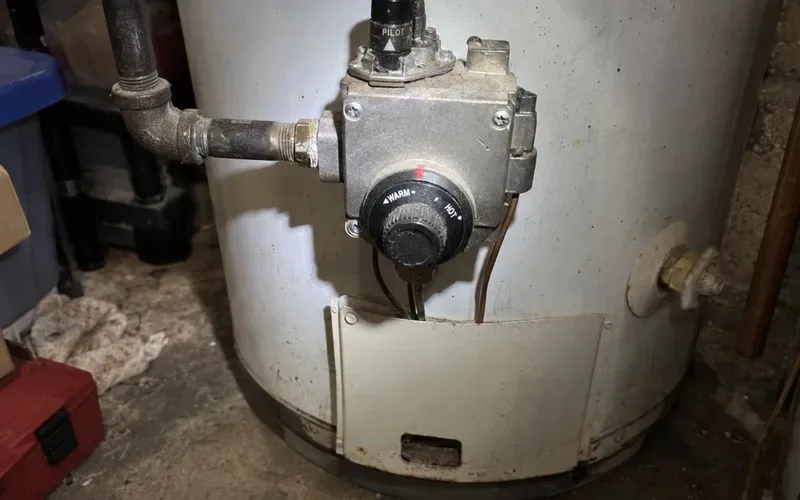
So if you’re shopping for a 75-gallon water heater for a big household, plan on that hour-long full reheat.
For a standard 40 or 50 gallon gas tank, about 40 minutes is a normal full reheat.
How Long Does an Electric Water Heater Take to Heat Up?
An electric water heater takes 60 to 90 minutes to fully heat a 40 to 50 gallon tank, about twice as long as gas, according to A. O. Smith’s heating times. A larger 75 to 80 gallon electric tank can take up to 2 hours.
A heating element is a metal rod inside the tank that turns electricity into heat. Elements don’t make heat as quickly as a gas burner, though they pass energy into the water efficiently once they get going.
That’s why homes with electric tanks often space out showers and laundry.
Do Tankless Water Heaters Need Time to Heat Up?
Tankless water heaters don’t need time to heat up, because they heat water as it flows through the unit instead of storing it, A. O. Smith explains. A tankless unit has no recovery time, whether it runs on gas or electricity.
You still wait a few seconds at the faucet while hot water travels through your pipes. That’s physics, not a slow heater.
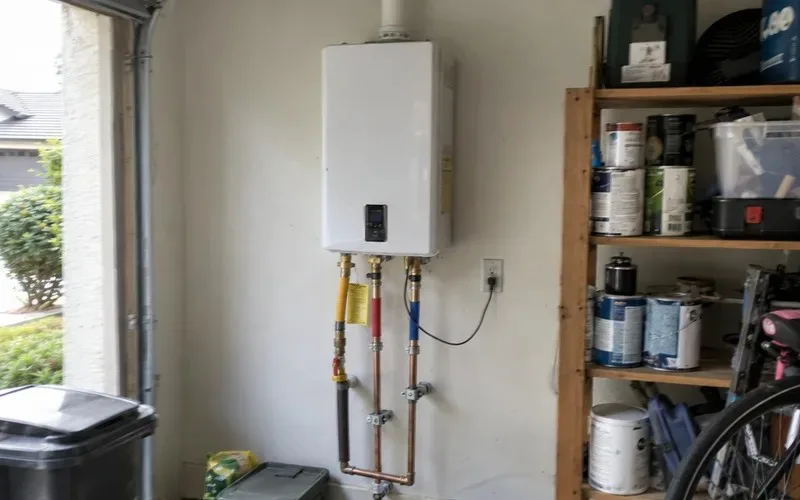
The real limit is flow rate, the number of gallons per minute the unit can heat. As long as you don’t run more fixtures than it can handle, the hot water keeps coming.
That same limit decides whether a tankless unit can fill a bathtub without going lukewarm.
Shopping for an electric tankless water heater? Count the taps you run at once and match the unit’s flow rate to that number.
How Long for Hot Water to Come Back After a Shower?
Hot water usually comes back 20 to 30 minutes after a shower, since most tanks need that long to reheat, according to ATCO Energy. A tank you’ve fully drained takes the full heat-up time for its fuel instead.
So if 2 people shower back to back and the second one gets cold water, wait about 30 minutes between them.
If cold showers happen daily, ATCO says your household may use more hot water than the tank can handle.
How Long Does a New Water Heater Take to Heat Up?
A new water heater needs a full heat-up because it starts with cold water: about 30 to 40 minutes for gas and 1 to 2 hours for electric, according to ATCO Energy. The same goes for any tank you drain to flush it.
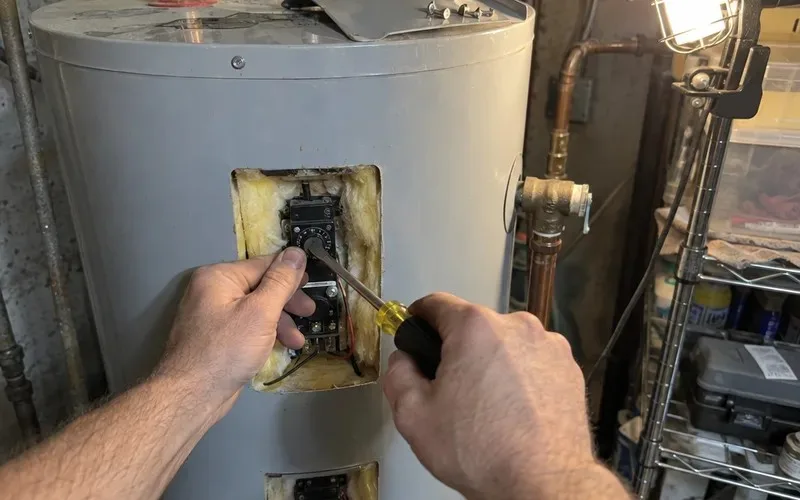
So if a plumber is swapping your unit, plan for the installation time plus up to 2 hours of heating on electric.
What Changes How Fast a Water Heater Heats Up?
Tank size, the thermostat setting and the temperature of the water coming into the tank change how fast a water heater heats up, according to A. O. Smith’s guide. Here’s how each one works:
- Tank size: a 30-gallon tank heats faster than an 80-gallon one, but it also runs out faster.
- Thermostat setting: most heaters come set to 120°F, which gives hot showers without risking burns.
- Incoming water: cold January groundwater makes the heater work harder than in July, so winter heating is slower.
That trade-off between size and speed is why the first-hour rating matters more than tank size alone. It shows how much hot water you get in your busiest hour, counting stored water plus what the unit heats on the spot.
Keep that in mind when you compare a standard tank with a heat pump water heater, a hybrid or solar water heaters. Tank size alone won’t show how fast any of them recovers.
Expect slower recovery in winter, and judge new heaters by first-hour rating.
Why Is My Water Heater Taking So Long to Heat Up?
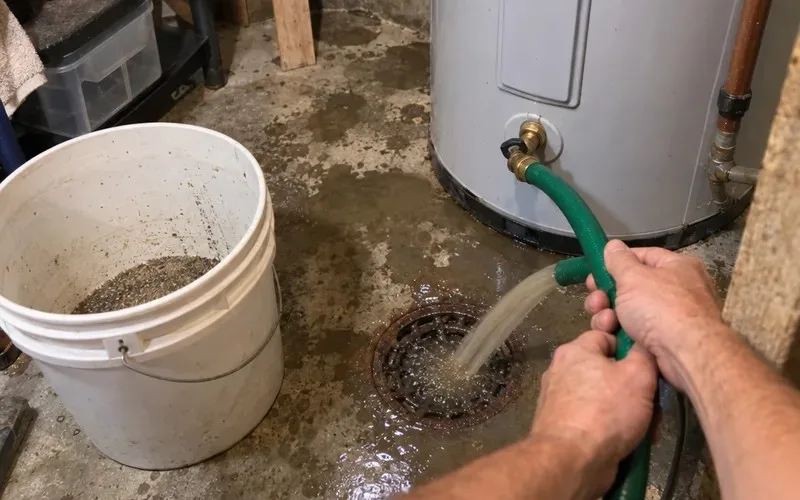
A slow water heater usually has sediment buildup, a failed heating element or a broken thermostat, according to A. O. Smith’s troubleshooting guide. Sediment is the most common cause.
Here’s what each problem does:
- Sediment buildup: minerals settle at the bottom of the tank and block heat moving from the burner or elements into the water.
- A failed heating element: most electric heaters use 2 elements, so losing one doubles your recovery time.
- A broken thermostat: it never tells the burner or elements to turn on, so you get lukewarm water or none.
Sediment often makes itself heard. Popping or rumbling sounds while the heater runs mean serious buildup that plumbers need to clean out.
If your electric heater suddenly takes about twice as long as it used to, check the elements first.
How Long Is Too Long for a Water Heater to Heat Up?
A water heater is too slow when an electric model needs over 2 hours or a gas model over an hour, according to ATCO Energy’s guidance. Past that point, something is likely wrong.
ATCO lists 3 more warning signs:
- The water never gets fully hot.
- Only lukewarm water comes out.
- The heater runs constantly.
Age plays a part too. Water heaters usually last 8 to 12 years, according to ATCO, which lines up with typical 50-gallon tank lifespans.
A heater that keeps shutting off is a separate problem.
How to Speed Up a Slow Water Heater
You can speed up a slow water heater by checking the thermostat, flushing the tank and testing the elements, in that order, before paying for a repair. ATCO Energy recommends these steps:
- Check the thermostat and set it to about 120°F (49°C).
- Flush the tank to drain out sediment, which ATCO says helps when done yearly.
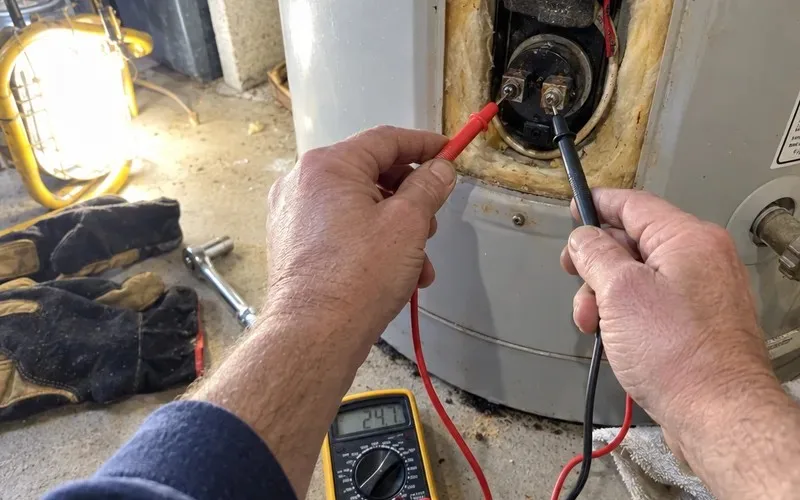
- Test the heating elements on an electric heater and replace any that have burned out.
- Add an insulation blanket to cut heat loss from the tank.
- Upgrade to a larger or tankless model if your household has outgrown the tank.
For step 3, note that elements aren’t universal, and you’ll need the right socket size for the element to remove one.
If flushing doesn’t improve the heat-up time, call a licensed plumber.
The Bottom Line
Most slow water heaters come down to sediment, a dead element or the thermostat, and you can check all 3 before calling a plumber.
This week, time a full reheat after the morning showers. If it runs past ATCO Energy’s limits of 1 hour on gas or 2 hours on electric, start with the temperature setting and a flush.
Frequently Asked Questions
A 50-gallon water heater takes about 30 to 40 minutes to fully heat up on gas and 60 to 90 minutes on electric, according to A. O. Smith. To compare models, check the first-hour rating, not just tank size.
A water heater is likely failing when it takes longer to heat up each year, makes popping or rumbling noises, gives rust-colored water or leaks at the base, according to A. O. Smith. Call a licensed plumber for any of them, since rust inside the tank and leaks aren’t DIY fixes.
No, turning up the water heater makes it take longer to reach the higher temperature, and you spend more on energy for water hotter than you need, according to A. O. Smith. Keep it at about 120°F instead.