A $12.05 hose filter and a $1,894.17 self-cleaning unit do the same basic job.
Both are water screen filters that push water through a mesh to catch sand before it reaches anything you care about.
The difference is where that water goes: a garden hose, a drip line, a pump or your whole house.
So each of the 4 main types below comes with its mesh size, price and cleaning routine.
Here’s a fast way to find yours:
- Hose or pressure washer: a hose-thread filter is enough.
- Drip emitters keep clogging? Add a Y-style filter.
- On a sandy well, a spin-down filter does the heavy lifting.
- Pumping from a pond calls for an in-line strainer.
What Is a Water Screen Filter?
A water screen filter is a housing with a mesh screen inside that traps sand, silt and other grit as water flows through it. IrrigationKing’s store listing says its screen filters are designed to remove inorganic debris such as sand and sediment.
That word “inorganic” matters, because a screen is built for hard particles like sediment, rust flakes and sand. Slimy algae is a different problem, covered further down.
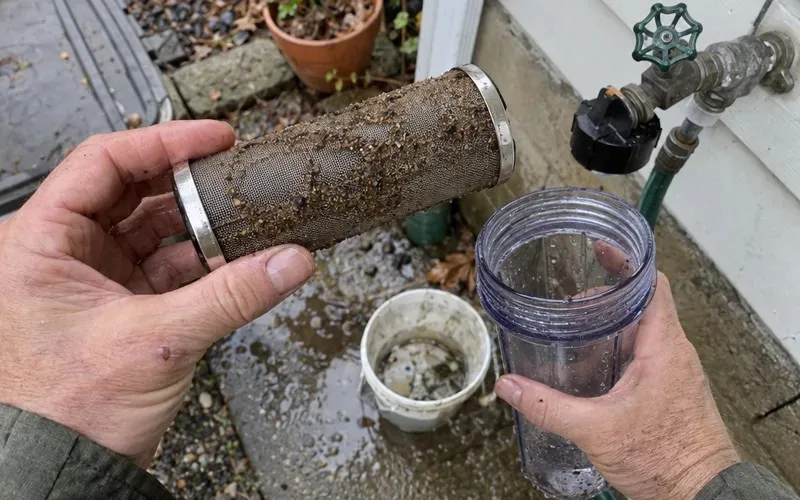
Most people use one as a prefilter: a cheap first stage that grabs the big stuff so everything after it lasts longer.
How Does a Screen Filter Work?
A screen filter works by forcing water through a fine mesh, so anything bigger than the holes stays on the screen while cleaner water flows out. As that grit builds up, you flush it out or rinse the screen.
The design is simple: IrrigationKing’s line pairs heavy-duty plastic housings with stainless steel mesh screens, which resist rust in a part that sits in water all season.
What Mesh Size Do You Need?
Mesh size is the number of openings per inch of screen, so a higher mesh number means smaller holes and finer filtering. A 155 mesh screen catches finer grit than an 80 mesh screen, but it also clogs sooner.
Go too coarse and grit slips through to your emitters. Go too fine and you’ll clean the screen constantly.
So check your emitters’ package or spec sheet for the mesh they need, then match it. On very dirty water, start coarser and add a finer filter after it.
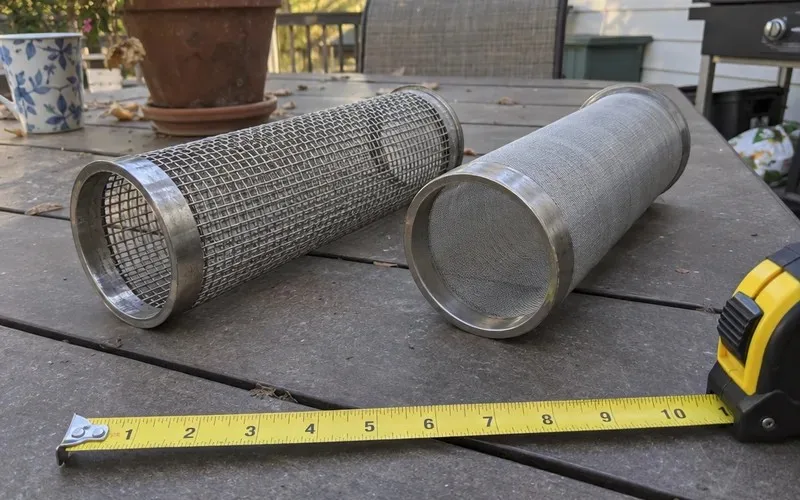
Most irrigation screen filters at that same store come in 120 mesh, with 80 mesh versions for bigger lines and a 155 mesh hose filter.
Micron measures the hole size itself, so a lower micron number means a finer screen.
4 Types of Water Screen Filters
The 4 main types of water screen filter are garden hose filters, Y-style irrigation filters, in-line pump strainers and spin-down whole-house filters. They run from the smallest job to the biggest.
Garden Hose Screen Filters
A hose screen filter threads onto a garden hose or spigot and catches grit before it reaches a sprayer, drip kit or pressure washer.
- Best for: drip kits, pressure washers or RVs on a hose. Skip it for buried irrigation systems.
- Cost: $12.05 for an Irritec hose filter with a 155 mesh screen at IrrigationKing (October 2026).
- First step: Check that your spigot and hose use standard 3/4-inch hose thread.
Two popular picks are the Twinkle Star hose filter, which comes with 100 and 40 mesh screens, and the Irritec Deluxe hose thread Y filter. If you also want less chlorine, compare garden hose water filters that add a carbon stage.
Y-Style Filters for Drip and Sprinkler Lines
A Y-style screen filter sits in the main irrigation line, after the backflow preventer and before the pressure regulator, so every zone gets filtered water.
- Best for: drip and sprinkler systems. Skip it if you water by hand.
- Cost: $16.65 for a 3/4-inch, 120 mesh model, or $89.00 for a 2-inch, 80 mesh BALDR model (October 2026 sale prices at the same store).
- First step: Measure your mainline pipe and check your emitters’ mesh rating.
For a home drip system, the Rain Bird RBY075S drip filter and the Orbit 67736 drip Y-filter are common choices.
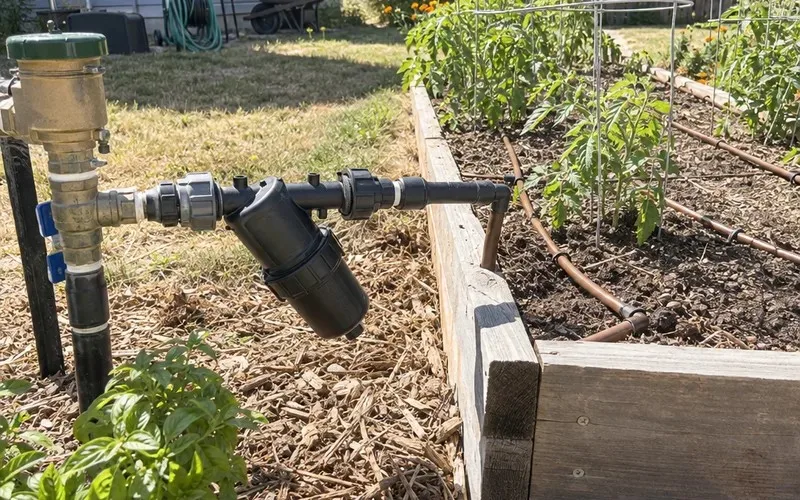
Size it by flow, in gallons per minute (GPM): the 3/4-inch model is rated for 20 GPM and the 2-inch BALDR for 110 GPM. So larger irrigation water filter systems need bigger bodies.
In-Line Strainers for Pumps
An in-line strainer is a threaded screen filter on a pump’s inlet that catches leaves, sand and debris before they wear out the pump.
- Best for: pumps pulling from a pond, tank or rain barrel. Skip it if your pump has a strainer basket.
- Cost: Not in our price research; the closest item, the 3/4-inch Y filter above, sold for $16.65.
- First step: Match the strainer’s thread size to your pump’s inlet.
One option is this 3/4-inch in-line strainer with a 100 mesh stainless steel strainer screen.
Pond water carries more leaves and algae than well water, so compare lake water filters for irrigation before you trust a screen alone. Pressure washer owners can match a pressure washer water filter to the pump’s inlet.
Spin-Down Filters for Well Water
A spin-down filter is a whole-house screen filter in a clear housing that spins sand to the bottom, where you flush it out through a valve. It’s the go-to prefilter for sandy well water.
- Best for: homes on a well with visible sand. Skip it if your worry is taste or chemicals.
- Cost: Not in our price research.
- First step: Check your cartridge filters for brown grit, a sign a spin-down will help.
Two common picks are the iSpring WSP-50 with a 50-micron screen and the iSpring WSP-100 with a 100-micron screen.
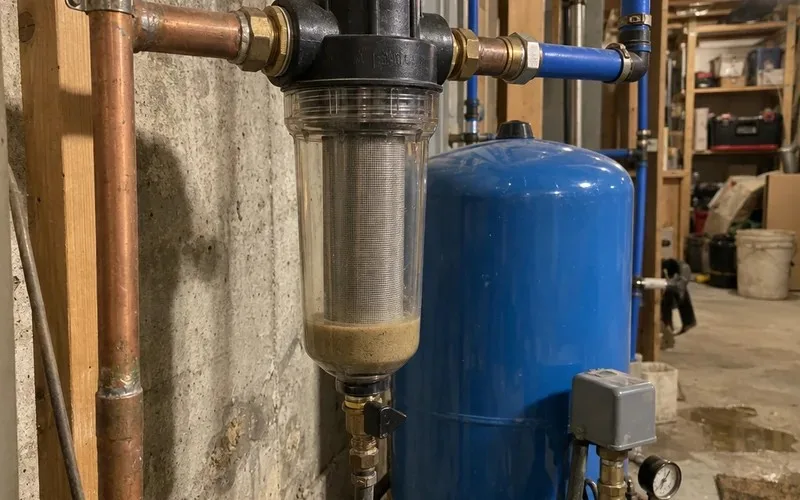
On very sandy water, start with the coarser 100-micron screen. Many homes pair a spin-down water filter with a cartridge sediment filter for well water to catch the finer silt.
Screen Filter vs. Disc Filter: Which Is Better?
A screen filter is better for hard, inorganic grit like sand, while a disc filter is better for organic debris like algae from ponds and canals. Its stacked, grooved discs hold slime that would quickly coat a flat screen.
So on a well or city line, stick with a screen. On pond water, use a disc filter, or put one ahead of your screen.
How Much Does a Screen Filter Cost?
A screen filter costs $12.05 to $89.00 for most home and garden setups, based on IrrigationKing’s October 2026 prices. A 2-inch automatic self-cleaning model for big systems costs $1,894.17.
The 3/4-inch Y filter was on sale for $16.65, down from $45.72, in a fall sale the store said would end October 31. So check today’s price, and look at home-size self-cleaning water filters if you want automatic flushing.
How to Clean a Screen Filter and When to Replace It
You clean a screen filter by opening its flush valve or cap, then pulling the screen and rinsing it with a soft brush when flushing isn’t enough. Check it often early in the season, then set your schedule by how much grit you find.
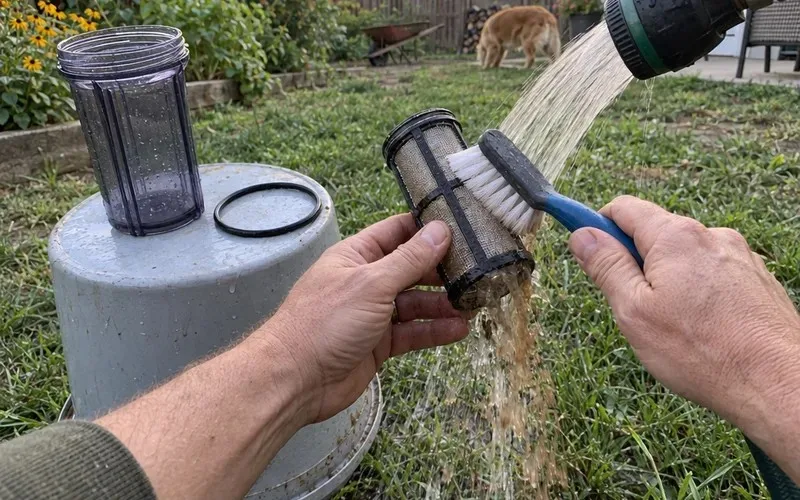
Here’s the routine:
- Shut off the water and release the pressure.
- Open the flush valve and let the grit run out.
- Pull the screen and rinse it with a soft brush.
- Check the O-ring, then reassemble.
Replace the screen when you see a tear or hole in the mesh, or when flow stays weak right after a full cleaning.
If your house loses pressure after you add a filter, check the screen first, since clogging is a common cause of a whole-house filter pressure drop.
Does a Screen Filter Make Water Safe to Drink?
No, a water screen filter does not make water safe to drink, because it only removes particles big enough to catch on the mesh. Bacteria, dissolved metals and chemicals pass straight through.
Think of it as a water pre-filter that protects the carbon, UV or reverse osmosis stage doing the real cleaning. If germs worry you, learn which filters remove E. coli before drinking untreated water.
The Bottom Line
Match the filter to where the water goes, then pick the mesh your equipment asks for.
This week, find the mesh rating on your emitters or pump and order the matching filter type.
Frequently Asked Questions
The best water screen filter depends on the job: a Y-style filter like the Rain Bird RBY075S for a home drip line, or a spin-down filter like the iSpring WSP-50 for sandy well water. Then match its mesh size to what your equipment needs.
Install the screen filter after the backflow preventer and before the pressure regulator, so it protects the regulator and every emitter downstream. Point the arrow on the housing in the direction the water flows.