If you’ve ever woken up to an icy driveway and realized you’re out of ice melt, you might have glanced at that bag of water softener salt in the garage and wondered: would that work?
The answer is yes — and it’s actually a pretty good solution in a pinch. Choosing the best water softener salt for your system is important, but knowing it doubles as an ice melter is a nice bonus. Here’s what you need to know.
Can You Use Water Softener Salt to Melt Ice?
Yes, you can use water softener salt to melt ice. The salt lowers the freezing point of water, which means it can effectively help to prevent ice from forming. In addition, the salt can also help to break up existing ice.
As a result, using water softener salt is a great way to keep your driveway and walkways clear during the winter. Just be sure to sweep up any excess salt before it has a chance to damage your grass or plants.
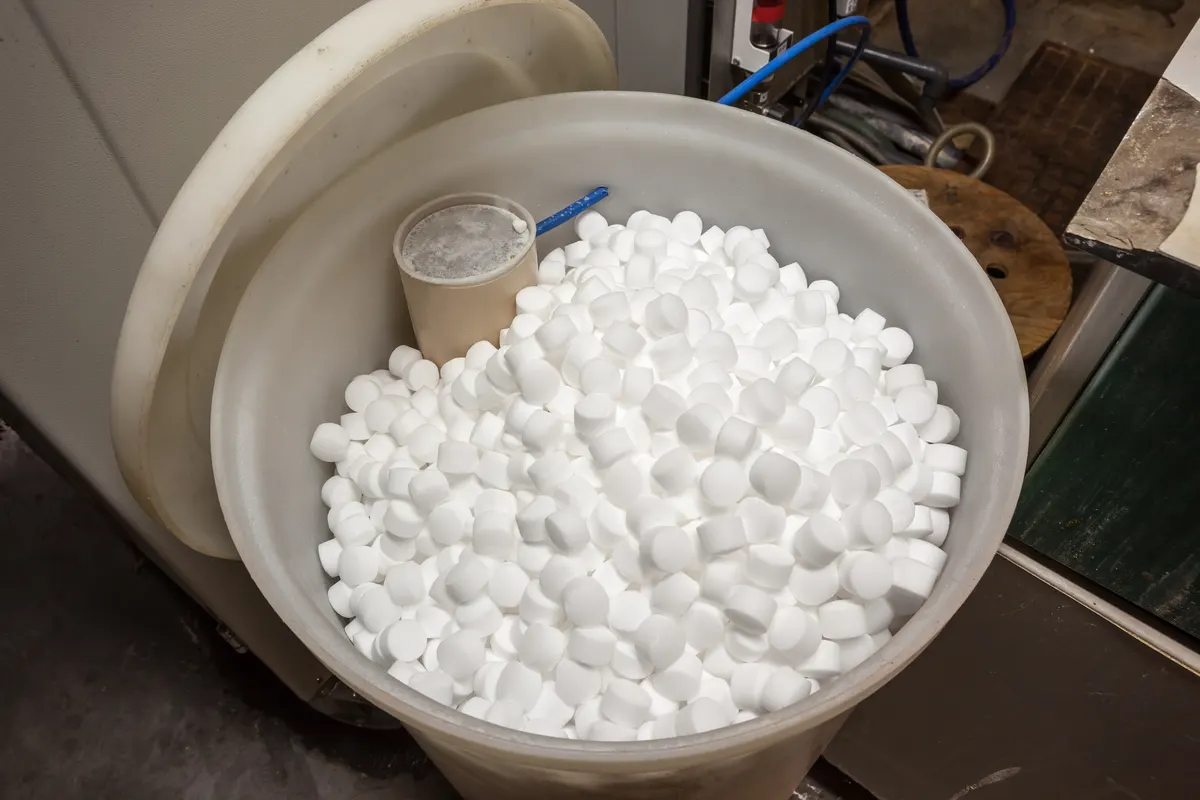
What Is Water Softener Salt?
Water softener salt is a product that’s used to treat hard water. Hard water is water with a high concentration of minerals like magnesium and calcium.
Those minerals can cause a lot of trouble, like making it difficult to get laundry clean and leaving spots on dishes.
Water softener salt works by exchanging the minerals in hard water for sodium ions. This process is called ion exchange, and it results in softer water that’s easier to use and less likely to cause problems. If you’re curious about the mechanics, read about how often a water softener regenerates to understand the full cycle.
There are a variety of different types of water softener salt available on the market. The best type for your home will depend on your water supply and your personal preferences. You can learn more about the different options in our guide on how much salt to use in a water softener.
How to Melt the Ice With Water Softener Salt
Melting ice with water softener salt is a relatively simple process. All you need to do is spread the salt over the ice and then wait for it to melt.
You’ll need about two pounds of salt for every square foot of ice. To apply the salt, simply spread it evenly over the surface of the ice.
For best results, wait until after a light rain or snowfall to apply the salt. The moisture will help to activate the salt and speed up the melting process.
The Difference Between Water Softener Salt and Sidewalk Salt
While water softener salt and sidewalk salt both lower the freezing point of water and can be used to melt ice, there are some key differences between these two products.
Water softener salt is typically made from evaporated sea salt or rock salt, while sidewalk salt is usually made from calcium chloride. Calcium chloride is more effective at melting ice than salt, but it’s also more expensive.
In addition, calcium chloride can damage concrete and other surfaces if used excessively. As a result, it’s important to use sidewalk salt cautiously and only as directed.
Finally, water softener salt is usually sold in large bags or pellets, while sidewalk salt is typically sold in smaller bags or shakers. This makes it easier to spread sidewalk salt on ice without making a mess.
When choosing an ice melt product, be sure to consider your needs and the type of surface you’ll be using it on. Water softener salt is a great choice for melting ice on driveways and walkways, but sidewalk salt may be a better option for treating ice on sidewalks and patios. If you’re wondering whether a softener is worth the investment overall, check out our article on whether a water softener is worth it.
How Long Does It Take for Water Softener Salt to Melt Ice on the Driveway?
Water softener salt typically takes about 15 minutes to melt ice on the driveway. However, the exact amount of time will vary depending on the type of salt you use, the temperature of the air, and the thickness of the ice.
To speed up the melting process, you can mix the salt with sand or calcium chloride. You can also use a snow blower or ice chipper to remove the ice before spreading salt on the surface.
If you live in an area with very cold winters, you may need to reapply salt every few hours to keep the driveway clear. Using salt from your softener for ice melting means you’ll go through it faster, so keep an eye on how long your water softener lasts and maintain it properly. In addition, be sure to sweep up any excess salt that doesn’t get dissolved in the melting process.
This will help to prevent the salt from damaging your grass or plants.
Will Water Softener Salt Damage Concrete?
Water softener salt won’t damage concrete. In fact, it can actually help to prevent damage by causing the water to become less acidic.
Over time, acid can eat away at concrete, causing it to crack and crumble. By using salt to soften the water, you can help to prolong the life of your concrete surfaces. Curious whether water can be too soft? It’s a common concern when using salt-based systems.
In addition, salt can also help to remove stains from concrete, keeping your surfaces looking clean and new. For these reasons, there’s no need to worry about water softener salt damaging your concrete.
However, it’s always a good idea to use salt in moderation. Excessive salt application over many years could potentially affect the soil around your concrete surfaces. If you’d rather avoid salt altogether, explore some water softener alternatives that don’t use sodium chloride.
Sweep up any excess salt after the ice has melted to keep your property in the best condition. And don’t forget to check what your water softener hardness should be set at to make sure your system is properly calibrated after using some of its salt supply.
Frequently Asked Questions
It varies depending on the temperature and ice thickness, but a rough guideline is about 1 pound per square foot of ice. You might need more in really cold conditions or for thick ice.
Yes, you can use water softener salt on driveway ice. It is a great choice for melting ice on driveways and walkways because it is less likely to damage concrete than other types of salt.
Toss the pellets in a zip-top bag and give them a few whacks with a hammer — that's the quick and dirty way. Smaller pieces dissolve faster, which means faster melting. A food processor or blender works too if you want a finer grind.
Water softener salt is safe for pets. However, it is important to keep the salt away from their eyes and mouths.
In addition to melting ice, water softener salt can be used to remove stains from concrete, clean rust off metal surfaces, and kill weeds. It can also be used as a deicer for cars and trucks.
No, water softener salt is not the same as table salt. Table salt is made from sodium chloride, while water softener salt is usually made from evaporated sea salt or rock salt. Water softener salt is more coarse and does not contain iodine.
Final Thoughts
If you've already got water softener salt at home, it's a solid (and affordable) ice-melting option. It starts working in about 15 minutes and won't damage your concrete — it might actually help protect it.
The stuff is also pet-safe, which is a nice bonus over some commercial ice melters. Beyond de-icing, you can use it to clean concrete stains, remove rust, and even kill weeds.
Just remember to sweep up whatever doesn't dissolve. Salt runoff into your garden beds can cause problems for plants over time. Apply it after a light rain or snow when there's already some moisture to help it dissolve faster. Crushing the pellets into smaller pieces speeds things up too.
Compared to specialized sidewalk salt, water softener salt is usually cheaper and you probably already have some in the garage. Keep an extra bag on hand during winter and you'll never get caught off guard by an icy morning.